


All products are independently selected by our editors. If you buy something, we may earn an affiliate commission.
Richard Dadd: Beyond Bedlam brings one of Victorian art’s most intriguing figures back to the Royal Academy, where his career began. Presented in the Jillian and Arthur M. Sackler Wing of Galleries at Burlington House, the exhibition gathers more than 100 works spanning Dadd’s early ambitions, travels through the Eastern Mediterranean and decades spent painting while confined to psychiatric hospitals.
His celebrated fairy paintings provide some of the most absorbing moments, alongside portraits, travel sketches and landscapes that reveal a career considerably broader than the fantastical scenes for which he is best known.
Richard Dadd Beyond the Familiar Story
Born in 1817, Dadd studied at the Royal Academy Schools and became a founding member of the Clique, a group of young artists that included William Powell Frith and Augustus Egg. His early work already showed considerable technical ability and an interest in literary and supernatural subjects.
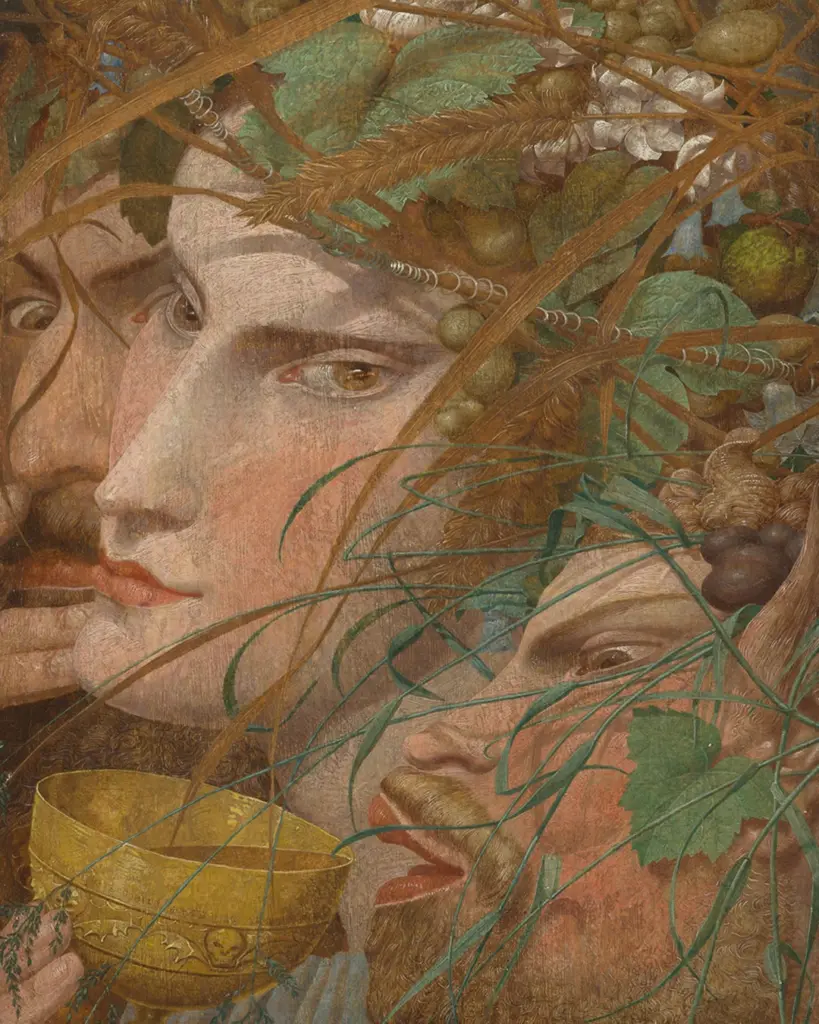
In 1842, Dadd accompanied Sir Thomas Phillips on a journey through the Eastern Mediterranean, travelling through Greece, Turkey, Syria and Egypt. His mental health deteriorated during the trip and, after returning to England, he developed severe delusions. In 1843, he killed his father, Robert Dadd, and fled to France, where he was arrested.
Dadd subsequently became a patient at Bethlem Royal Hospital and later Broadmoor Hospital, continuing to paint throughout his confinement. The exhibition gives this history necessary context while tracing the interests and technical abilities already established earlier in his career.
An Imaginative World in Extraordinary Detail
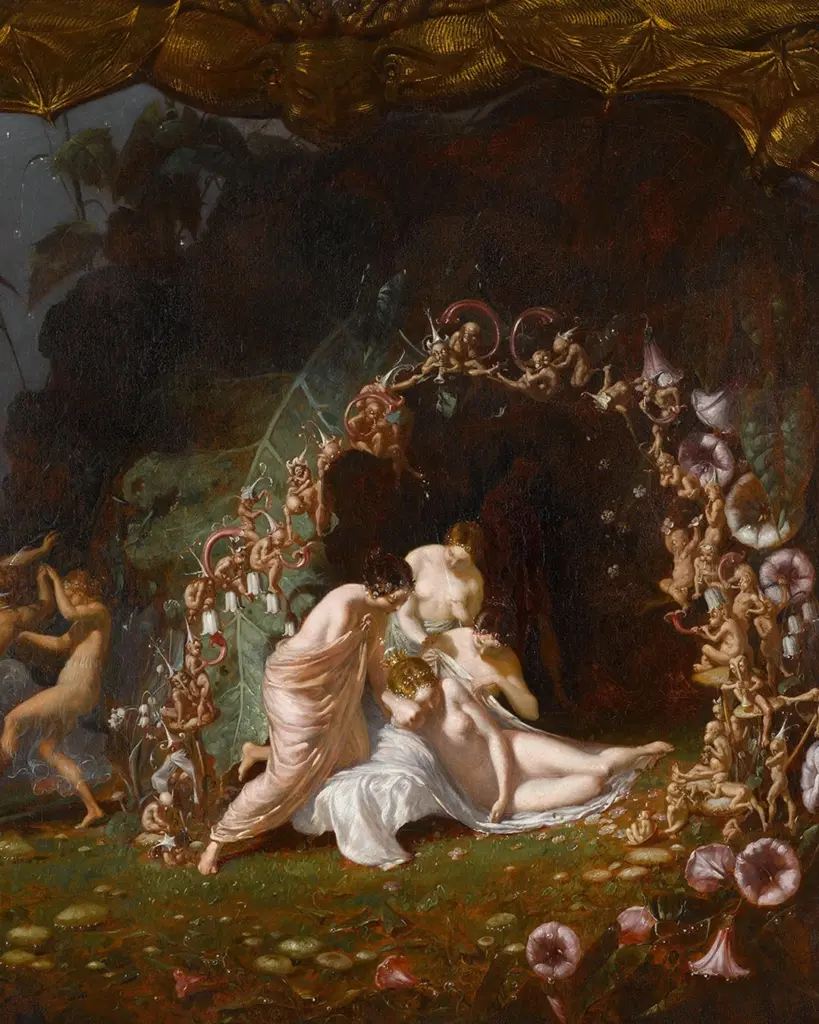
Dadd’s fairy paintings inevitably command attention. Titania Sleeping, painted in 1841, predates his institutionalisation and shows how early fantasy and Shakespearean subjects entered his work. Titania lies amid an elaborate gathering of figures and musicians, rendered with the precision that became one of Dadd’s defining qualities.
Contradiction. Oberon and Titania, painted between 1854 and 1858, takes this fascination further, filling the composition with figures, vegetation and intricate decorative detail.
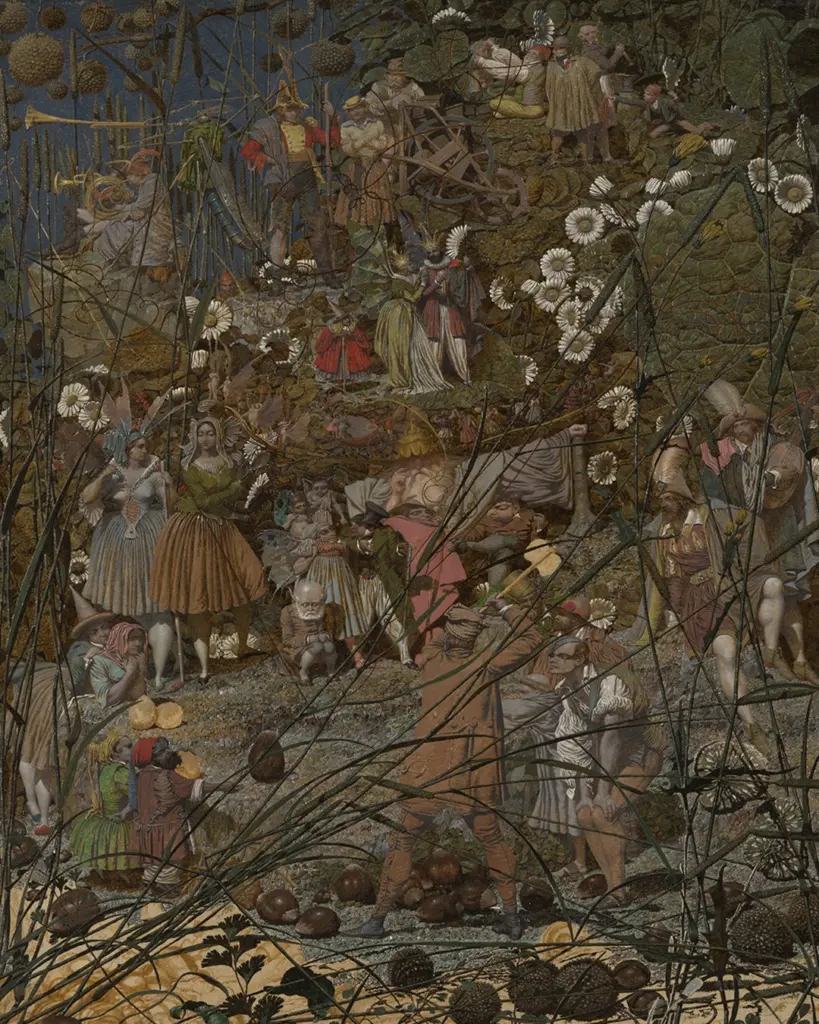
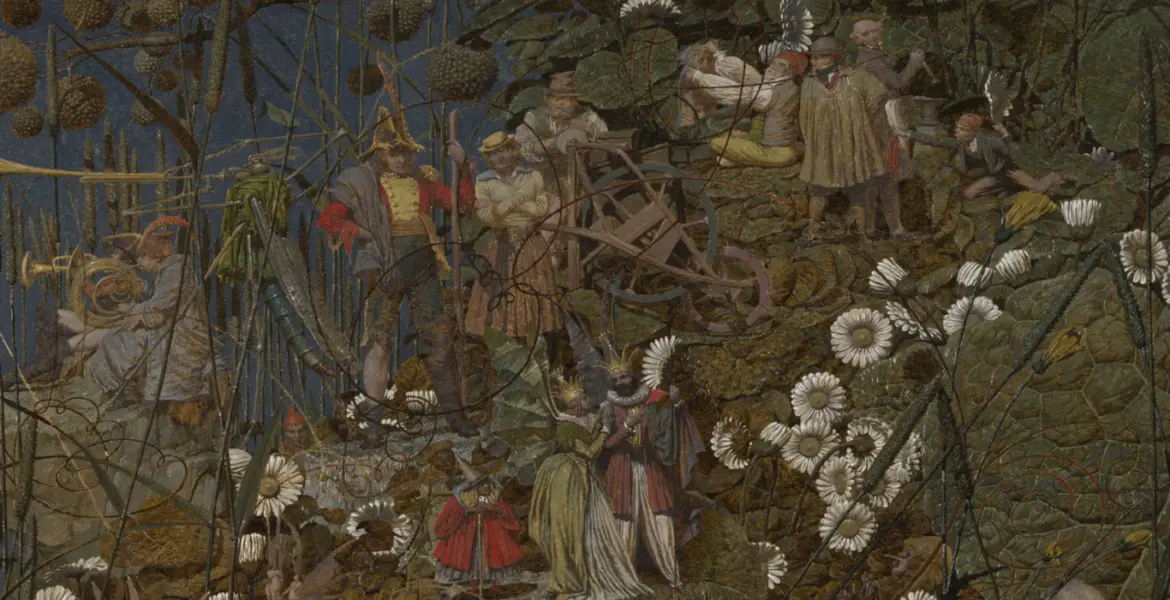
The centrepiece is The Fairy Feller’s Master-Stroke, painted at Bethlem between 1855 and 1864. The relatively small canvas contains a remarkable concentration of figures gathered around the fairy feller, whose raised axe is poised above a nut intended for Queen Mab’s carriage. Grass, flowers and stems tower over the miniature gathering, while tiny faces and incidents emerge across the surface.
Seeing the painting at close range makes Dadd’s painstaking technique particularly apparent. Its modest dimensions contrast with the density of the composition, rewarding the time spent examining its smallest details.
Travels, Portraits and a Broader View of Dadd
The exhibition becomes particularly revealing away from the fairy paintings. Sketches made during Dadd’s Eastern Mediterranean journey show the observational side of his practice, recording figures and places encountered during his travels. Those experiences continued to surface in his work decades later.
Paintings such as Reminiscence of Venice demonstrate the lasting role of travel and memory, while landscapes revisit places connected to his earlier life, including the waters around Chatham in Kent, where he grew up.
Dadd also painted people around him during his years in hospital, including members of the medical staff. These perceptive portraits and character studies sit in marked contrast to his densely constructed fantasies and give the exhibition welcome breadth.
A Closer Look at Dadd’s World
The exhibition follows Dadd’s development chronologically, moving through his Royal Academy training, travels and years at Bethlem and Broadmoor. Early portraits and literary subjects establish his artistic foundations before the Eastern Mediterranean drawings introduce experiences that continued to influence his later work.
The intimate scale of many pieces suits the exhibition particularly well. Travel drawings and studies encourage slower viewing, while The Fairy Feller’s Master-Stroke proves surprisingly small in person. Its scale brings the viewer closer to the tiny faces, plants, clothing and gestures worked into the canvas.
Later landscapes and seascapes shift the mood towards memory, showing how Dadd continued to revisit places he had known before his confinement. Together, these quieter works provide a useful counterpoint to the intensity of his fairy paintings.
Art, Illness and Dadd’s Legacy
Dadd’s mental illness shaped the circumstances in which much of his work was produced, although several qualities associated with his hospital paintings were already present beforehand. Shakespeare, fairy imagery and intricate compositions interested him before his psychosis became apparent.
Beyond Bedlam gives weight to that continuity. Portraits, landscapes and travel-related works sit alongside the paintings that established Dadd’s modern reputation, allowing his technical skill and range to emerge more clearly without reducing his art to his illness.
Visiting the Royal Academy
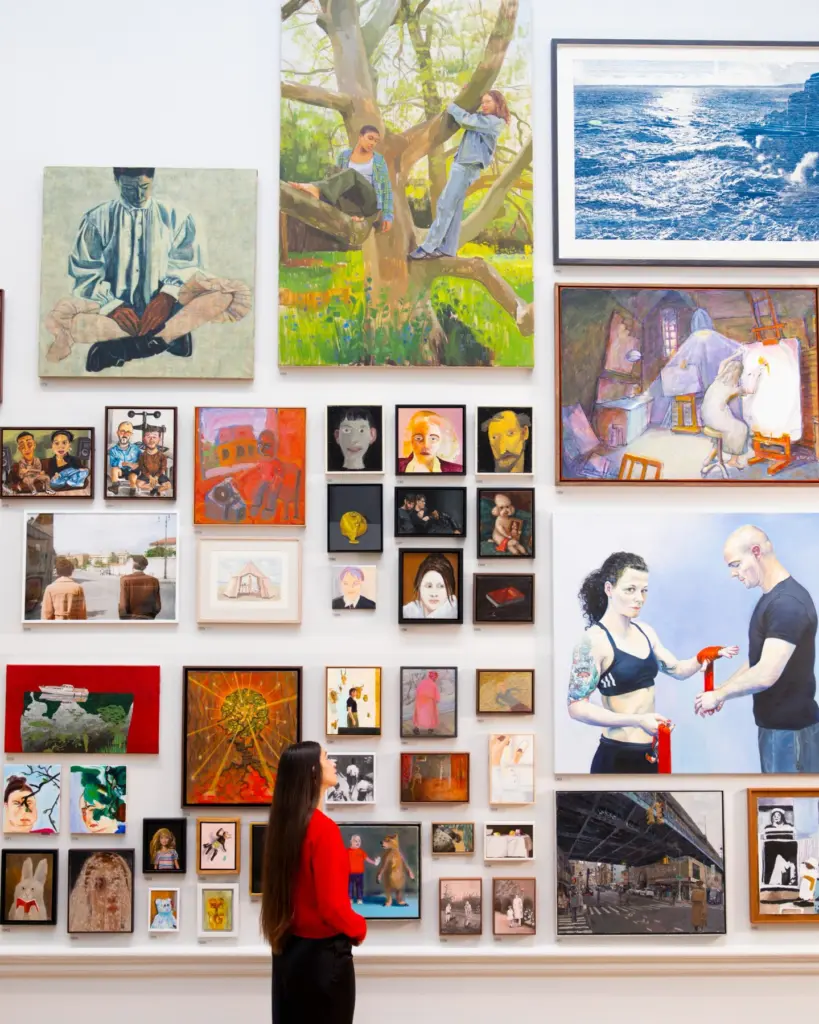
Richard Dadd: Beyond Bedlam is presented in the Jillian and Arthur M. Sackler Wing of Galleries at the Royal Academy of Arts, Burlington House, Piccadilly, London.
The exhibition runs from 25 July to 25 October 2026 and brings together more than 100 works. Booking is advisable, particularly for busier dates.
It is worth allowing time for the smaller works. Much of Dadd’s art is unusually dense in detail, and the exhibition is best seen at an unhurried pace.
A Remarkable Return to the Royal Academy
There is a fitting quality to seeing Dadd’s work at the Royal Academy, where he trained as a young artist. The Fairy Feller’s Master-Stroke receives its deserved prominence, while the portraits, travel studies and landscapes reveal a fuller picture of his career.
What lingers is the extraordinary concentration behind the work. Whether constructing an imagined fairy gathering or recalling places seen decades earlier, Dadd painted with a precision that continually draws the eye closer. Beyond Bedlam gives that work the space and context it deserves.