

All products are independently selected by our editors. If you buy something, we may earn an affiliate commission.
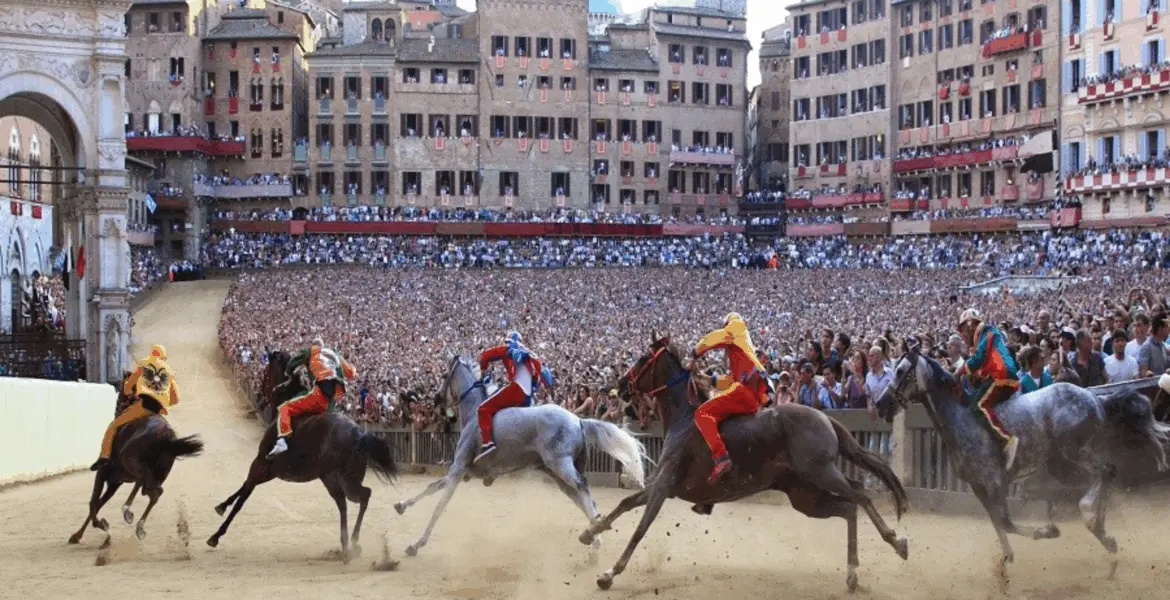
Each summer, Siena’s medieval streets become the setting for one of Italy’s oldest and most fiercely protected traditions. In 2026, the Palio di Siena returns on 2 July and 16 August, bringing centuries of rivalry, pageantry and civic pride back to Piazza del Campo. Although the race lasts little more than a minute, the traditions surrounding it unfold over several days, offering a deeper insight into Siena than many visitors expect.
For those planning to attend for the first time, understanding the customs behind the spectacle makes the experience considerably more rewarding. Arriving before race day, exploring the Contrade, and experiencing the city as celebrations build provides a far richer perspective than watching the race alone.
A City Shaped By The Contrade
The Palio cannot be separated from Siena itself. While visitors are drawn to the city’s Gothic architecture and beautifully preserved medieval streets, daily life within the historic centre revolves around the seventeen Contrade, or districts. Neighbourhoods such as Oca (Goose), Aquila (Eagle), Tartuca (Tortoise) and Onda (Wave) each have their own colours, symbols, museums displaying historic Drappelloni, headquarters and oratories that continue to anchor community life.
For many Sienese families, belonging to a Contrada begins at birth and lasts a lifetime. District colours, victories and rivalries become part of everyday life from childhood, explaining why success in the Palio carries emotional significance far beyond sport.
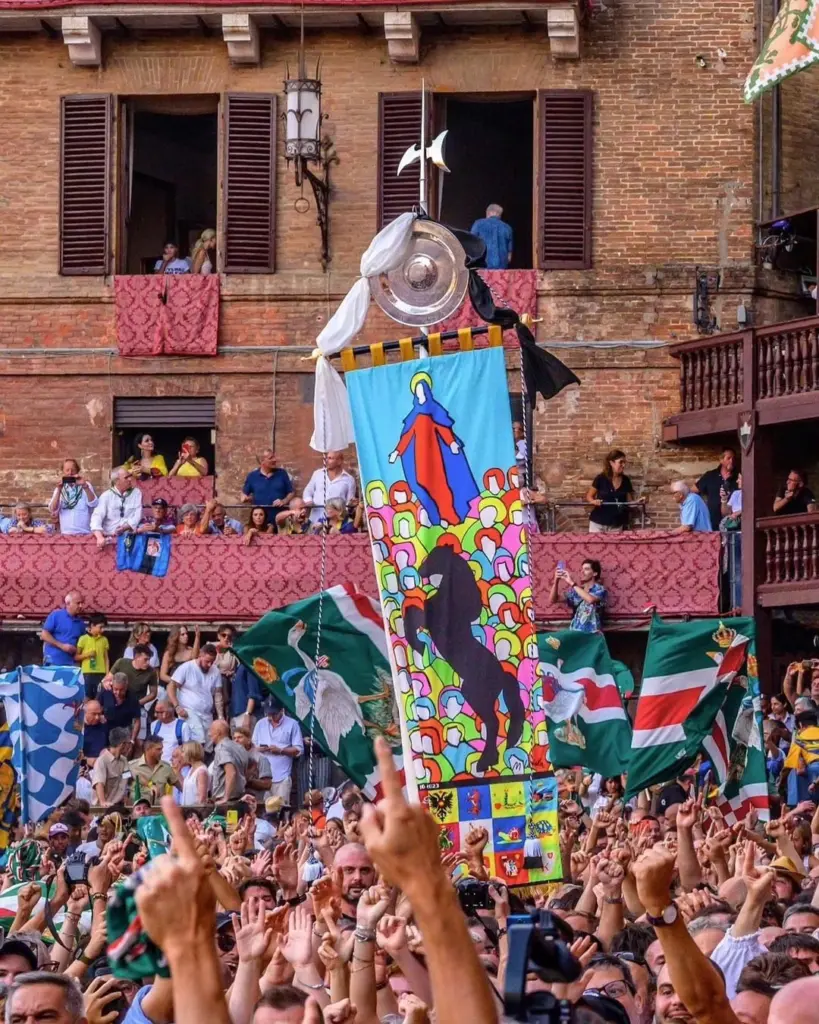
Ten of the seventeen Contrade compete in each race. Seven qualify through rotation, while the remaining three are selected by lottery, ensuring every district has the opportunity to compete over time.
Although the modern Palio dates to the seventeenth century, its traditions are considerably older. The July Palio di Provenzano and August Palio dell’Assunta each follow the same format but bring their own atmosphere to Siena’s summer calendar.
The Build-Up To Race Day
Arriving three or four days before the race reveals a side of the Palio many visitors never see. Anticipation builds steadily through the Tratta, trial races, horse blessings and neighbourhood celebrations that gradually take over Siena’s streets.
The Tratta, where horses are assigned to the competing Contrade by lottery, marks the true beginning of the festivities. Once the draw is complete, morning and evening trial races allow jockeys to familiarise themselves with the demanding circuit around Piazza del Campo, while locals analyse every performance with remarkable attention.
One of the Palio’s most meaningful traditions follows shortly before the race, when each horse receives a blessing inside its Contrada church. Across the city, the Cene della Contrada bring residents together beneath rows of district flags, while the renowned Sbandieratori perform throughout the celebrations. For visitors fortunate enough to receive an invitation through local contacts or specialist hospitality providers, a Contrada dinner offers one of the week’s most memorable experiences.
Tradition, Ceremony, and The Race Itself
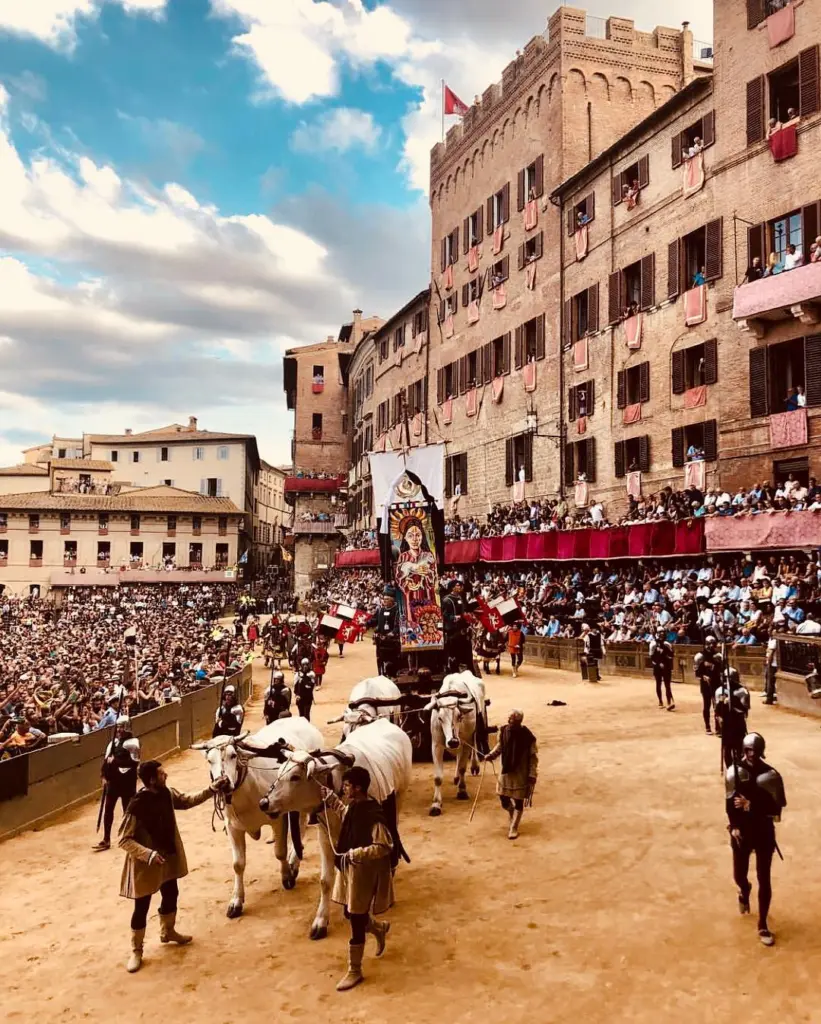
Race day begins with the Corteo Storico, a magnificent procession of musicians, drummers, flag throwers, and participants dressed in meticulously recreated medieval costumes. By early evening, Piazza del Campo has been transformed into a temporary racecourse, with thousands gathering around the packed dirt track that circles the square.
The start, known as the Mossa, is famously unpredictable, often requiring several attempts before the horses are released. Once underway, the race lasts around ninety seconds, with three laps carrying competitors past the notoriously difficult San Martino and Casato bends, where fortunes can change almost instantly.
One of the Palio’s most unusual traditions allows a horse to win even if its jockey has fallen before the finish. The victory belongs to the Contrada rather than the rider, reinforcing the communal spirit that defines the event.
When the winning horse crosses the finish line, celebrations immediately spill into the surrounding streets. Residents accompany the horse and the Drappellone, a hand-painted silk banner specially commissioned from a different contemporary artist each year, back to the victorious Contrada, where festivities continue well into the night.
Experiencing the Palio Well
Choosing the right vantage point shapes the entire experience.
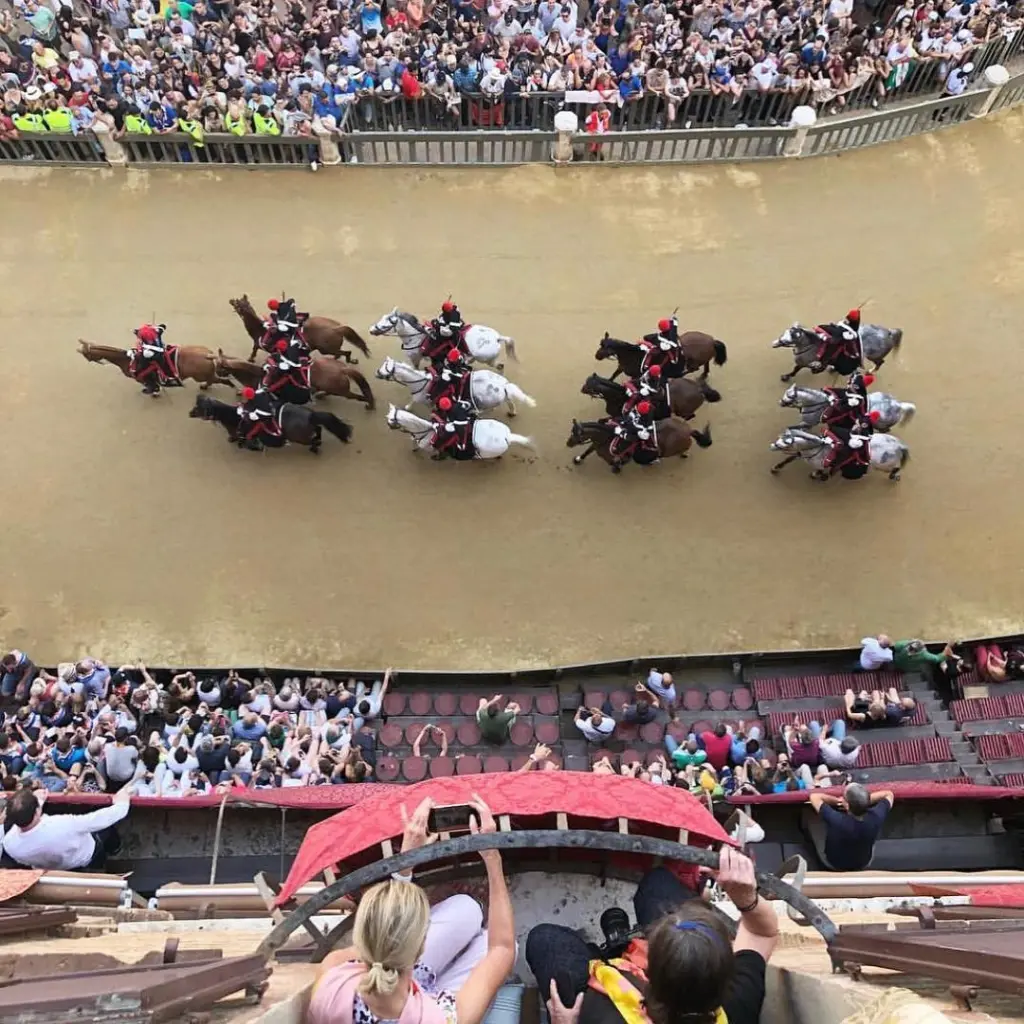
Standing in the centre of Piazza del Campo offers the best atmosphere, placing spectators at the heart of the celebrations, though arriving several hours early is essential. Reserved grandstands provide more comfortable viewing, while private balconies within Siena’s historic palazzi offer the most exclusive perspective, combining exceptional views with attentive hospitality. Many of the finest balcony experiences are arranged through specialist hospitality providers and are secured months in advance.
Planning is equally important when booking accommodation. Hotels within Siena’s historic centre frequently sell out six to twelve months before both races, while premium hospitality packages are often reserved even earlier.
Lightweight clothing, comfortable footwear for Siena’s cobbled streets and protection from the summer sun all make the day considerably more enjoyable. Respecting processions, neighbourhood celebrations, and local customs also allows visitors to appreciate the Palio as residents do.
Although both races follow the same format, each has its own character. The July Palio opens the height of the Tuscan summer, while the August edition, held in honour of the Assumption of Mary, enjoys an especially festive atmosphere as much of Italy celebrates its summer holidays.
Extending the Journey Beyond Piazza del Campo
The Palio provides the perfect centrepiece for a longer stay in Tuscany.
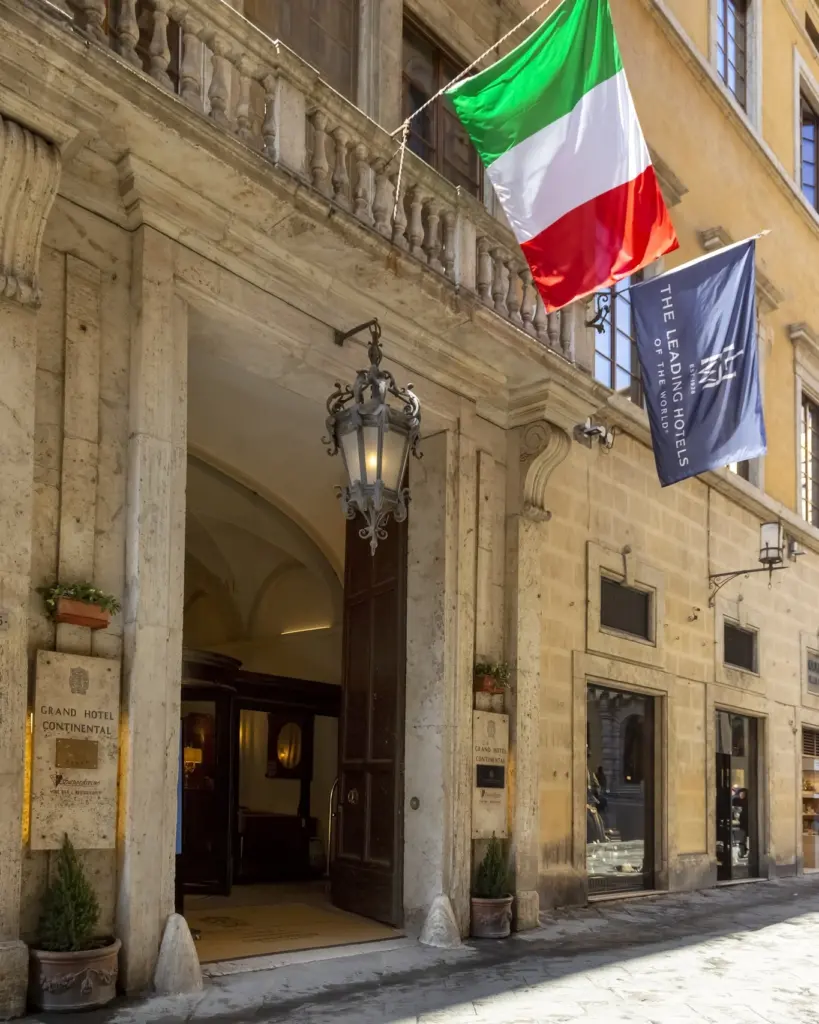
Grand Hotel Continental Siena remains the city’s leading luxury address within the historic centre, while Rosewood Castiglion del Bosco, COMO Castello Del Nero, Borgo Santo Pietro and Castel Monastero pair the excitement of the Palio with some of Tuscany’s finest countryside escapes.
Beyond Siena, private Brunello tastings around Montalcino, vineyard lunches in Chianti, historic wine cellars beneath Montepulciano and scenic drives through the UNESCO-listed Val d’Orcia reveal another side of the region. Many estates also offer cooking experiences and seasonal truffle excursions for visitors looking to explore Tuscany’s culinary traditions.
Back in Siena, restaurants including Osteria Le Logge, Tre Cristi Enoteca Ristorante and Particolare di Siena showcase refined regional cooking alongside excellent Tuscan wines. Handmade pici pasta, wild boar ragù, Chianina beef, panforte and ricciarelli remain among the city’s signature dishes.
A Tradition Best Experienced With Time
The Palio di Siena has endured for centuries because it remains inseparable from the city that created it. Every procession, blessing, and celebration reflects traditions that continue to shape daily life long after the crowds have departed.
Arriving before race day, exploring Siena’s Contrade and extending your stay into the surrounding Tuscan countryside transforms the Palio from a brief sporting spectacle into one of Italy’s most rewarding cultural experiences.