


All products are independently selected by our editors. If you buy something, we may earn an affiliate commission.
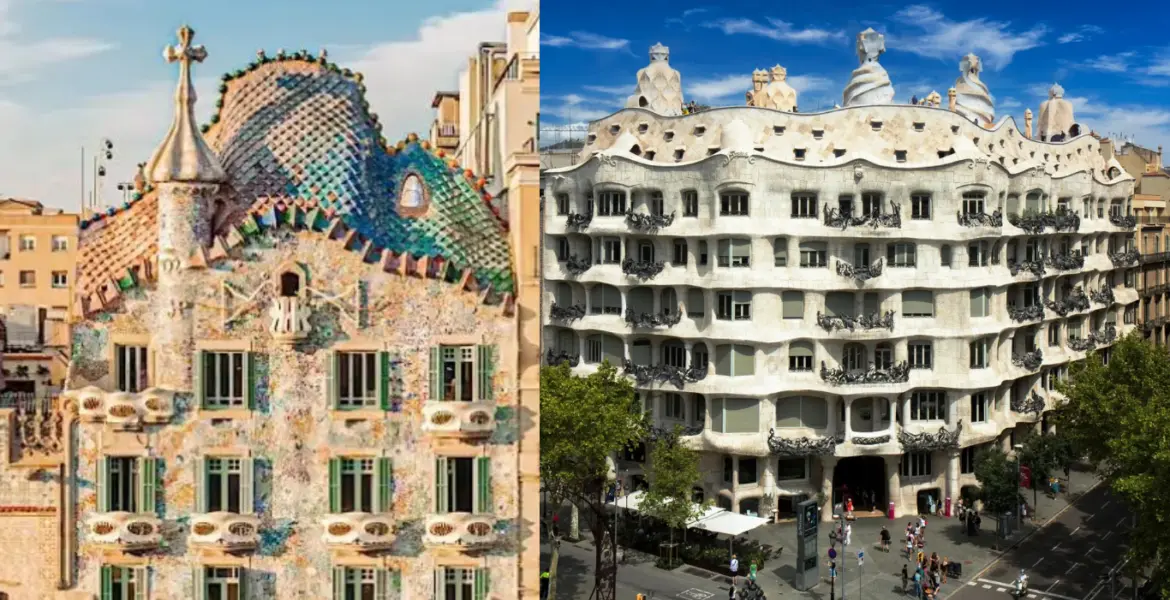
Barcelona’s Passeig de Gràcia is home to two of Antoni Gaudí’s most important residential works, each revealing a different side of the architect. Casa Batlló transformed an existing townhouse into a richly detailed expression of colour and organic form. At the same time, La Pedrera – Casa Milà gave Gaudí a much larger canvas for his architectural ideas. Both form part of the UNESCO-listed Works of Antoni Gaudí, and seeing them together offers one of the best introductions to his work in the city.
Casa Batlló: Gaudí at His Most Expressive
Casa Batlló began as a conventional late 19th-century building before textile industrialist Josep Batlló commissioned Gaudí to remodel it in the early 1900s. Rather than demolishing the house, Gaudí reworked its façade, interiors, light wells and roof, creating one of the most distinctive buildings on Passeig de Gràcia.
The façade immediately sets it apart. Coloured fragments of ceramic and glass cover its undulating surface, while slender columns and curved balconies give the building its skeletal appearance. Above them, the tiled roof has long been associated with the back of a dragon, one of several interpretations linked to the legend of Saint George, Catalonia’s patron saint.
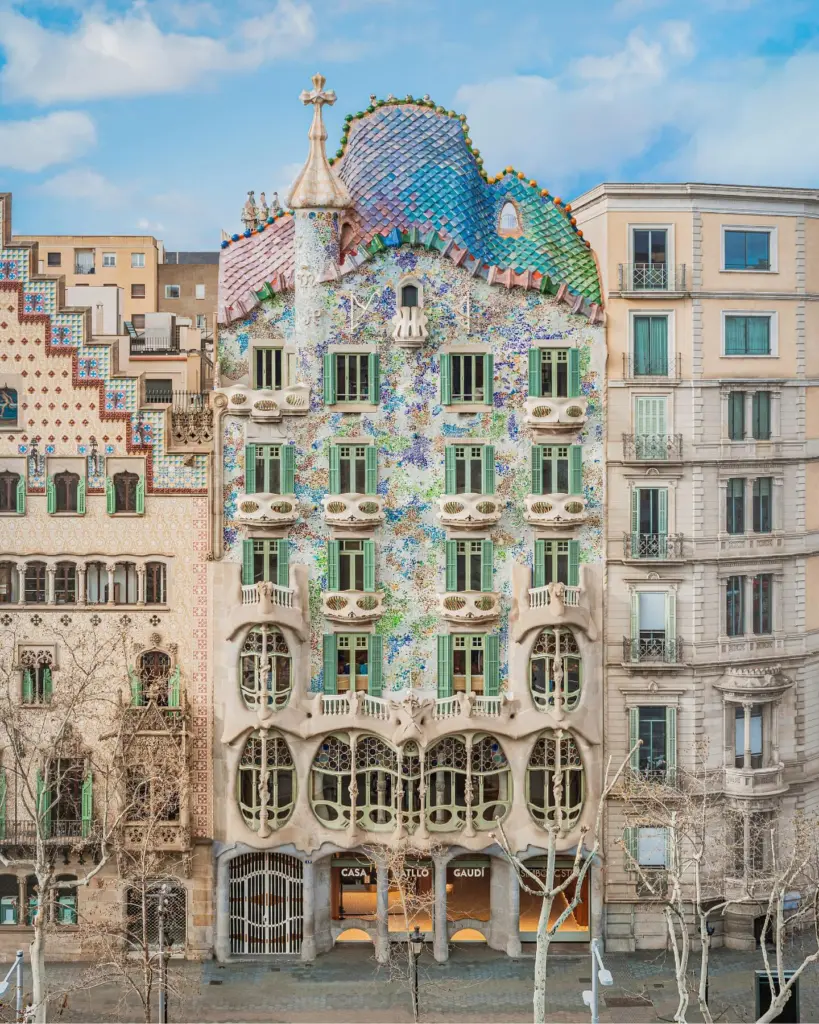
Gaudí carried the same attention to form, light and craftsmanship throughout the interiors, making the house as rewarding to explore inside as it is to view from the street.
Inside the Batlló House
The Noble Floor was the Batlló family’s principal living space and contains some of the house’s finest details. Its main salon overlooks Passeig de Gràcia through large windows framed by slender columns, with stained glass introducing shifting colour as daylight changes.
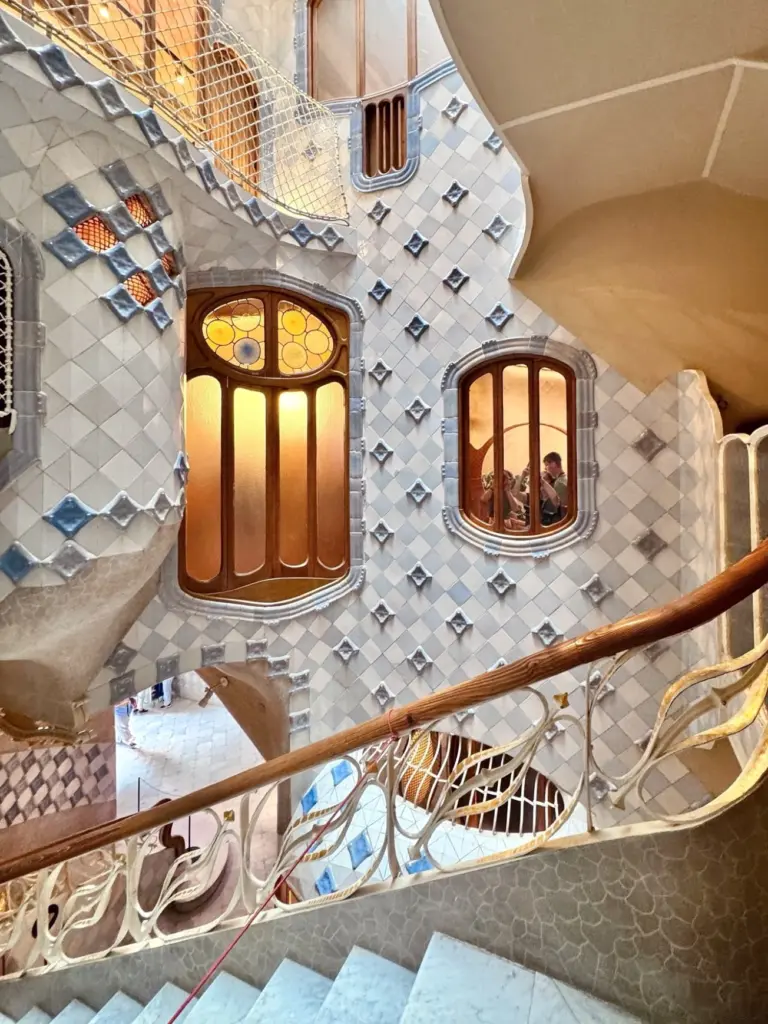
Elsewhere, doors, ceilings, staircases and window frames demonstrate Gaudí’s preference for curved forms and bespoke craftsmanship. The central light well is particularly clever. Blue tiles become progressively darker towards the top, helping to balance the intensity of natural light across the different floors, while carefully designed windows contribute to ventilation.
Higher in the building, the whitewashed attic is defined by a sequence of catenary arches. The route eventually reaches the roof terrace, where colourful chimney stacks and the building’s scaled roofline turn practical architectural elements into some of Casa Batlló’s most recognisable features.
Casa Batlló’s Most Immersive Experiences
The contemporary visit combines the original architecture with digital interpretation designed to reveal more of Gaudí’s ideas. The Gaudí App incorporates audio, imagery, video, augmented reality and interactive content as visitors move through the house.
Dedicated installations extend the experience further. The Gaudí Dome introduces the natural influences that shaped his imagination, while the Gaudí Cube surrounds visitors with a large-scale digital work inspired by the architect’s creative world. Higher-tier visits provide access to additional spaces, making them particularly worthwhile for those looking to explore beyond the standard route.
At selected times of year, Casa Batlló also hosts Magical Nights, pairing an evening visit with a live concert on the rooftop. The format offers a different atmosphere once the daytime crowds have eased, although access can differ from the full daytime route, so the two experiences should be considered separately.
La Pedrera: Gaudí on a Grander Scale
A short walk along Passeig de Gràcia leads to La Pedrera – Casa Milà, commissioned by Pere Milà and Roser Segimon and completed in 1912. It was Gaudí’s final private residential commission and remains one of his boldest architectural projects.
Its vast, undulating stone façade gives the building its popular name, La Pedrera, meaning “the stone quarry”. Wrought-iron balconies run across the exterior, their irregular forms contrasting with the pale stone behind them.
The building was innovative beneath the surface too. Gaudí separated much of the façade from the load-bearing structure and used columns rather than conventional supporting walls in key areas, allowing greater flexibility in the apartments’ arrangement. Natural ventilation, underground parking and carefully planned circulation reflected his interest in how a residential building could function as well as how it looked.
Courtyards, Attic and the Rooftop
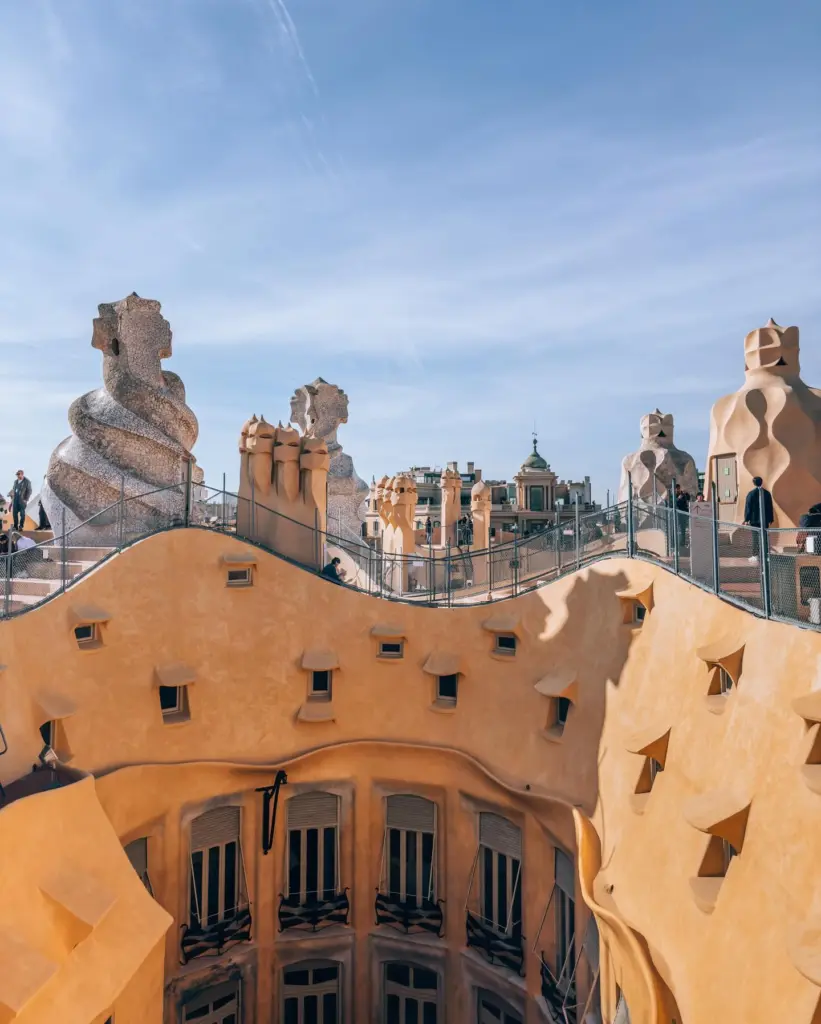
Two large internal courtyards draw daylight and fresh air into La Pedrera. Their painted walls, curved balconies and generous proportions make them integral to the architecture rather than simply functional shafts within the building.
Above the apartments sits the attic, formed from hundreds of brick catenary arches. It now houses Espai Gaudí, an exhibition devoted to Gaudí’s work, with models and other material examining his architectural methods and recurring interest in forms found in nature.
The rooftop is the building’s most dramatic space. Chimneys, ventilation towers and stairwell exits rise above different levels of the terrace, their sculptural forms turning everyday building services into part of the overall composition. Views across Barcelona, including towards the Sagrada Família, provide a wider sense of Gaudí’s presence across the city.
La Pedrera at Its Most Exclusive
For a more private encounter with the building, La Pedrera Premium is the experience to prioritise. Visits are limited to a maximum of six people and are led by a specialist guide, with queue-free entry and access extending beyond areas included in the standard route.
The experience opens spaces normally closed to general visitors, including the mezzanine, rear courtyard, historic lift and the staircase connecting the period apartment with the attic. These additions reveal aspects of the building that are easy to miss on a conventional visit and provide greater insight into how La Pedrera originally functioned.
The visit concludes in a private setting with a glass of cava and traditional sweets, though its strongest advantages are restricted architectural access and the small-group format.
Gaudí After Dark
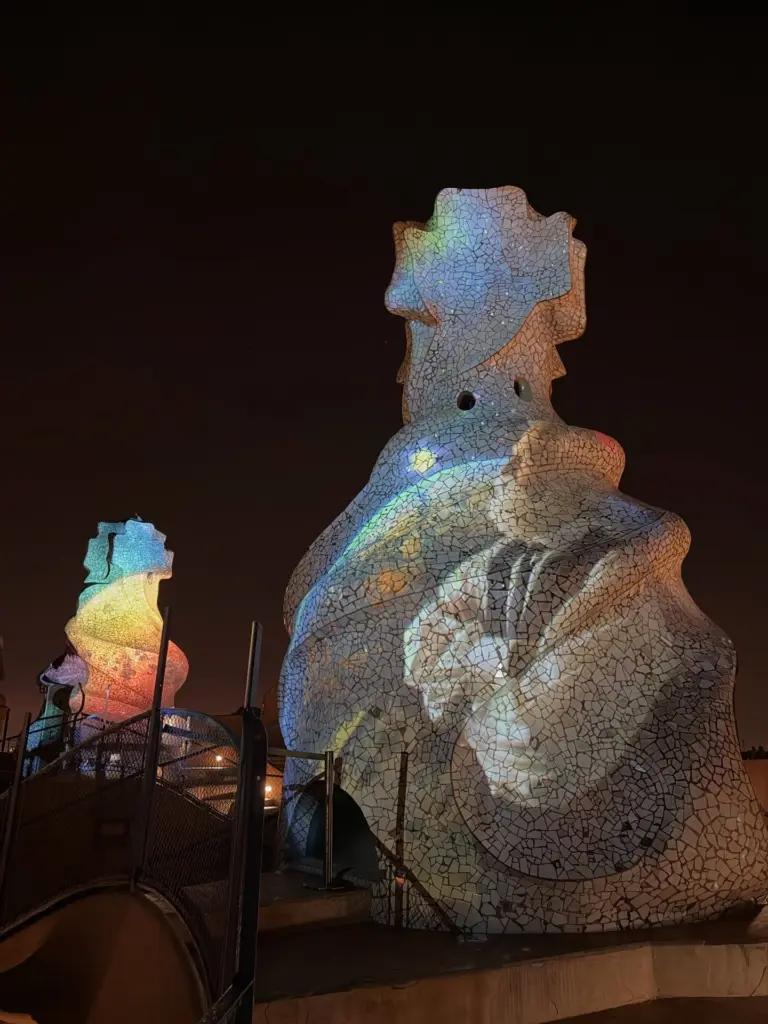
La Pedrera takes on a different character in the evening. The La Pedrera Night Experience leads visitors through selected areas of the building before reaching the rooftop, where projections and video mapping use Gaudí’s architecture as the setting for an audiovisual presentation. A glass of cava concludes the experience.
The rooftop also hosts seasonal cultural programming. Talents Jazz brings live jazz performances to the terrace on selected summer evenings, usually accompanied by access to the Espai Gaudí and a drink on the roof.
For travellers interested in seeing Gaudí’s houses outside conventional daytime hours, these programmes and Casa Batlló’s Magical Nights provide worthwhile alternatives. As seasonal schedules can change, consider them alongside the permanent premium experiences rather than as essential components of every visit.
Experiencing Both Houses
Casa Batlló and La Pedrera are close enough on Passeig de Gràcia to visit on the same day, but allowing enough time for each offers value, rather than treating them as stops on a rapid architectural circuit.
Their differences are what make the pairing particularly rewarding. Casa Batlló is intimate and intensely decorative, with craftsmanship apparent in almost every surface. La Pedrera operates on a broader scale, revealing more of Gaudí’s structural thinking and his approach to an entire residential building’s organisation.
Limited-capacity premium visits and evening experiences are worth reserving in advance. Pairing a detailed daytime visit at one house with an evening experience at the other can also provide a more varied introduction to both properties than two consecutive standard visits.
Two Sides of Gaudí
Casa Batlló shows Gaudí transforming the familiar Barcelona townhouse through colour, light and extraordinary attention to detail. La Pedrera reveals the architect working at greater scale, experimenting with structure, circulation and the possibilities of urban residential design. Together, they offer a particularly rich way to understand why his work continues to define Barcelona more than a century later.