

All products are independently selected by our editors. If you buy something, we may earn an affiliate commission.
Art has shaped Málaga’s identity for centuries, but few figures have left a greater mark on the city than Pablo Picasso. Housed within the beautifully restored 16th-century Palacio de Buenavista, the Picasso Museum in Málaga brings together one of the world’s finest collections dedicated to the artist alongside remarkable architecture and centuries of Andalusian history. More than a museum, it offers an engaging introduction to Picasso’s creative evolution while placing visitors at the heart of the city where his story began.
Unlike the nearby Casa Natal Picasso, which focuses on the artist’s early life and family history, Museo Picasso Málaga explores the full breadth of his creative journey. From youthful studies to his later experiments in ceramics and sculpture, the museum presents one of history’s most influential artists in a setting that rewards both dedicated art lovers and curious first-time visitors.
A Collection Spanning Eight Decades
The museum’s permanent collection features more than 230 works donated by members of Picasso’s family, offering an unusually personal perspective on his artistic evolution. Rather than concentrating solely on his most recognisable Cubist masterpieces, the galleries reveal an artist in constant reinvention through paintings, drawings, sculptures, ceramics and prints.
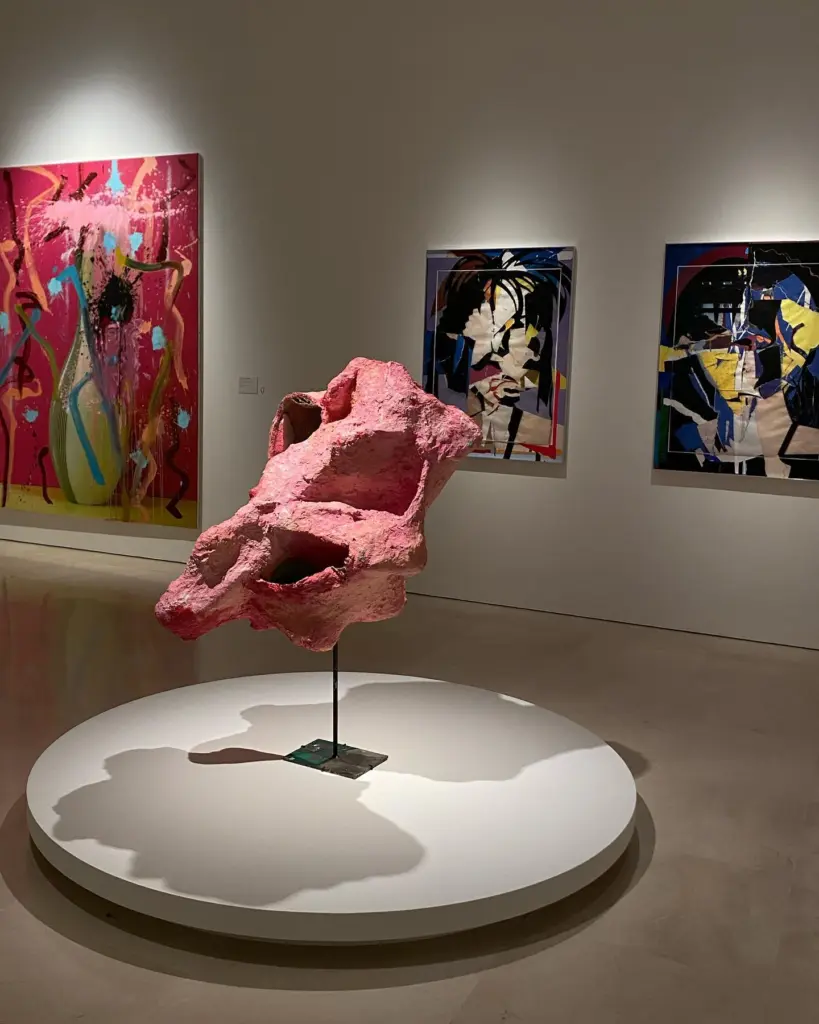
Visitors move through eight decades of creativity, discovering everything from early academic studies and expressive portraits to bold Cubist compositions, playful ceramics and works inspired by mythology, the Mediterranean and everyday life. The displays are thoughtfully arranged, allowing each period of Picasso’s career to build naturally upon the last, while concise interpretation panels provide valuable context without overwhelming the experience.
Alongside the permanent collection, the museum regularly presents temporary exhibitions developed in collaboration with leading international museums and private collections. These changing displays ensure that even returning visitors will often discover something new.
Inside the Palacio de Buenavista
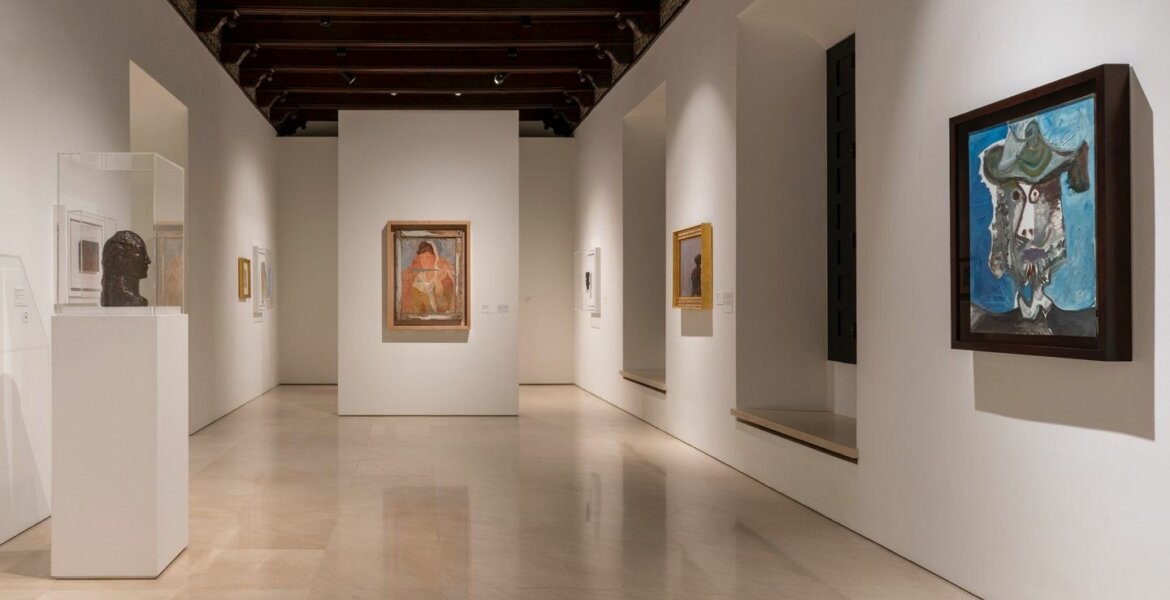
The museum’s setting is every bit as compelling as the collection itself. Built in the 16th century, the Palacio de Buenavista blends Renaissance architecture with distinctive Mudéjar craftsmanship, creating an atmosphere that feels both grand and intimate.
Elegant courtyards, carved wooden ceilings, stone arcades and carefully restored architectural details preserve centuries of Andalusian history while providing a fitting backdrop for Picasso’s modern works. Contemporary gallery spaces have been seamlessly integrated into the historic palace, allowing the architecture and artwork to complement one another.
Beneath the museum lies one of its lesser-known highlights. Archaeological excavations uncovered Phoenician, Roman and Nasrid remains, revealing layers of Málaga’s history that stretch back thousands of years. These excavated structures offer visitors a fascinating glimpse into the city’s past, making the museum a journey through multiple civilisations as well as Picasso’s artistic legacy.
A More Rewarding Visit
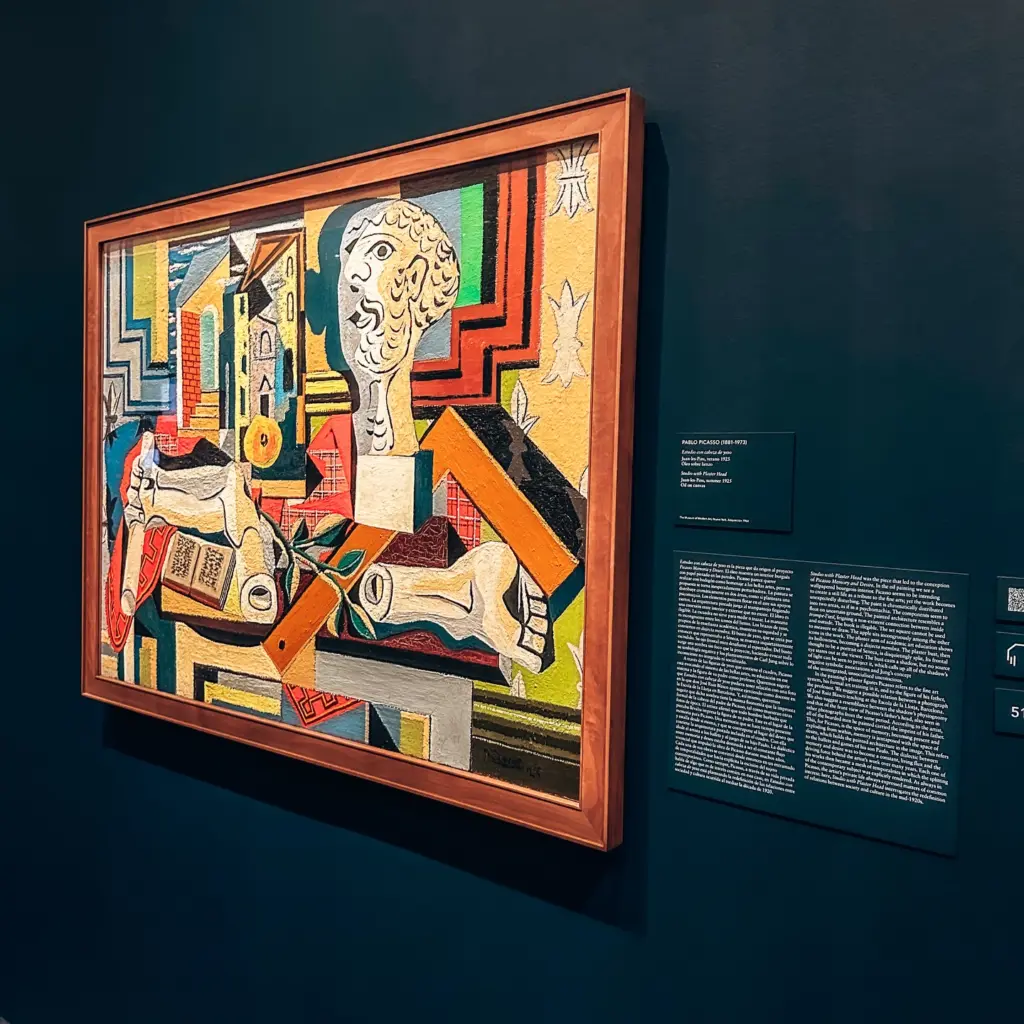
The galleries are rewarding to explore independently, but private guided tours offer a deeper appreciation of Picasso’s techniques, influences and continual artistic experimentation. Expert guides provide valuable context, helping visitors understand both the symbolism within the works and the experiences that shaped many of them.
Multilingual tours and comprehensive audio guides make the collection accessible regardless of prior knowledge, while those seeking a quieter experience should consider visiting shortly after opening or later in the afternoon, particularly outside peak holiday periods.
The museum also hosts rotating exhibitions, lectures, educational programmes, concerts and seasonal cultural events throughout the year, reinforcing its position as one of Andalucía’s leading cultural institutions.
Beyond the Gallery
One of the museum’s greatest advantages is its location in Málaga’s compact historic centre, placing many of the city’s finest landmarks within easy walking distance.
Just a few minutes away stands the Alcazaba, one of Spain’s best-preserved Moorish fortresses, with landscaped gardens and panoramic views across the city and harbour. At its foot sits the Roman Theatre, Málaga’s oldest surviving monument, while the nearby Cathedral, affectionately known as La Manquita, showcases an impressive blend of Renaissance and Baroque architecture.
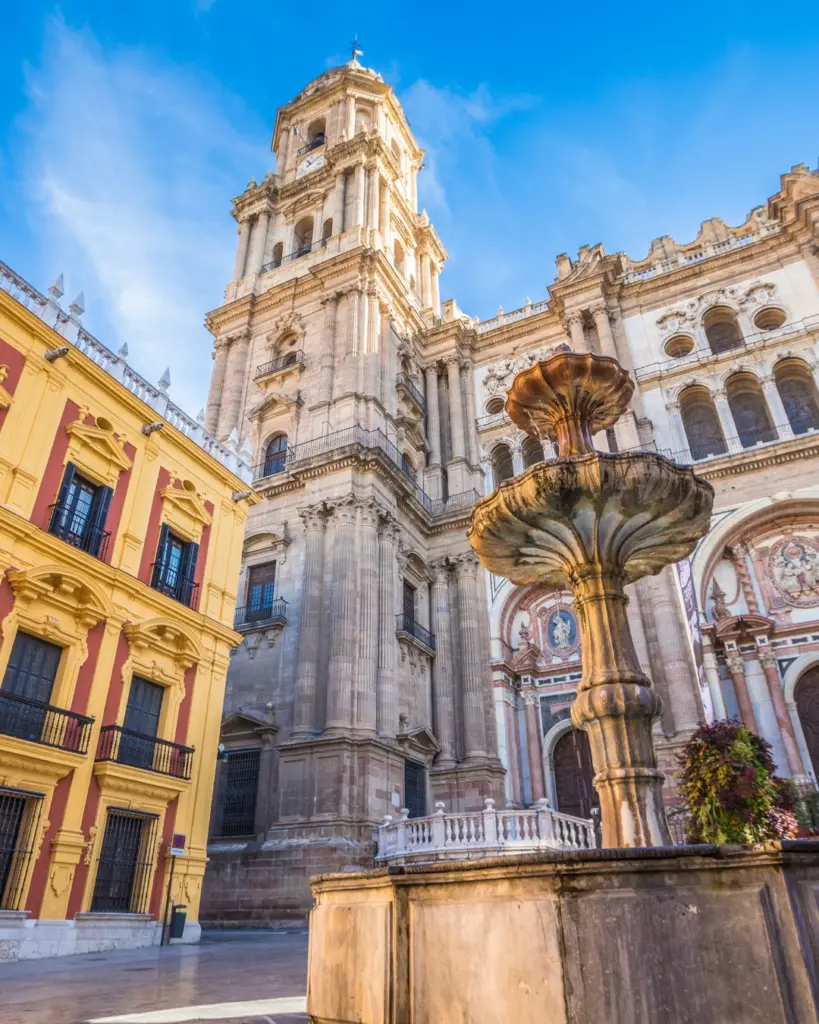
The surrounding streets are equally rewarding, lined with independent galleries, artisan boutiques and elegant cafés that invite a leisurely afternoon exploring the city’s cultural heart.
Málaga’s Standout Dining Addresses
While the museum café provides a pleasant setting for coffee or a light refreshment, Málaga’s flourishing dining scene deserves equal attention.
For contemporary fine dining, José Carlos García offers Michelin-starred cuisine overlooking Muelle Uno marina, while Kaleja has earned acclaim for its inventive tasting menus rooted in Andalusian ingredients. Those seeking a more traditional atmosphere often gravitate towards El Pimpi, one of Málaga’s best-known dining institutions, where regional specialities are served within a historic setting closely connected to the city’s artistic heritage.
Luxury Hotels Nearby
A museum visit also pairs naturally with a stay at one of Málaga’s leading luxury hotels.
Gran Hotel Miramar remains the city’s landmark five-star address, combining Belle Époque elegance with sea views, landscaped gardens and a refined spa. Palacio Solecio offers boutique sophistication within a beautifully restored 18th-century palace just moments from the museum, while Only YOU Hotel Málaga delivers contemporary luxury overlooking the port.
Vincci Selección Posada del Patio is another excellent choice for those wishing to stay within the historic centre, placing Málaga’s principal cultural attractions within easy reach.
Planning Your Visit
Allow at least two hours to appreciate both the permanent collection and the archaeological remains beneath the palace, although art enthusiasts may wish to spend considerably longer if a temporary exhibition is taking place.
Booking tickets online is advisable during weekends and holiday periods, particularly when major exhibitions are on display. Audio guides are available in multiple languages, and the museum offers excellent accessibility throughout its galleries.
Before leaving, the museum shop is well worth exploring. Alongside beautifully produced exhibition catalogues, visitors will find limited-edition prints, ceramics, design objects, jewellery and carefully curated gifts inspired by Picasso’s enduring artistic legacy.
A Cultural Highlight of Southern Spain
Museo Picasso Málaga rewards far more than a brief visit. Its remarkable collection, historic setting and central location combine to create an experience that reflects both Picasso’s extraordinary imagination and the city that shaped his early years.
Combined with Málaga’s exceptional restaurants, elegant hotels and wealth of nearby historic landmarks, the museum forms the centrepiece of a rewarding cultural itinerary on the Costa del Sol. Whether discovering Picasso’s work for the first time or returning for one of the museum’s changing exhibitions, it remains one of Spain’s most enriching cultural experiences.
Location: Palacio de Buenavista, C. San Agustín, 8, Distrito Centro, 29015 Málaga, Spain