

All products are independently selected by our editors. If you buy something, we may earn an affiliate commission.
For one week in Nevada’s Black Rock Desert, an empty expanse becomes Black Rock City, a temporary community shaped by monumental art, elaborate camps, mutant vehicles and tens of thousands of participants. Burning Man has become one of the world’s most recognisable cultural gatherings, attracting artists, entrepreneurs, designers, technologists and travellers from across the globe.
There are no headline acts booked by the organisers, corporate hospitality areas or official VIP tiers. Participants create much of the experience themselves, guided by principles that include Radical Self-reliance, Gifting, Participation and Leaving No Trace.
For those accustomed to highly considered travel, Burning Man can still be experienced with considerable comfort. Private and charter aviation, well-equipped RVs and sophisticated camp infrastructure all feature on the playa. Understanding how those comforts fit within a community built around participation is key.
The Culture Behind Burning Man
Burning Man grew from a small gathering on San Francisco’s Baker Beach into the creation of Black Rock City in Nevada. Its Ten Principles remain central to how the temporary city operates: Radical Inclusion, Gifting, Decommodification, Radical Self-reliance, Radical Self-expression, Communal Effort, Civic Responsibility, Leaving No Trace, Participation and Immediacy.
Several are particularly important for first-time visitors. Black Rock City is a decommodified environment, with little of the purchasing culture associated with major festivals. Camps and individuals instead gift experiences, food, drinks, performances, workshops and unexpected encounters.
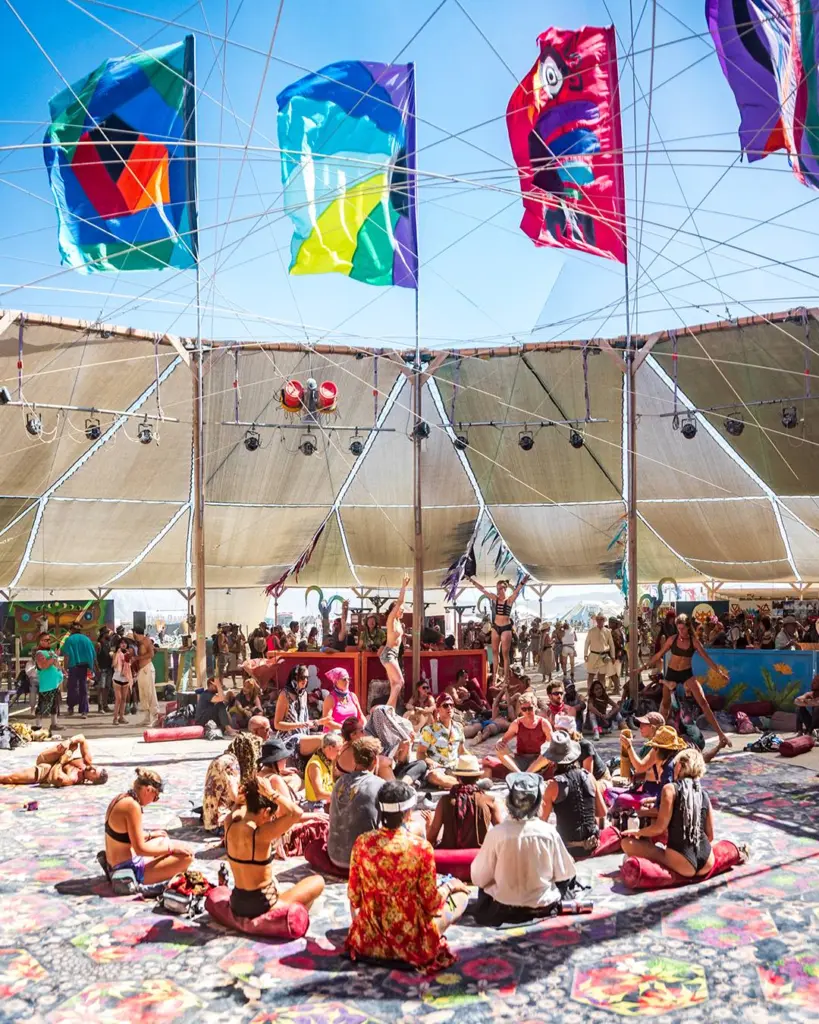
Participation carries equal weight. A well-funded camp is still expected to contribute something meaningful, whether an ambitious art project, performance space, bar, dining experience, wellness offering or another shared experience. Burning Man discourages camps where paying guests arrive to find every aspect of their stay handled for them.
This matters for visitors accustomed to private clubs and invitation-only hospitality. Money can fund exceptional infrastructure, but it does not grant higher status within Black Rock City. The most impressive camps tend to pair their resources with ambitious contributions and an engaged community.
Inside Black Rock City
Black Rock City is laid out as a vast semicircular settlement facing the open playa, with the Man at its centre. Streets curve around the city, while the desert beyond becomes an enormous gallery for installations, illuminated artworks and mutant vehicles.
The Man is the best-known landmark, culminating in its ceremonial burn, while the Temple offers a more contemplative experience. Rebuilt in a different form for each edition, it becomes a place for remembrance, reflection and personal tributes before it too is burned towards the end of the gathering.
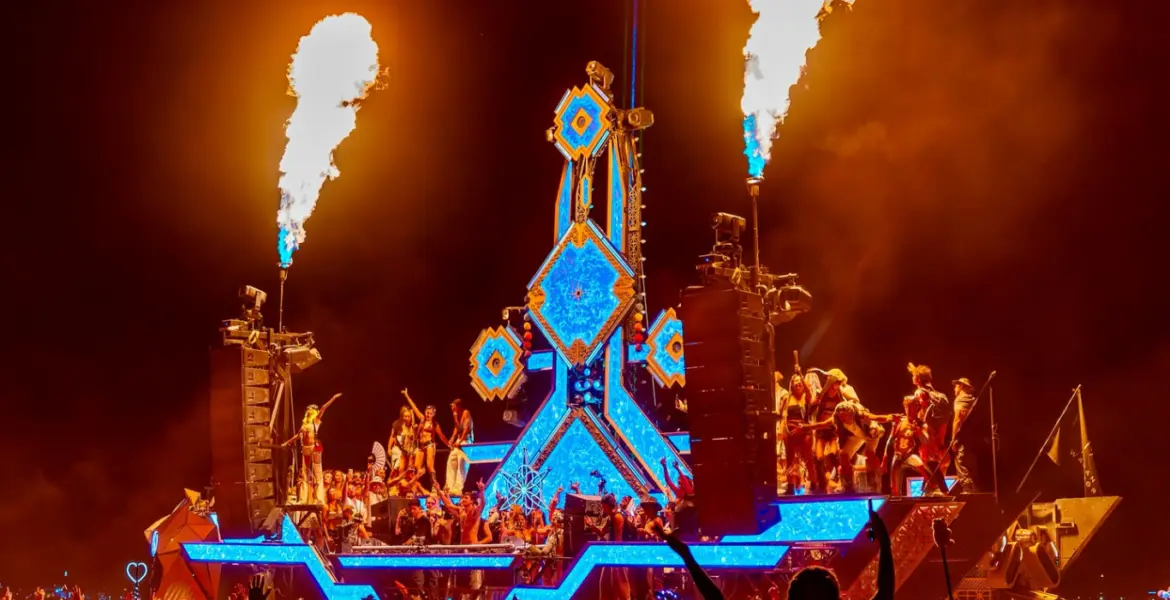
Elsewhere, the experience is deliberately unpredictable. Large-scale installations are scattered across the playa, while mutant vehicles move through the desert as mobile works of art, some carrying sound systems, performers or social spaces. Theme camps fill the city streets with cocktail bars, communal meals, workshops, dance floors, saunas, talks and performances.
Music is a significant part of Burning Man, particularly around major sound camps and art cars, but the organisers do not organise a conventional festival line-up. Memorable moments can be an elaborate sunrise set on the deep playa, an unexpected dinner, a tiny bar discovered while cycling home, or an installation encountered almost alone after dark.
Social etiquette matters throughout. Consent should be taken seriously, particularly when photographing people or entering more intimate spaces. Camps are homes as well as public-facing venues, and participation is expected. Leaving room for discovery generally works better than trying to programme every hour.
Comfort in the Black Rock Desert
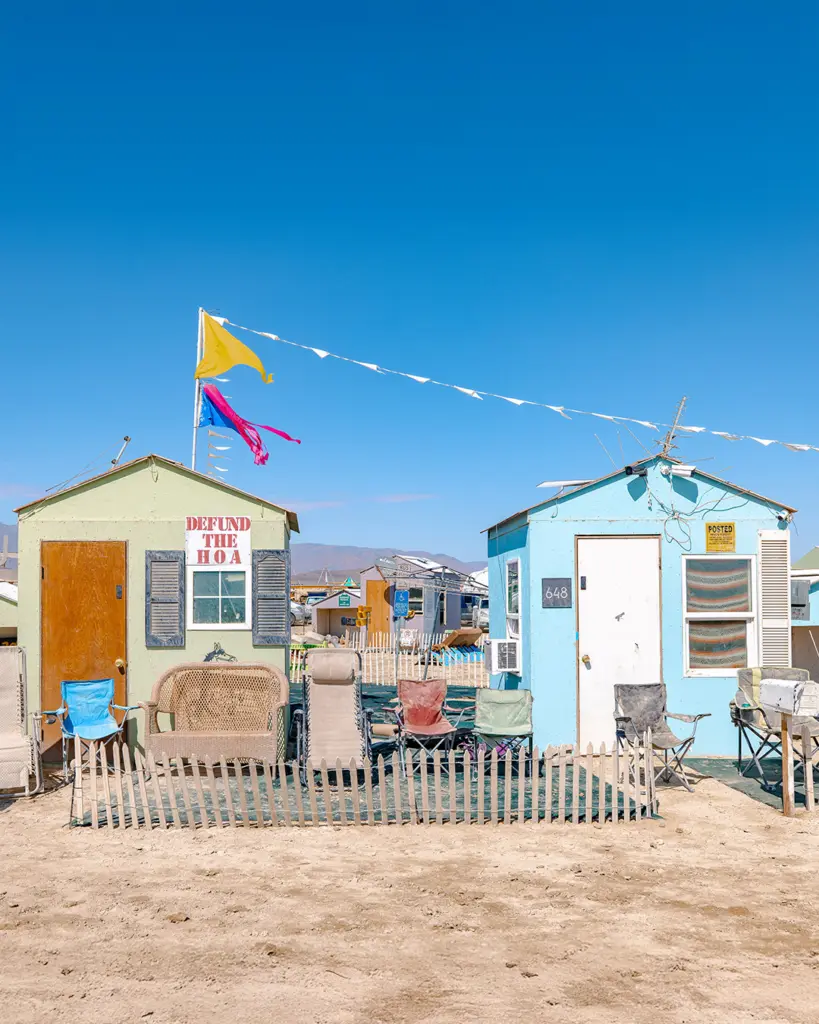
The desert is demanding enough that thoughtful infrastructure can transform a stay. For travellers accustomed to high levels of comfort, preparation makes the greatest difference.
An RV is one of the most practical options, offering a proper bed, shelter from dust and wind, refrigeration, air conditioning when power allows, and private bathroom facilities. More elaborate camps may add substantial shade structures, lounges, communal kitchens, dining areas, showers and carefully planned power, water and waste systems.
There are no conventional RV hookups in Black Rock City, so water, fuel, electricity, grey-water management and sanitation need to be planned before arrival. Burning Man operates an Outside Services programme through approved providers for certain infrastructure and services, while maintaining rules intended to prevent commercial hospitality from replacing participation.
Larger established camps can be remarkably sophisticated. Well-equipped kitchens support communal meals, generators or renewable systems power camp operations, and carefully designed shade structures provide relief during the hottest hours. Good bedding, effective cooling and a reliable shower become meaningful comforts after several days of dust and limited sleep.
Food deserves similar planning. There is no restaurant scene to rely on, despite the abundance of gifted meals and drinks. Well-organised camps often plan communal dining, with refrigeration, prepared ingredients and cooking teams. Participants should still arrive able to meet their own food and water needs.
Connectivity can be inconsistent. Some camps create their own solutions, but arranging meeting points with friends remains useful. Reliable charging for phones, lights, cameras, and other equipment should also be considered.
Ultimately, the best camp infrastructure supports both personal comfort and the wider community. A beautifully equipped base fits far better into Burning Man when its resources also help create something others can enjoy.
Dressing for Life on the Playa
Burning Man has developed a visual language of its own. Sculptural clothing, metallic fabrics, elaborate headpieces, vintage pieces, and futuristic silhouettes all appear across Black Rock City. Radical Self-expression encourages experimentation, making dressing part of the creative experience for many participants.
The desert still determines what works. Daytime temperatures can be intense, while nights can become surprisingly cold. Layers are essential, particularly for anyone staying on the playa until sunrise. Sturdy, comfortable footwear also matters given the amount of cycling and walking involved.
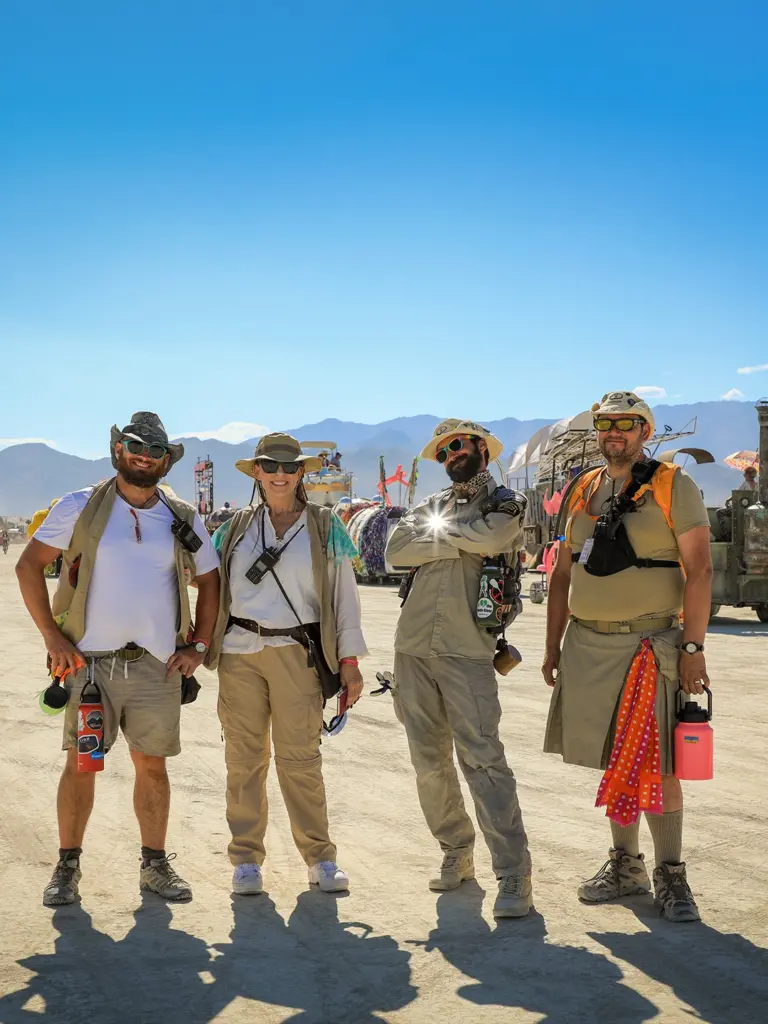
Playa dust is the defining practical challenge. Fine alkaline dust penetrates clothing, luggage, vehicles and electronics, while strong winds can turn a clear afternoon into a whiteout. Proper goggles and a well-fitting mask or face covering should always be within reach.
Visibility matters after dark too. Black Rock City is filled with bicycles, moving art cars and people travelling through areas with little conventional lighting. Clothing, bicycles and bags should carry effective lights.
For anyone bringing an extensive Burning Man wardrobe, the best approach is to build it around these practical requirements. Statement pieces still work on the playa when warmth, mobility, dust protection and visibility have been considered.
The Journey to Black Rock City
Burning Man requires careful planning given Black Rock City’s remote desert setting. Reno is the principal commercial gateway, with participants continuing by road or the official Burner Express Bus. Driving offers greater flexibility for transporting equipment, although congestion during arrival and Exodus can be considerable.
For those travelling privately, Black Rock City Municipal Airport operates during the event and accommodates approved general aviation, while charter flights provide another route to the playa. Larger equipment and camp infrastructure usually require separate logistical arrangements, making advance coordination particularly important.
Preparing for The Burn
Camp arrangements should be settled well beforehand. Joining an established camp can provide a ready-made community and substantial shared infrastructure, but members are expected to contribute through responsibilities such as set-up, cooking, hosting experiences, and dismantling the site. Open camping offers greater independence but requires more self-sufficiency.
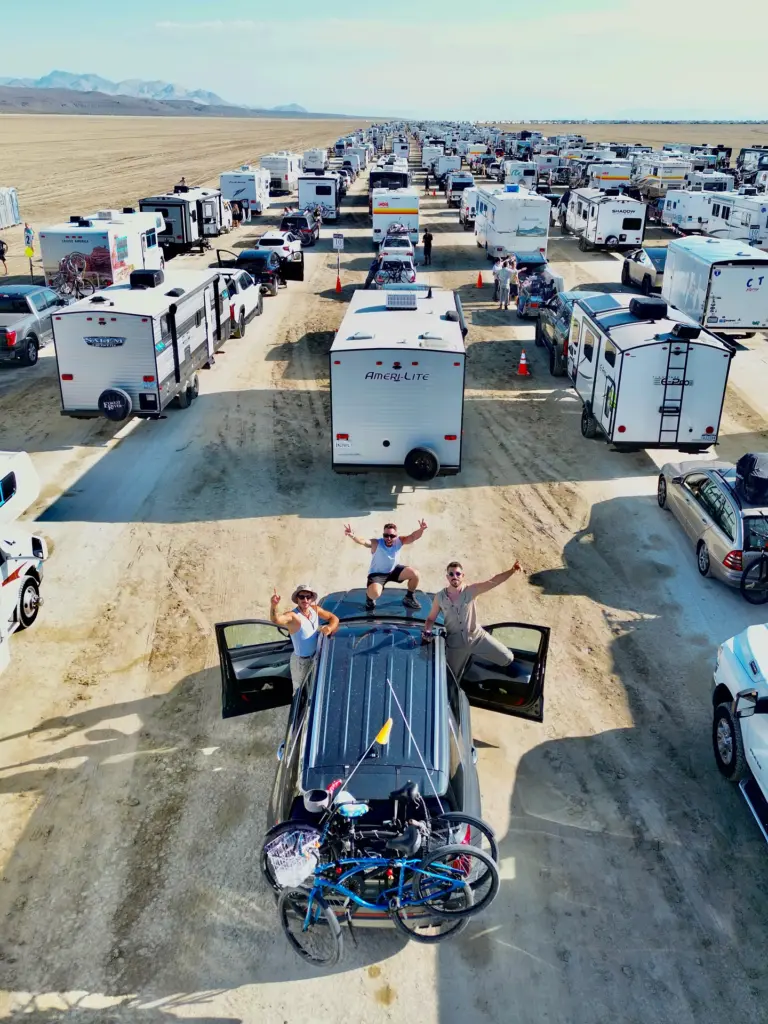
Tickets and any required vehicle passes should be secured through official channels, while the current Survival Guide is essential reading before departure as procedures can change. Once inside Black Rock City, bicycles are the principal means of getting around and particularly useful given the distances involved.
Leaving No Trace should shape preparations from the outset. Everything brought onto the playa needs an exit plan, including rubbish and camp infrastructure. Participants are expected to clear MOOP, or “Matter Out of Place”, and leave their site clean after dismantling, regardless of how elaborate the camp may be.
An Authentic Experience on the Playa
Burning Man rewards a different kind of preparation from most luxury journeys. Comfortable accommodation, intelligent logistics and substantial resources can make the Black Rock Desert easier to navigate, but participation remains central to the experience. Arrive prepared to contribute, explore and embrace some unpredictability, and Black Rock City becomes far more rewarding.