

All products are independently selected by our editors. If you buy something, we may earn an affiliate commission.
The Racquets Club at La Manga has long occupied a distinctive place within Europe’s sporting landscape. Generations of players have arrived on Murcia’s sunlit coastline for its tennis courts, padel culture, and easy Mediterranean rhythm, returning year after year for the atmosphere as much as the sport itself.
Part of its appeal lies in how naturally everything fits together. Serious tennis exists alongside long lunches. Competitive padel matches drift into late-afternoon drinks on the terrace. Families divide their days between coaching sessions, spa visits, golf tee times, and the coastline nearby. The atmosphere never feels overly polished or performative. Instead, The Racquets Club has the confidence of a place that understands exactly what it offers and why people keep returning.
A Longstanding Name in European Racquet Sports
La Manga Club has long held a strong reputation within European sport and leisure travel. Spread across a vast area near Cartagena on Spain’s Costa Cálida, the resort became widely known through its championship golf courses, football training camps, and extensive sporting facilities, but the Racquets Club has remained one of its defining pillars.
The club itself has evolved steadily over the years, adapting to changing sporting trends while maintaining its core identity. Tennis remains central, though padel’s rise across Spain has naturally reshaped the social energy of the club in recent years. Pickleball has also found a place here, adding another layer to the destination’s increasingly broad sporting appeal.
What keeps the club feeling current is the balance it strikes between professionalism and accessibility. You do not need to arrive as a tournament-level player to enjoy the experience. Equally, experienced players are unlikely to feel underserved. That flexibility gives the destination an unusually broad appeal, particularly for luxury travellers who want activity woven naturally into a holiday rather than structured around rigid schedules.
Courts, Coaching, Fitness, and the Sporting Rhythm
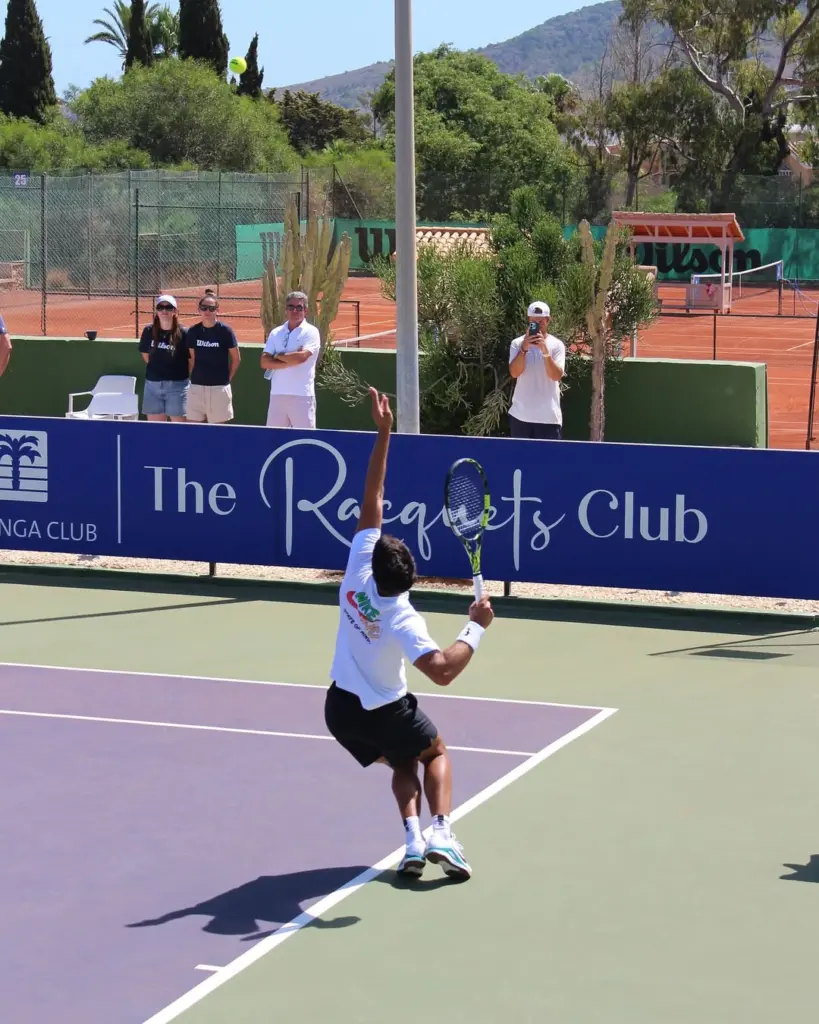
The Racquets Club’s strength lies in the scale of its facilities as much as the atmosphere around them. The wider resort describes the club as having over 40 courts in total, across tennis, padel, and pickleball. The scale is immediately clear once inside: this is a serious multi-sport centre rather than a simple hotel tennis offering.
Tennis with Proper Depth
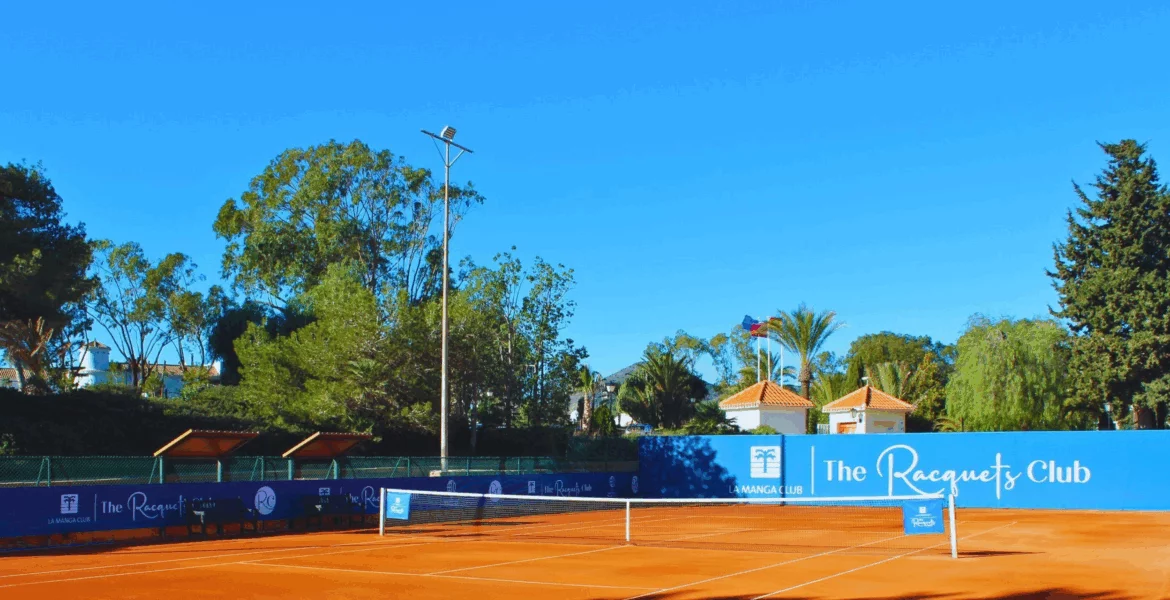
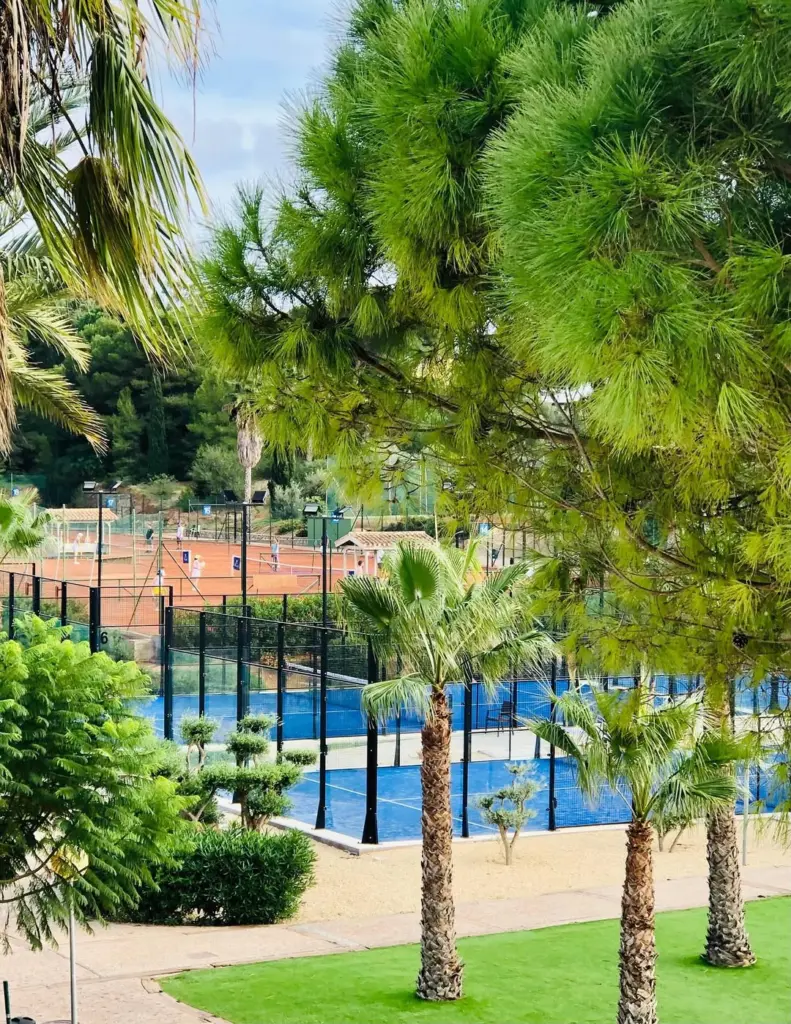
Tennis remains the club’s foundation. Clay and hard courts sit beneath rows of palms, supporting everything from casual holiday games to private coaching, adult academies, junior programmes, and structured training weeks. Early mornings often begin with academy drills and one-to-one lessons already underway before breakfast terraces start to fill.
The atmosphere softens the intensity. Coaching sessions naturally flow into coffees, lunches, and slower afternoons rather than feeling rigidly scheduled. For many guests, that balance becomes part of the appeal.
Padel, Pickleball, and Social Play
Padel now forms a major part of the club’s energy. The resort includes 10 floodlit padel courts, alongside coaching programmes, social tournaments, and academy sessions that remain busy throughout much of the year. Matches often feel sociable even when competitive, which suits the wider rhythm of La Manga Club itself.
Pickleball has also found a home here, with four dedicated courts introducing a lighter, more informal sporting option. Guests can join social sessions, book introductory lessons, or simply use it as a slower-paced alternative between tennis matches and pool afternoons.
The broader racquet-sport mix keeps the destination feeling contemporary rather than nostalgic. Visitors can arrive focused entirely on tennis and still find themselves drawn into padel tournaments or casual pickleball sessions by the end of the week.
Fitness Beyond the Courts
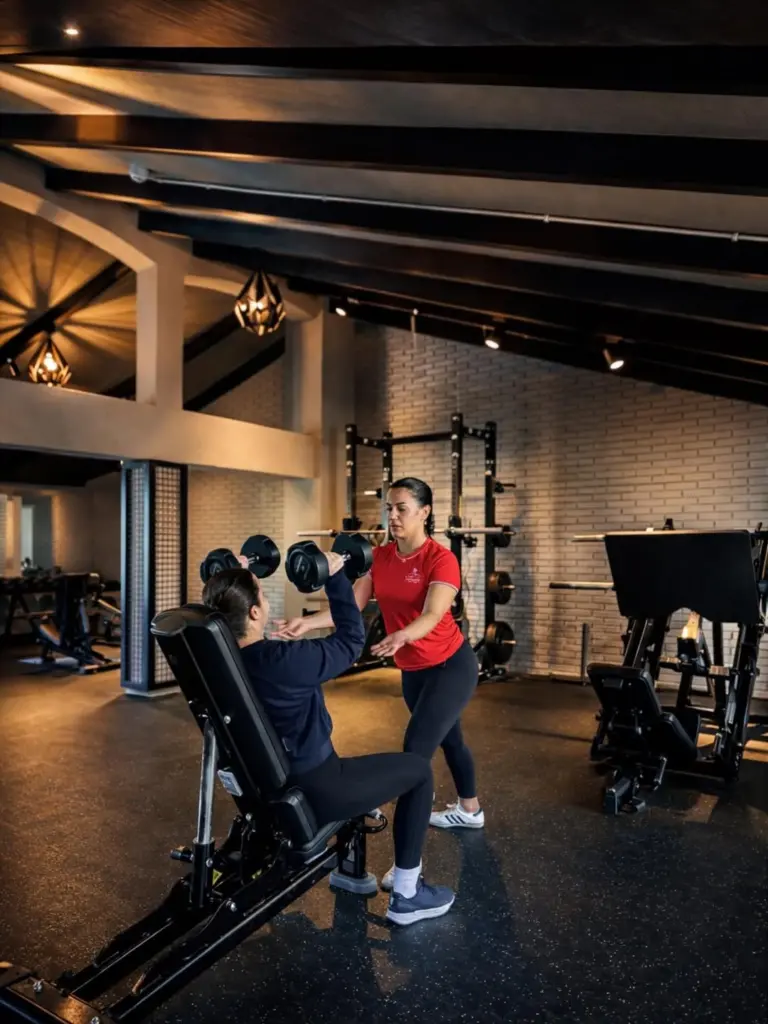
The Racquets Club’s fitness offering deserves equal attention. A large, modern gym sits within the sporting complex itself, allowing guests to move seamlessly between court sessions, strength training, recovery work, and conditioning routines throughout the day.
For longer sporting stays, that integration matters. The destination feels designed around active living rather than treating fitness as a secondary resort amenity. Warm-up areas, recovery-focused routines, personal training options, and off-court conditioning all form part of the wider experience.
A pro shop with racket stringing services, equipment, apparel, and courtside refreshments adds another layer of practicality expected from a destination with such a longstanding sporting reputation.
The Mediterranean Rhythm
What ultimately defines the sporting experience at La Manga is the pace surrounding it. Coaching sessions taper into long lunches. Afternoon matches pause for drinks in the shade. Even serious players tend to settle into the slower Mediterranean rhythm after a few days.
That atmosphere keeps the club from feeling overly performance-driven despite the quality of its facilities.
The Club Beyond Competition
What separates The Racquets Club from many dedicated sporting academies is its social atmosphere. The environment feels welcoming rather than exclusive, with regular visitors often returning season after season.
The terrace areas surrounding the courts are central to that experience. Spectators drift in and out throughout the day, coffees turning into lunches, lunches extending into evening drinks. Conversations between tables happen naturally, particularly during tournaments or academy weeks when the club becomes especially lively.
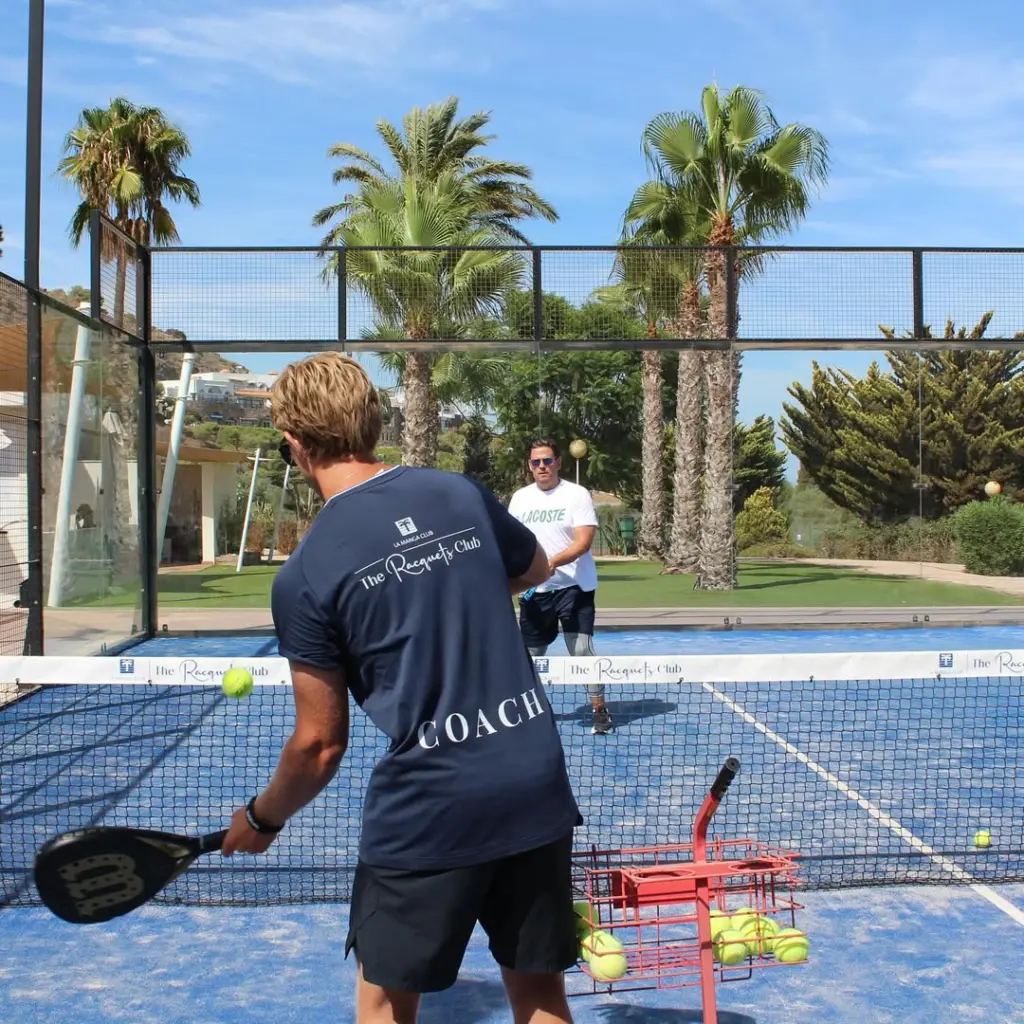
Families form a major part of the destination’s appeal. Parents can spend mornings on court while younger children attend coaching sessions nearby, and older teenagers often move independently between sport, pools, restaurants, and the resort’s wider facilities. That sense of ease matters. The resort rarely feels overly formal, despite its scale.
During peak spring and autumn months, the social energy becomes particularly noticeable. The climate during these periods is ideal for outdoor sport, and the club fills with returning guests escaping colder weather elsewhere in Europe. There is a familiarity to the atmosphere that many newer luxury sports resorts struggle to replicate.
Staying at La Manga Club
Accommodation at La Manga Club now centres around the Grand Hyatt La Manga Club Golf & Spa, which reopened following a significant refurbishment that brought a more contemporary edge to the resort while retaining its long-established sporting identity.
The Grand Hyatt Era
The hotel sits comfortably within the wider rhythm of the destination. Guests can move easily between breakfast terraces, early coaching sessions, gym workouts, spa appointments and evening dinners without needing to leave the resort grounds, which becomes especially valuable during longer sporting stays.
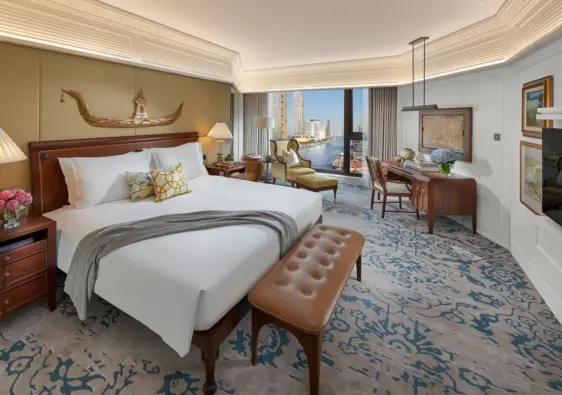
Rooms and suites lean towards understated Mediterranean styling, with soft neutral palettes, private terraces, and views stretching across golf courses, tennis facilities, and the surrounding Murcian hillsides. The atmosphere feels calm and unfussy rather than overtly theatrical, which suits the sporting character of the resort.
Villas, Suites, and Longer Sporting Stays
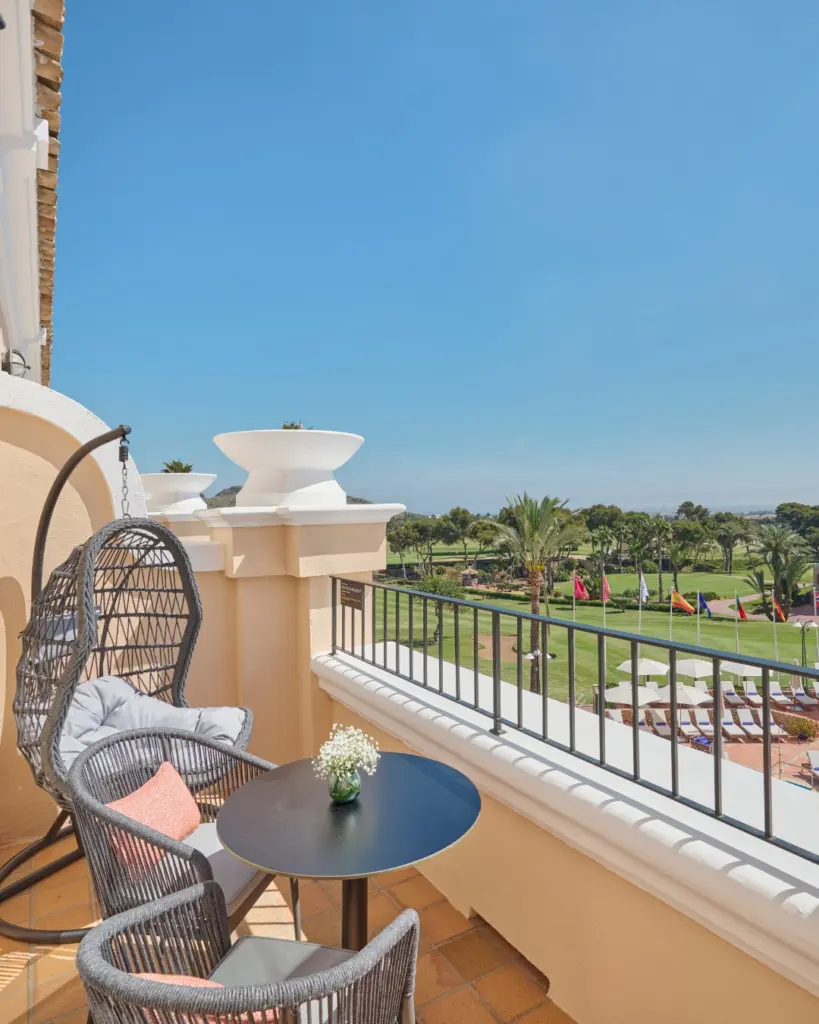
Suites naturally suit families or groups travelling for academy weeks and padel holidays, while private villas and apartments around the resort offer a more residential experience for guests staying longer.
Many villas include private pools, outdoor dining spaces, and direct access to the wider resort infrastructure, allowing guests to balance privacy with the convenience of La Manga Club’s sporting and dining facilities nearby.
The destination works particularly well for mixed groups. One guest can spend the morning on court while another heads to the spa, golf course, or coastline without the experience ever feeling disconnected.
Wellness, Recovery, and Resort Life
The wellness side of the resort feels particularly well integrated with the sporting atmosphere. The spa includes hydrotherapy facilities, thermal areas, treatment rooms and recovery-focused wellness experiences that become increasingly appealing after consecutive days on court.
Massage and muscle-recovery treatments remain especially popular among tennis and golf guests, balancing active mornings with slower afternoons. The wider resort pace also encourages downtime naturally, whether beside the pool, on a shaded terrace, or during long lunches between sessions.
Golf Beyond The Racquets Club
Golf remains another defining part of La Manga Club’s wider identity. The South Course continues to hold the strongest reputation, though the North and West courses add variety for guests, splitting time between golf and racquet sports.
That crossover between sports is part of what keeps the destination appealing to multi-generational travellers and groups with different interests. Few European resorts manage to combine golf, tennis, padel, wellness, fitness and Mediterranean leisure quite so cohesively.
Long Lunches and Relaxed Dining
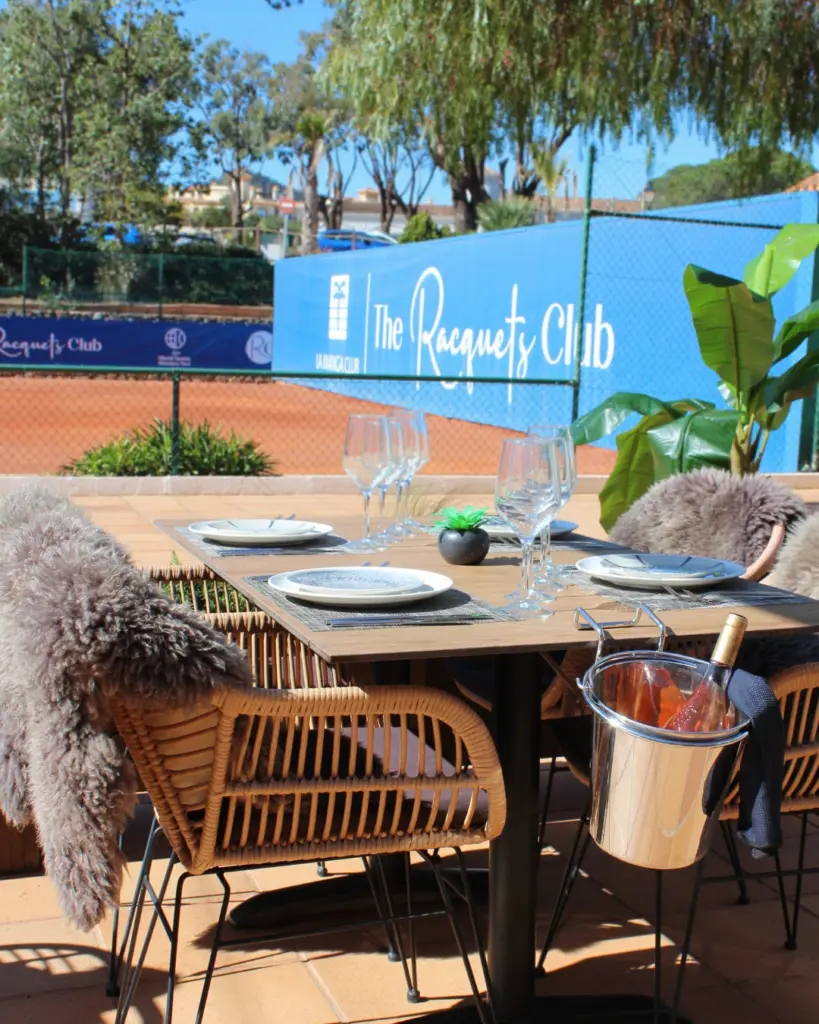
Food at La Manga Club follows the pace of the destination itself: relaxed, social, and shaped around long outdoor afternoons.
Within The Racquets Club, La Terraza acts as the club’s central meeting point throughout the day. Players drift in after coaching sessions for coffee or fresh juice before returning later for tapas, salads, grilled dishes, or afternoon drinks overlooking the courts.
During tournament weeks and busier spring periods, the terrace becomes one of the liveliest corners of the resort. The atmosphere works because it never feels overly formal. Tennis whites, padel gear and resort wear blend naturally together, particularly during late afternoons when courts begin to empty, and guests settle into slower evenings.
Across the wider resort, dining becomes more varied. Asia offers a more contemporary evening setting with Japanese and Asian-inspired dishes, while Don Luigi Trattoria remains a longstanding favourite for classic Italian dinners, particularly among families and larger groups.
Amapola introduces a more refined Mediterranean approach, with seafood, rice dishes, grilled meats, and regional flavours reflecting Murcia’s coastal setting.
Evenings naturally spill outdoors, thanks to the climate. Terraces remain busy well into the night during spring and summer, particularly after tournaments and major sporting weekends around the resort.
The resort’s location also allows for worthwhile dining excursions beyond the property itself. The nearby fishing village of Cabo de Palos is particularly popular for seafood lunches and marina-side dinners, especially for guests wanting a change of pace without venturing too far from the resort.
Beyond the Courts
Although The Racquets Club forms the centrepiece of many stays, the surrounding region gives the destination far more depth than a standard sports resort.
Murcia’s climate remains one of the destination’s greatest luxuries. Even during winter months, outdoor breakfasts, afternoon matches and terrace dinners remain entirely realistic, which explains why La Manga continues attracting northern European visitors long after summer has faded elsewhere.
The pace of life also feels noticeably slower than in many larger Mediterranean resort destinations. Days unfold gradually here, shaped more by weather and outdoor living than rigid itineraries.
Just beyond the resort, Calblanque Regional Park offers a striking contrast to the structured atmosphere of the club itself. Protected beaches, rugged walking trails and quieter stretches of coastline provide a more natural side to the region, particularly appealing after several days spent within the rhythm of training schedules and resort life.
The Mar Menor also shapes the wider experience significantly. Europe’s largest saltwater lagoon supports sailing, paddleboarding, kayaking and gentler watersports throughout much of the year, while nearby beaches offer calmer swimming conditions than parts of the open Mediterranean coastline.
Cartagena adds another dimension altogether. Roughly thirty minutes from the resort, the historic port city combines Roman ruins, elegant waterfront promenades, and an increasingly polished dining scene.
The Roman Theatre remains its best-known landmark, though the marina, old town streets and seafood restaurants often become equally memorable during slower afternoon visits away from the courts.
These surroundings help La Manga avoid the trapped feeling that affects some dedicated sporting resorts. There is enough beyond the tennis and padel culture to shape a longer stay naturally, whether that means golf, sailing, wellness, coastal walks, or simply slower afternoons under the Murcian sun.
The Luxury Wanderings Perspective
The Racquets Club at La Manga succeeds because it never feels overly engineered. The destination has grown organically over decades, shaped by returning guests, sporting culture, Mediterranean weather, and the quiet confidence of a resort that understands its strengths.
For some, the appeal lies in the quality of the tennis and padel facilities. For others, it is the ease of the lifestyle surrounding them: mornings on court, afternoons by the pool, evenings stretching across restaurant terraces under warm Murcian skies.
Very few European sporting destinations manage to balance energy and ease quite so naturally. La Manga still does.
Location: La Manga Club, 30389 Cartagena, Murcia, Spain