

All products are independently selected by our editors. If you buy something, we may earn an affiliate commission.
The Vienna Opera Ball holds its position through continuity rather than reinvention. Held each year at the Vienna State Opera on the Thursday preceding Ash Wednesday, it remains the most formal and closely observed evening of Vienna’s social calendar.
Rooted in the city’s long tradition of court balls and winter redoutes, the Opera Ball reflects a culture shaped by music, ceremony, and social discipline. With the opening of the Vienna State Opera in 1869, this tradition found its most enduring setting. Since 1877, when dancing was first permitted within the opera house, the building has been transformed annually into one of Europe’s most recognisable ballrooms.
For those drawn to heritage, ritual, and the precision of formal celebration, the Vienna Opera Ball remains a rare invitation, one that rewards preparation, discretion, and an understanding of how the night is meant to unfold.
A Tradition Restored, Not Recreated
The Opera Ball’s modern form carries a strong sense of continuity, even where history has demanded reinvention. In 1921, following the fall of the monarchy, a post-war redoute was held with proceeds benefiting the pension fund of the state theatres, preserving the link between Vienna’s performing arts and its formal social culture. By 1935, the event formally adopted the name Vienna Opera Ball, cementing its position as Austria’s most prestigious annual social gathering.
After World War II, the tradition returned with the reopening of the Vienna State Opera in 1955, followed by the first post-war Opera Ball in 1956. Since that revival, the event has been cancelled only three times, in 1991 due to the Gulf War and in 2021 and 2022 during the global pandemic. Its return in 2023 reaffirmed its place as a fixture rather than an exception within Vienna’s cultural calendar.
The Night’s Signature Choreography
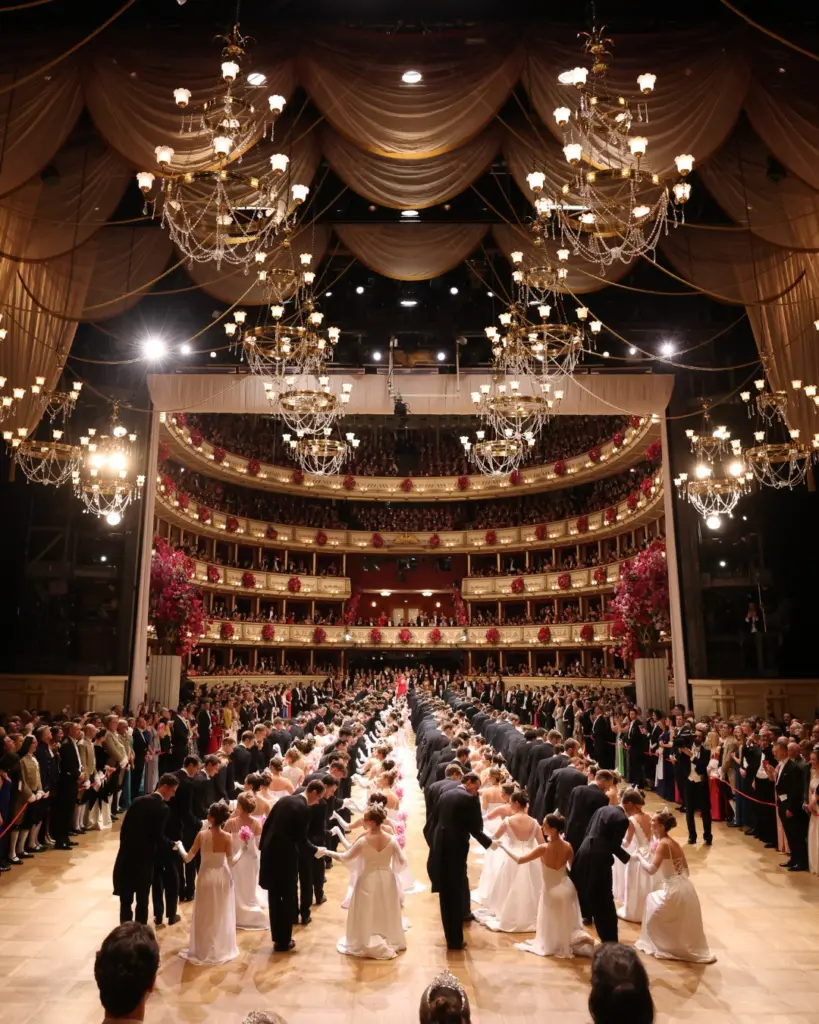
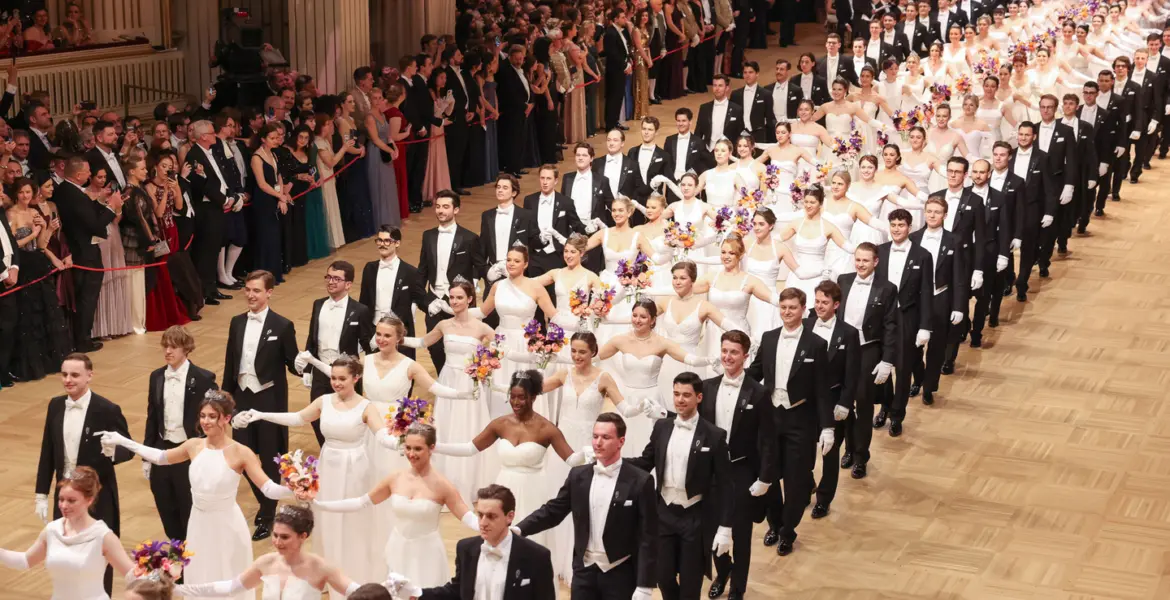
The evening opens with a precisely choreographed ceremony featuring approximately 160 debutantes and their partners, dressed in white gowns and black tailcoats. Their traditional polonaise, framed by opera and ballet performances, establishes the formal cadence of the night before the room is gradually released into motion.
As the opening gives way, the Vienna State Opera undergoes its annual transformation. Seating is reconfigured, floral installations soften the architecture, and the building becomes a ballroom in the truest sense. Dancing unfolds across multiple levels, conversations move between foyers and boxes, and the atmosphere loosens while retaining its composure.
Broadcast live beyond Austria, the evening carries an international presence, drawing cultural figures, patrons, and public guests from across Europe and beyond. Over the years, this visibility has coincided with appearances by figures from cinema and culture, from Sophia Loren and Jane Fonda to more recent guests such as Priscilla Presley.
Access, Etiquette, And The Shape Of The Evening
The Vienna Opera Ball is open to the public, though access requires intent. Tickets are issued through the official Opera Ball Office of the Vienna State Opera and typically sell out well in advance. The experience of the night varies considerably depending on how one attends. General admission allows full access to the ceremony and the dance floors, while reserved tables and boxes offer a more contained rhythm, providing a base for hosting, conversation, and pacing across the evening.
The dress code shapes how guests move through the space and how the evening holds its tone, even into the early hours. Observed properly, the formality lends cohesion to the room and establishes a shared visual language that remains consistent as the night unfolds.
Dress As Social Language
Formality at the Vienna Opera Ball is observed with remarkable consistency. Women wear floor-length evening gowns, ranging from restrained silhouettes to more elaborate couture expressions. Debutantes appear in white dresses with Swarovski tiaras, a visual signature inseparable from the event’s identity.
Men adhere to classic white-tie attire, including black tailcoats, white bow ties, wing-collar shirts, and polished patent leather shoes. The result is a rare visual harmony, lending the evening a cohesion seldom seen in modern social gatherings.
Where To Stay During Opera Ball Week
For an event of this formality, proximity and experience matter. Hotels accustomed to ball season understand the rhythm of late returns, early preparations, and the need for calm before the evening begins.
Directly within the Opera district, Hotel Sacher Wien remains the most traditional choice, long associated with Opera Ball rituals and pre-evening gatherings. Opposite the opera house, Hotel Bristol, a Luxury Collection Hotel, Vienna, offers unmatched convenience for those who value ease of movement on the night itself.
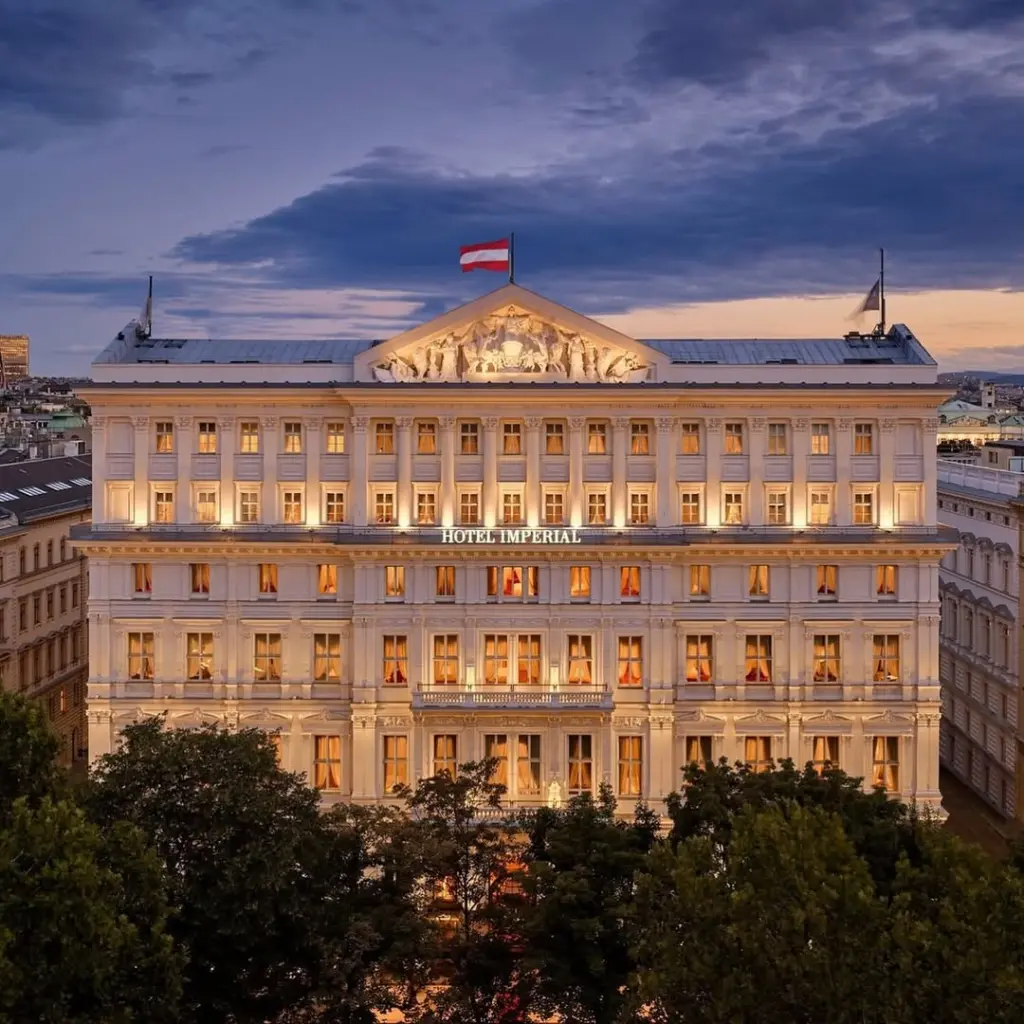
Slightly removed but firmly within Vienna’s grand hotel tradition, Hotel Imperial, a Luxury Collection Hotel, Vienna, provides Ringstrasse gravitas and a sense of established service culture. For a more contemporary expression of grand luxury, Rosewood Vienna and Park Hyatt Vienna offer refined alternatives with central positioning and a quieter reset between engagements.
Dining And The Pre-Ball Rhythm
A well-paced Opera Ball evening begins earlier than many visitors expect. Experienced attendees treat the night as a sequence rather than a single moment, allowing time for an unhurried meal before dressing.
Close to the opera, Café Sacher Wien remains a familiar pre-ball anchor, particularly for those staying nearby. For classic Viennese dining, Plachutta continues to draw those seeking something traditional and confidently executed. Guests building the ball into a longer Vienna stay often look further afield to Steirereck, where the experience becomes part of a broader culinary itinerary rather than a prelude alone.
Keeping the meal light is generally wise. The Opera Ball is a long evening, and composure tends to matter more than indulgence.
Movement, Timing, And Social Flow
Arrival logistics play a larger role than first-time attendees often anticipate. The area surrounding the opera becomes intensely busy, and the smoothest evenings tend to belong to those who build in generous margins, dress earlier than necessary, and plan their return.
As the night progresses, its rhythm remains measured. Even in the early hours, the Opera Ball rarely slips into disorder. Conversations tend to find their natural place away from the central spectacle, in quieter pockets of the building or within reserved settings where the pace of the evening can be managed with intention.
A Night That Still Belongs To Vienna
The Vienna Opera Ball endures through continuity rather than reinvention. Grounded in the performing arts, shaped by etiquette, and elevated by the architecture of the Vienna State Opera itself, it remains unmistakably Viennese.
For guests stepping inside on ball night, the reward is participation in a tradition the city continues to take seriously. It is this shared understanding of how the night should look, feel, and unfold, that keeps the Vienna Opera Ball among Europe’s most refined social occasions.