

All products are independently selected by our editors. If you buy something, we may earn an affiliate commission.
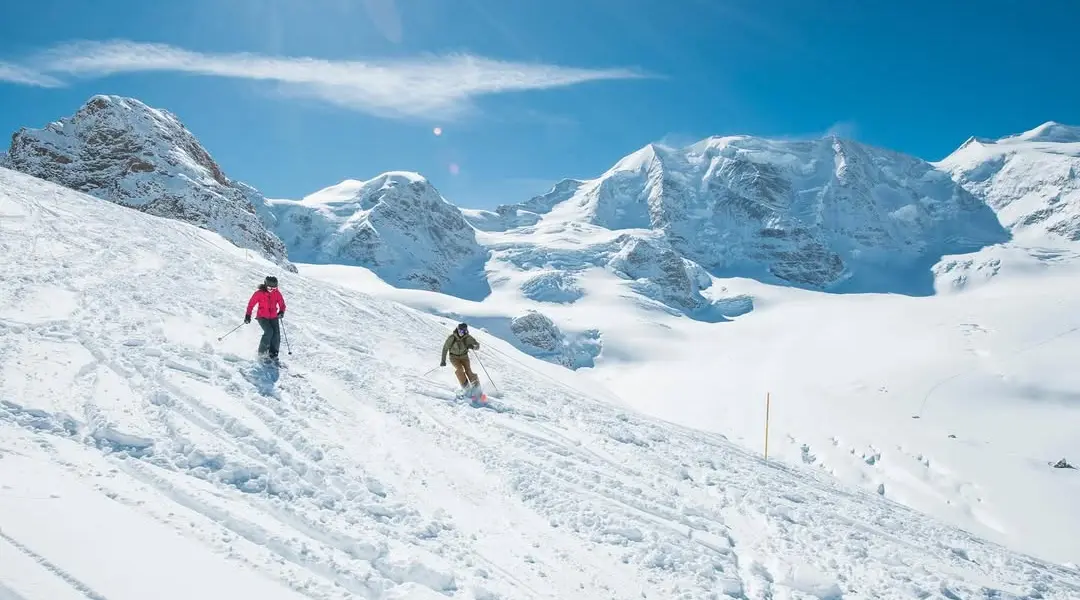
Few Alpine destinations balance sporting credibility and social sophistication as seamlessly as St. Moritz. Renowned for meticulous piste preparation, reliable snow conditions, and an unusually cultivated mountain culture, the resort continues to define elite winter travel in Europe. The ski runs in St. Moritz extend across three principal areas, Corvatsch, Corviglia–Piz Nair, and Diavolezza–Lagalb, each offering a distinct interpretation of high-altitude skiing shaped by terrain, exposure, and atmosphere.
From Corvatsch’s elevated snow security to Corviglia’s sunlit terraces and Diavolezza’s glacial scale, the ski runs in St. Moritz reward skiers who value precision, perspective, and setting. Together, they form one of the most complete and considered mountain domains in the Alps.
Corvatsch: High-Altitude Precision and Snow Reliability
Rising above the Upper Engadine to 3,303 metres, Corvatsch is the highest ski area in the canton of Graubünden and remains the resort’s most dependable option during marginal snow periods. Its network of approximately 120 kilometres of well-prepared pistes, combined with extensive freeride zones and secured snowshoe routes, makes it a natural choice for confident skiers seeking consistency and space.
Access is straightforward via the Surlej cable car, while the Furtschellas lift links the neighbouring village of Sils into the ski network. Snow quality remains reliable well into late spring, supported by altitude and favourable exposure.
A distinctive feature is Switzerland’s longest illuminated night run. Every Friday evening, a 4.2-kilometre piste descends under floodlights from the upper station, extending skiing well beyond sunset and adding a rare nocturnal dimension to the mountain’s appeal.
Notable Runs and Facilities
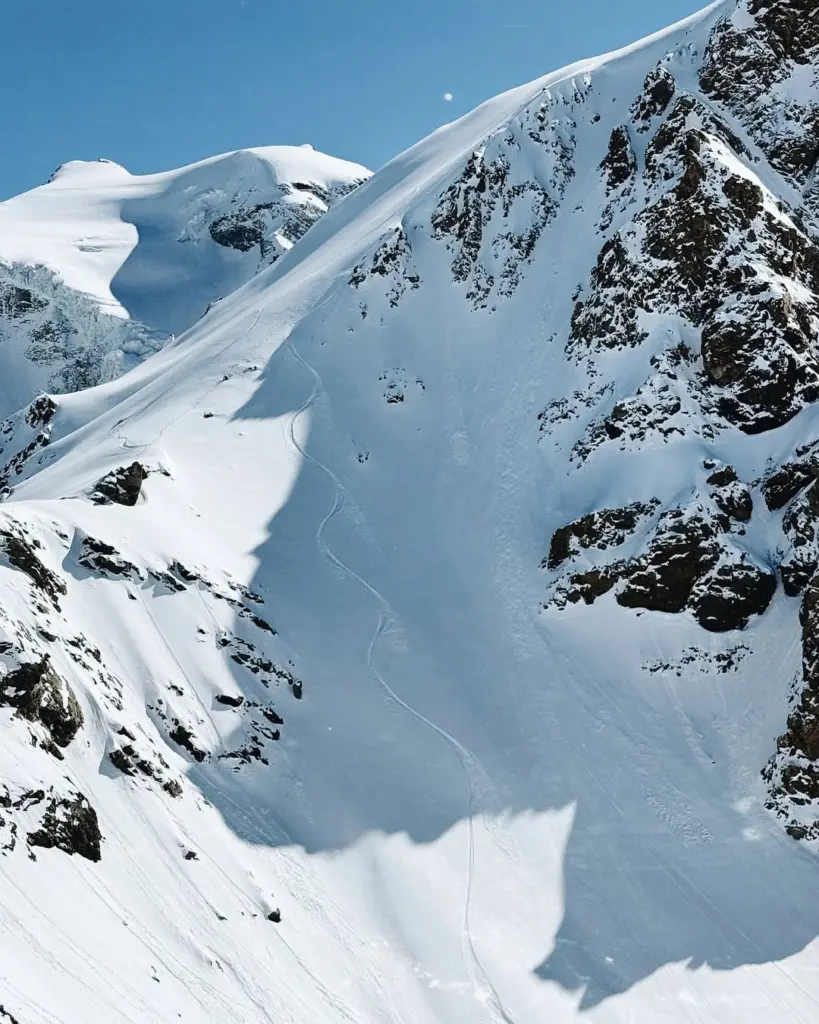
Corvatsch Park has established itself as one of the Alpine region’s leading freestyle centres, offering multiple lines, a halfpipe, and professional-grade features used for international competitions.
The Hahnensee descent provides one of the most atmospheric long runs in the region. Stretching for approximately nine kilometres, it winds down towards St. Moritz Bad, offering uninterrupted views across frozen lakes and valley slopes.
At the base, the Cristins learning area caters effectively to beginners, while Furtschellas offers wide, forgiving pistes connected by the Curtinella chairlift. Snowshoe hikers can follow the scenic Lake Trail, which traces quiet routes overlooking Lake Sils.
Dining at Altitude
Corvatsch’s culinary offering reflects the resort’s wider emphasis on quality and setting.
Restaurant 3,303, the highest dining venue in Graubünden, specialises in refined interpretations of traditional polenta dishes. It also houses the ORMA whisky distillery, recognised as the world’s highest, adding an unusual cultural dimension to the summit experience.
At Murtèl, a large sun terrace and wood-fired pizza oven make it a popular midday stop. Alpetta and La Chüdera focus on regional specialities, while Ustaria Rabgiusa and Kuhstall offer rustic interiors and hearty menus. Hahnensee Restaurant remains a favourite for its secluded atmosphere, while Hossa Bar serves as a discreet après-ski gathering point on the descent to Surlej.
Corviglia and Piz Nair: Sunlit Slopes and Social Skiing
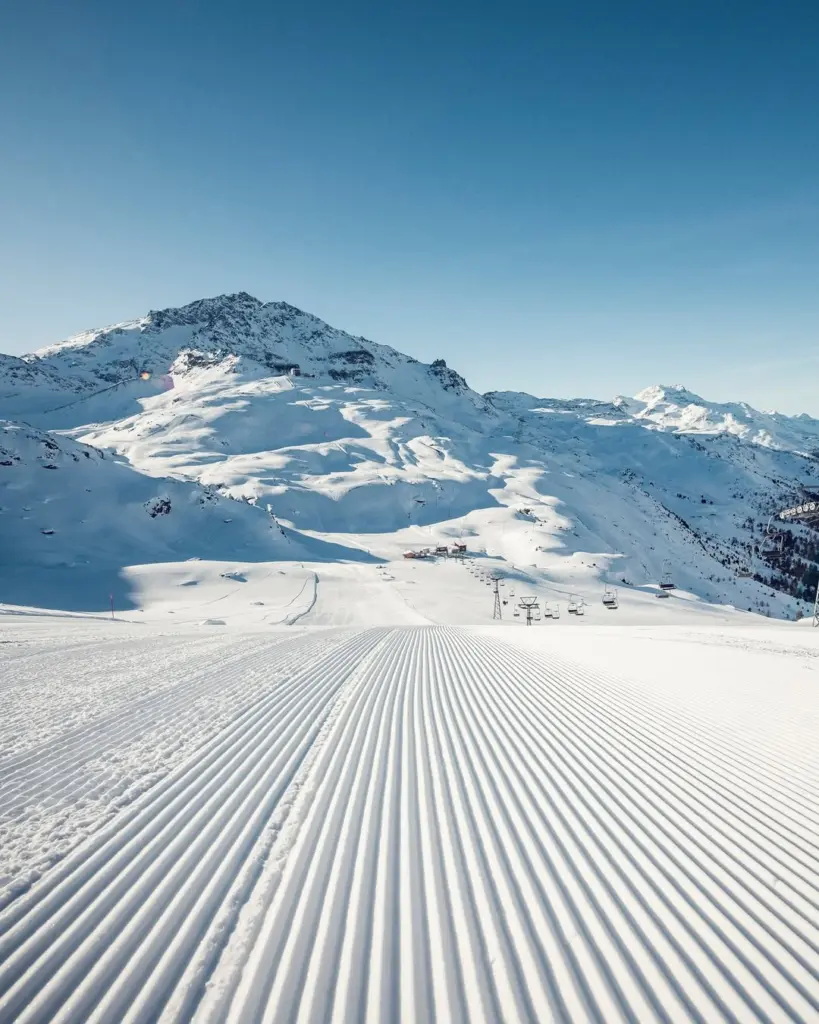
Facing south above St. Moritz Dorf, Corviglia represents the resort’s most sociable and visually striking ski area. With around 155 kilometres of groomed pistes and expansive terrace culture, it combines technical skiing with a distinctly refined rhythm.
Access is provided by the Chantarella funicular, Marguns chairlift, and Signal cable car. From Corviglia, the aerial tramway ascends to Piz Nair at 3,057 metres, opening a network of blue, red, and black runs framed by panoramic views of the Engadine lakes.
Early risers are rewarded through the White Carpet programme, which allows skiers onto freshly prepared pistes from 7:45 a.m., long before standard lift operations begin
Signature Experiences
Crowland Snowpark caters to freestyle skiers of varying abilities, offering beginner-friendly features alongside more advanced lines.
Speed Check allows visitors to measure their performance on a timed descent, generating radar images that can be downloaded after each run.
The Paradiso piste, known for its slower pace and designated rest zones, incorporates the world’s first “Yoga on Snow” concept, encouraging skiers to pause and engage with the landscape rather than rush through it.
Learning and Family Areas
Salastrains remains Corviglia’s primary beginner zone, equipped with gentle nursery slopes and conveyor belts. The Marguns sector provides further progression terrain, while adjacent villages such as Celerina offer additional learning facilities for younger skiers.
Mountain Restaurants
Dining is integral to Corviglia’s identity. Alpina Hütte and Chamanna deliver classic alpine fare, while Bergrestaurant Trutz is valued for its terrace positioning. White Marmot introduces a contemporary dining atmosphere, and Paradiso continues to anchor the après-ski scene with live music and extended lunches.
Diavolezza and Lagalb: Glacial Scale and Technical Challenge
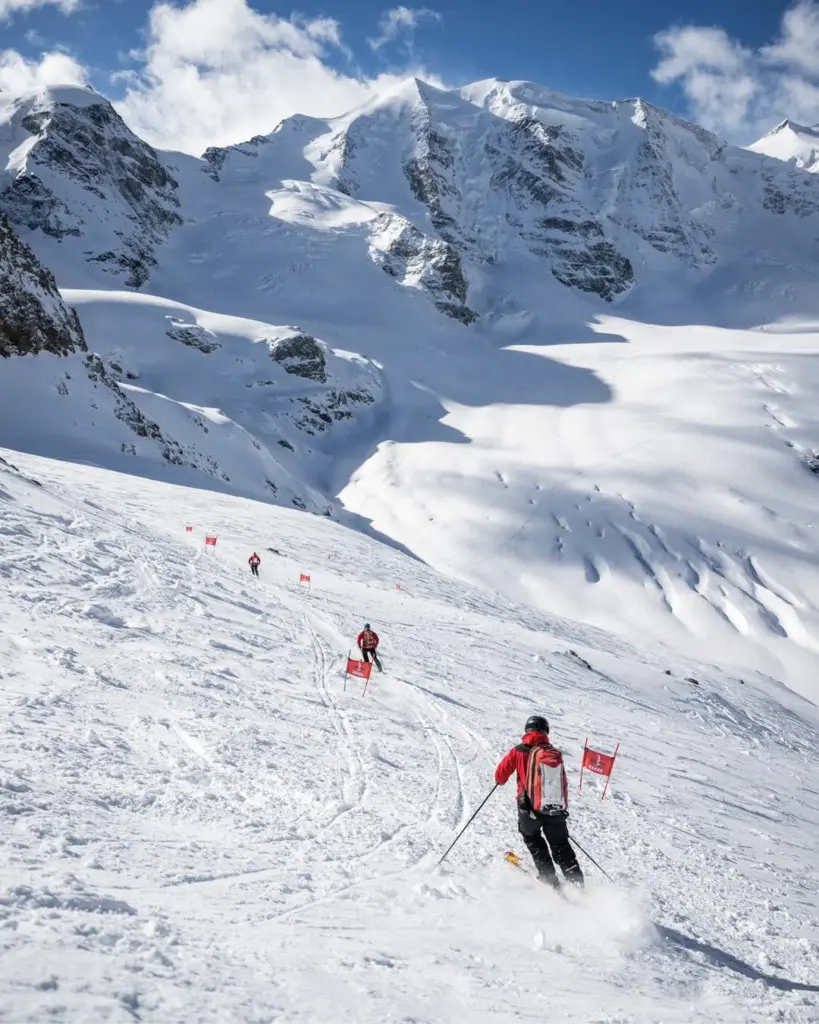
Diavolezza and Lagalb form the resort’s most dramatic and demanding sector. Set against the Bernina Massif, the area combines high-alpine scenery with some of Switzerland’s most challenging terrain.
Diavolezza’s signature route descends from the summit across the Pers and Morteratsch glaciers towards Morteratsch station. Covering approximately eight to ten kilometres, depending on conditions, it is widely regarded as the country’s longest glacier run and remains a highlight for experienced skiers.
Lagalb, positioned slightly apart, caters almost exclusively to advanced riders. Its Minor slope, with an 86 per cent gradient, is the steepest prepared run in Graubünden. Off-piste routes such as La Rösa attract freeriders during favourable snow cycles.
Endurance-focused challenges, including the Diavolezza Challenge and Club 8848, allow participants to accumulate extreme vertical distance over a single day.
Seasonal Highlights
Full-moon skiing events, marketed as Glüna Plaina, enable nocturnal descents under natural moonlight, accompanied by alpine dinners at Berghaus Diavolezza.
For 2026, the Diavolezza Glacier Race on 14 March remains one of the season’s standout sporting events, attracting both professional and amateur competitors.
Dining is centred around Berghaus Diavolezza and Bergrestaurant Lagalb, both offering traditional menus framed by high-altitude panoramas.
Muottas Muragl: Panoramic Interlude Above the Engadine
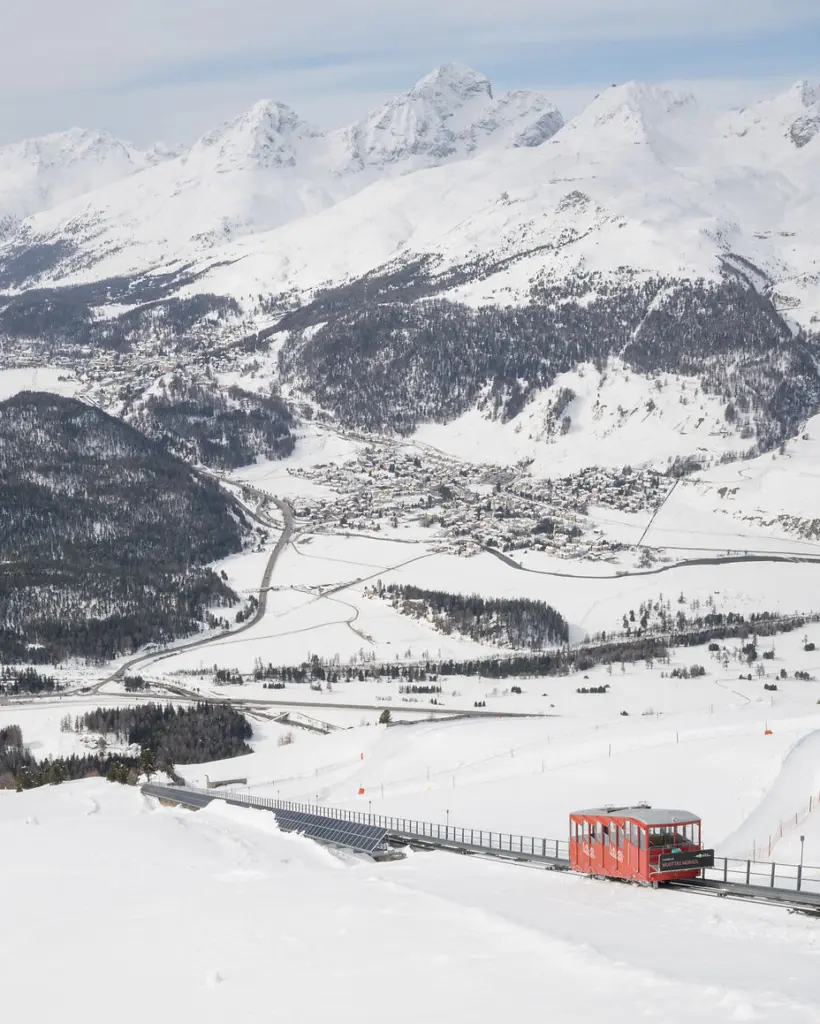
Although not a ski area in the conventional sense, Muottas Muragl plays an important role in the St. Moritz winter experience. Reached via a funicular built between 1905 and 1907, the summit sits at 2,456 metres and commands uninterrupted views across the Upper Engadine lakes and Bernina peaks.
A toboggan run descends over approximately 4.2 kilometres, dropping more than 700 metres in elevation and offering one of the region’s most atmospheric winter rides. Snowshoe routes and the Philosophers’ Path provide quieter alternatives, while the Senda d’Inspiraziun features interpretive displays and an ultra-precise sundial.
The panoramic restaurant, with its expansive terrace, attracts both skiers and non-skiers seeking a slower, contemplative alpine experience.
A Considered Approach to Alpine Excellence
St. Moritz’s strength lies in the clarity of its mountain identities. Corvatsch delivers altitude and snow reliability. Corviglia balances panoramic skiing with refined social culture. Diavolezza and Lagalb offer scale and technical ambition. Muottas Muragl provides a restorative counterpoint above the lakes.
Rather than relying on a single defining feature, the resort succeeds through the coherence of its terrain, infrastructure, and hospitality. For skiers who value preparation, perspective, and setting as much as performance, St. Moritz continues to represent one of the most complete winter destinations in the Alps.