


All products are independently selected by our editors. If you buy something, we may earn an affiliate commission.
Milan’s cultural appeal extends well beyond its best-known landmarks. On Via Palestro, the Galleria d’Arte Moderna, better known as GAM Milano, presents an important collection of nineteenth- and twentieth-century art inside the elegant Villa Reale.
Works by Giovanni Segantini, Antonio Canova and Giuseppe Pellizza da Volpedo are among its highlights, while period rooms, Neoclassical architecture and the villa’s garden give the museum much of its character.
An Art Collection with Milanese Roots
GAM’s collection began taking shape in 1861, when works from sculptor Pompeo Marchesi’s collection were donated to the Comune di Milano. Further donations followed, forming the basis of the Galleria d’Arte Moderna, established in 1903 and moved permanently to Villa Reale in 1920.
The Collezione dell’Ottocento remains central to the museum, tracing nineteenth-century Italian art through movements including Romanticism, Scapigliatura and Divisionism. Francesco Hayez, Tranquillo Cremona, Daniele Ranzoni, Giovanni Segantini and Gaetano Previati are among the artists represented.
The collection has a particularly strong connection to Milan and northern Italy, giving GAM a clear identity and a focused perspective on a period of considerable artistic change.
Inside the Villa Reale
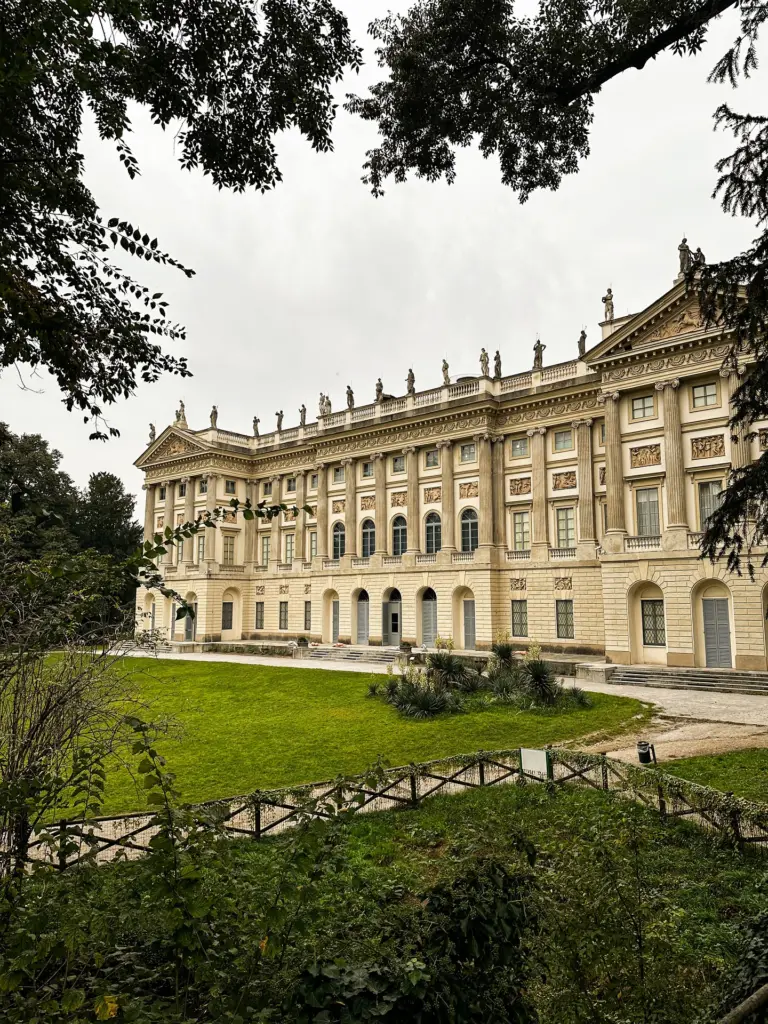
GAM has occupied Villa Reale since 1920, and the building immediately sets the tone for a visit. Also known as Villa Belgiojoso Bonaparte, the three-storey Neoclassical residence is arranged around a formal courtyard, with its more elaborate façade overlooking the garden.
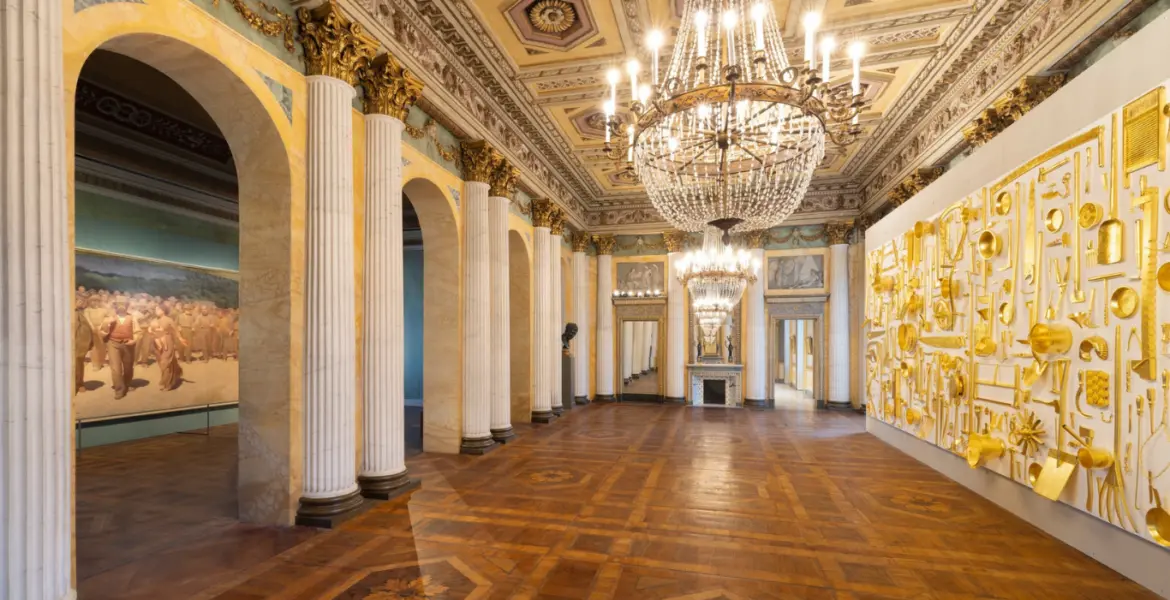
Inside, marble and wooden floors, ornamental ceilings and generously proportioned rooms retain the character of a historic residence rather than a purpose-built gallery.
Among its most distinctive spaces is the Sala del Parnaso, decorated with Andrea Appiani’s Neoclassical frescoes. The Sala da Ballo provides another reminder of the villa’s original ceremonial role. Together, these interiors make the architecture a meaningful part of the museum experience.
Highlights of the Collection
Antonio Canova’s Ebe is one of GAM’s defining works. Depicting Hebe, cupbearer to the gods in Greek mythology, the original plaster model exemplifies the elegance and precision of Canova’s Neoclassical work.
Giovanni Segantini is another important presence. His L’angelo della vita is a highlight of the museum’s representation of Divisionism and reflects his significance within Milanese artistic culture in the late nineteenth century.
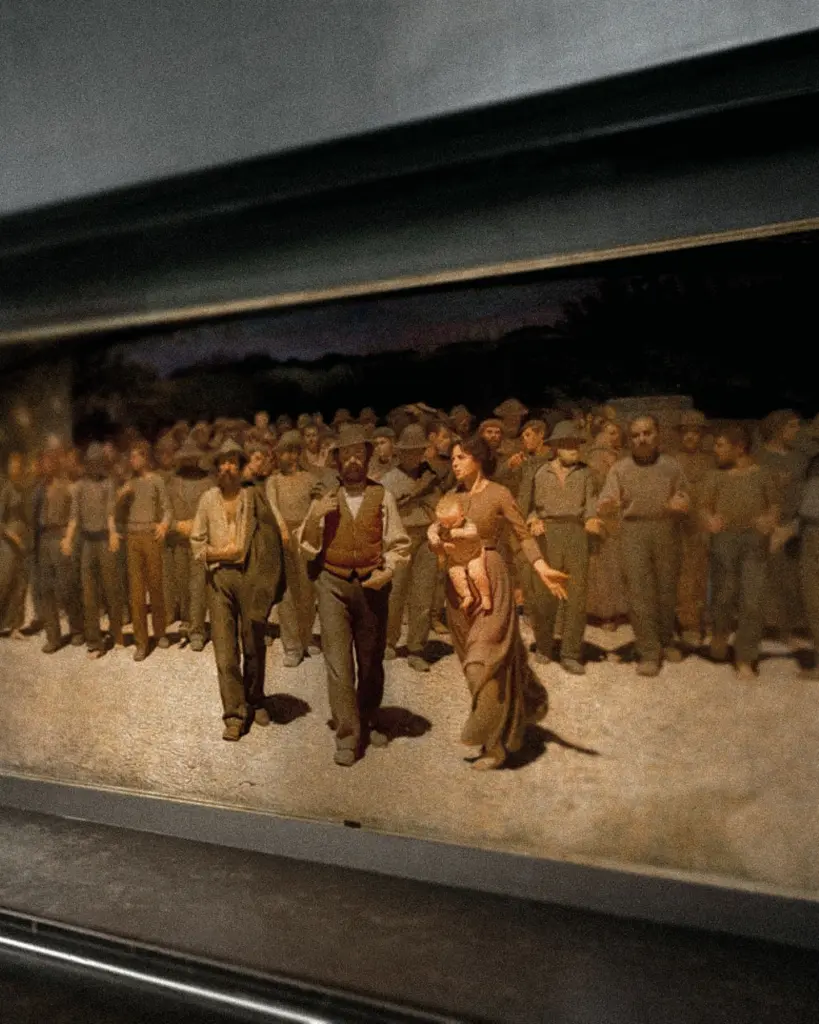
The collection’s most commanding work is Giuseppe Pellizza da Volpedo’s Il Quarto Stato. Painted between 1898 and 1901, the monumental canvas depicts workers advancing towards the viewer and is distinguished by Pellizza’s Divisionist handling of colour. Acquired for Milan’s civic collection following a public subscription, it now occupies a dedicated space on the first floor.
Other highlights include Francesco Hayez’s Ritratto della cantante Matilde Juva Branca, Medardo Rosso’s Birichino, Giorgio Morandi’s Natura morta con straccio giallo, Adolfo Wildt’s Vir temporis acti and Édouard Manet’s Ritratto di Michel Arnaud a cavallo.
GAM’s holdings extend through the Collezione Grassi and Collezione Vismara. The former includes works by Giovanni Fattori, Giuseppe De Nittis, Giovanni Boldini, Umberto Boccioni, Giacomo Balla, Manet, Van Gogh and Cézanne. The Vismara collection includes Modigliani, Matisse, Picasso, Dufy, Morandi and De Pisis. Access can be affected by gallery works, so checking which floors are open before visiting is advisable.
Temporary Exhibitions at GAM
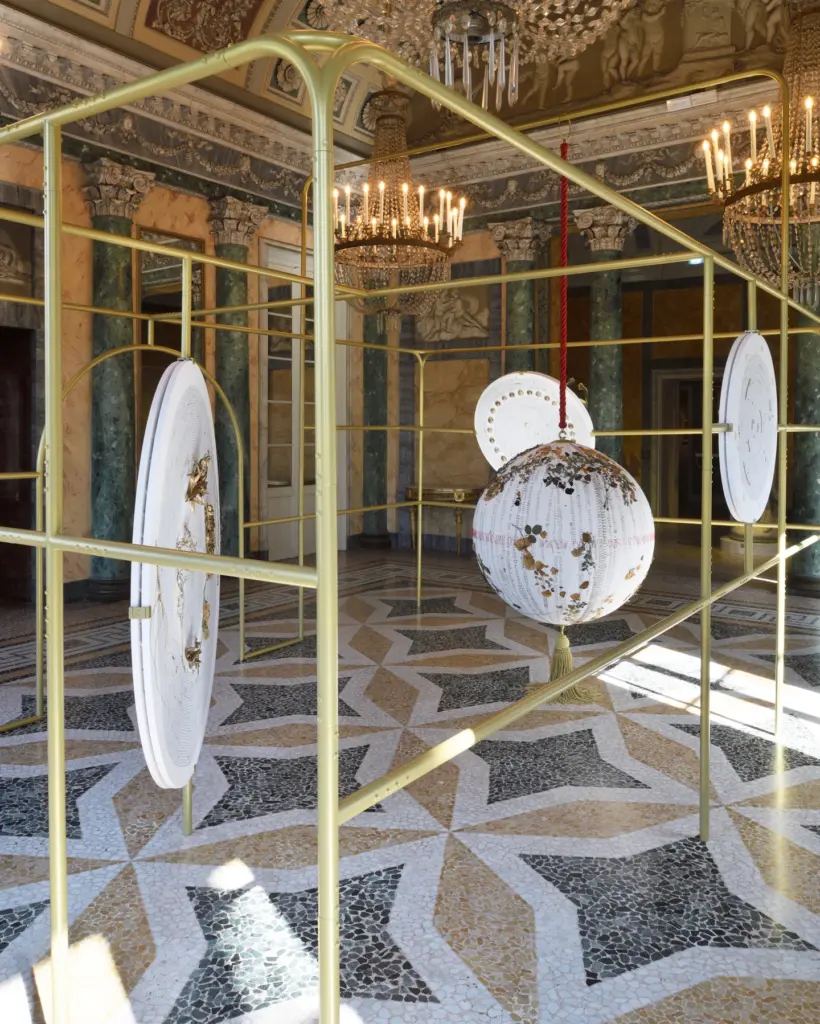
GAM complements its permanent holdings with temporary exhibitions and installations, some of which make direct use of Villa Reale’s historic interiors.
The programme may introduce contemporary work or explore artists and themes connected with the permanent collection, with site-specific projects making particularly effective use of spaces such as the Sala del Parnaso. As exhibitions change throughout the year, checking the current programme before visiting is worthwhile.
The Garden Beyond the Galleries
Behind Villa Reale, the historic garden provides a peaceful extension to the museum. Views of the greenery appear throughout the villa, strengthening the connection between its interiors and original residential setting.
Spending some time here after the galleries is worthwhile, particularly in good weather. Together, the garden and villa create a sense of place that distinguishes GAM from Milan’s larger museum spaces.
A More Intimate Side of Milan’s Art Scene
GAM’s relatively contained scale works in its favour. Its galleries can be explored without rushing, while the variety within the collection keeps the experience engaging.
Canova’s Neoclassical sculpture, Hayez’s portraiture, Segantini’s Divisionism and the scale of Il Quarto Stato create clear points of interest along the route. For travellers already familiar with Milan’s headline attractions, the museum offers a rewarding look at the city’s artistic heritage in a quieter setting.
Making the Most of a Visit
GAM Milano is located at Via Palestro 16, close to Porta Venezia and within easy reach of central Milan. The museum is generally open Tuesday to Sunday and closed on Mondays. Opening hours and gallery access should be checked before visiting, particularly when maintenance affects individual floors.
Around two hours should suit most visits, allowing time for the principal galleries, historic interiors and garden without rushing. Those with a particular interest in nineteenth-century Italian art may want to stay longer.
A Quiet Cultural Highlight in Milan
GAM Milano is particularly well suited to travellers interested in Italian art, historic interiors and Milanese cultural history. The collection is substantial without feeling overwhelming, while Villa Reale gives the experience a distinctive sense of place.
With important works including Canova’s Ebe, Segantini’s L’angelo della vita and Pellizza da Volpedo’s Il Quarto Stato, GAM makes a compelling addition to a cultural stay in Milan.
Location: Via Palestro, 16, 20121 Milano MI, Italy