


All products are independently selected by our editors. If you buy something, we may earn an affiliate commission.
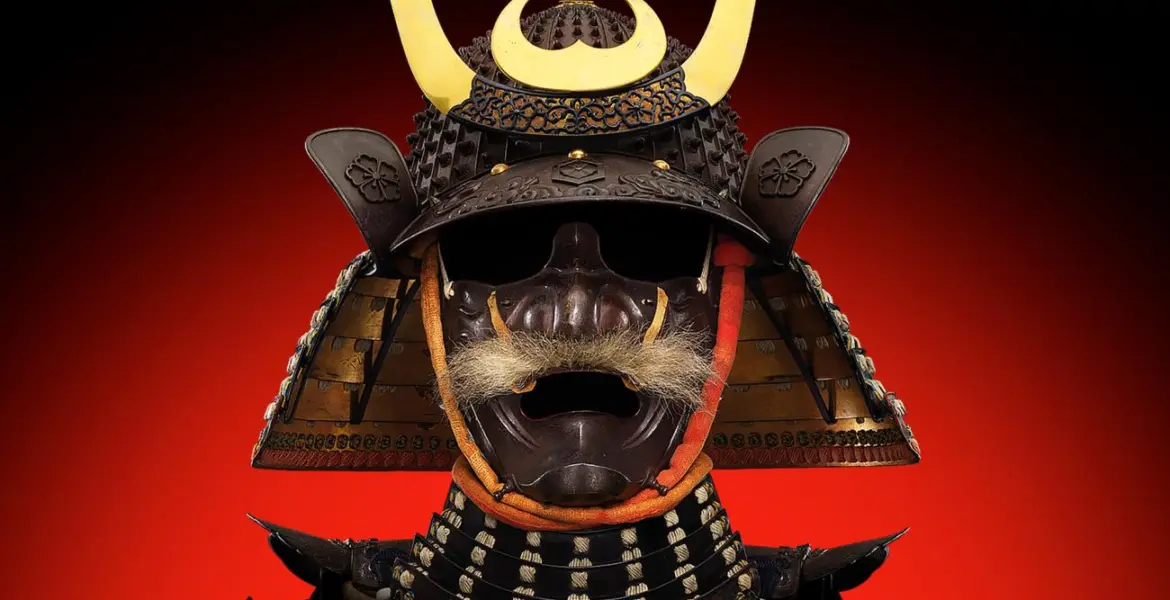
Spring in London brings a renewed rhythm to the city’s cultural calendar, and few exhibitions this season carry the same weight as Samurai at the British Museum. Running from February through early May 2026, it brings together more than a thousand years of Japanese history in a presentation that feels both rigorous and visually commanding.
Set within the Sainsbury Exhibitions Gallery, the exhibition unfolds with a sense of deliberate pacing. This is not a chronological procession of artefacts, but a carefully constructed narrative that moves between power, identity, and representation.
Reframing the Samurai: Power, Identity, and Myth
The exhibition resists the familiar shorthand of the samurai as singularly martial figures. Instead, it situates them within a broader social and political framework, tracing their transformation from regional warriors into a ruling elite who shaped governance, culture, and aesthetic values.
Particular attention is given to the Edo period, where the samurai’s role became increasingly ceremonial and administrative. Here, objects begin to shift in tone. Armour remains present, yet it is accompanied by works that reflect literacy, discipline, and cultural fluency. Calligraphy, poetry, and refined domestic objects reveal a class deeply invested in self-cultivation.
The inclusion of female samurai introduces a necessary correction. Their presence is not treated as an aside, but woven into the wider narrative, challenging the rigidity of earlier interpretations and offering a more complete view of the social fabric.
Armour as Statement: Form, Symbol, and Theatre
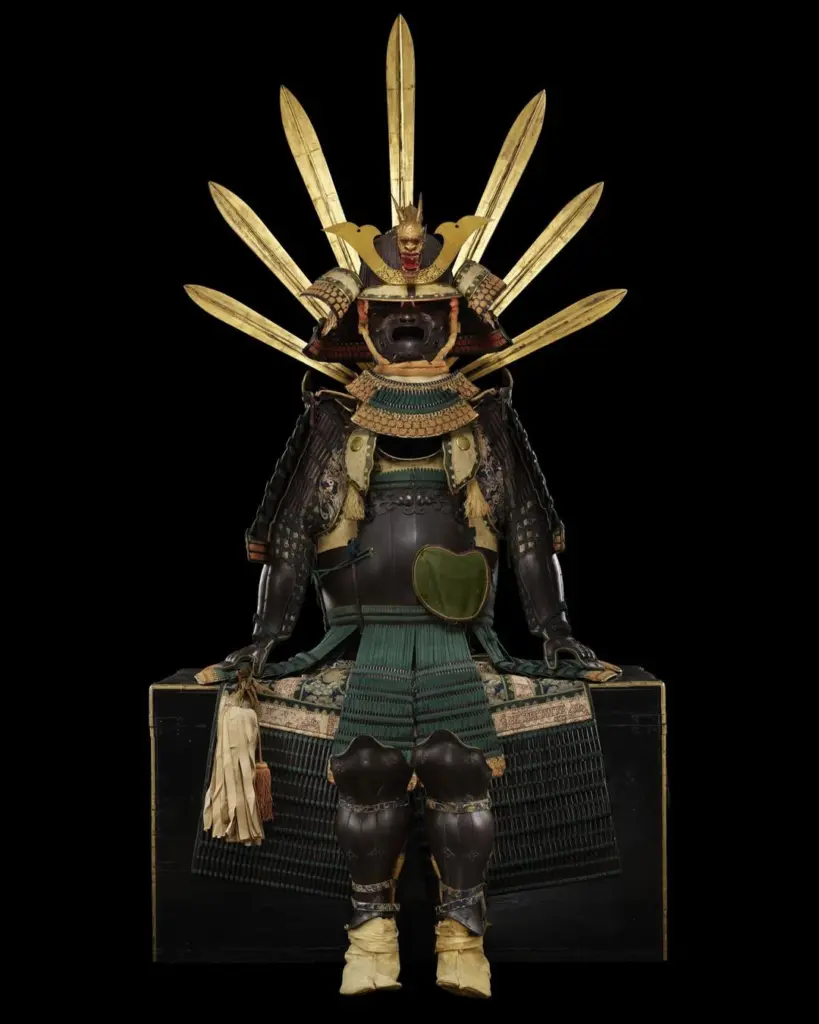
The armour displayed throughout the exhibition carries an unmistakable sense of authorship. These are not uniform constructions but highly individualised works, designed to project authority as much as to provide protection.
Kabuto helmets, in particular, command attention. Some rise into elaborate crests, their silhouettes bordering on the sculptural, while others incorporate motifs that signal lineage or allegiance. The materials themselves speak to status. Lacquered iron, silk braiding, and gilt detailing create surfaces that shift subtly under gallery lighting, revealing layers of craftsmanship on closer inspection.
What becomes apparent is the degree to which armour functioned as visual language. Every element, from colour to proportion, communicates rank, identity, and intent. The effect is closer to ceremonial dress than battlefield necessity.
The Discipline of Craft: Blades, Textiles, and Everyday Objects
Alongside the armour, the exhibition draws attention to objects that might initially seem secondary but ultimately carry equal weight.
Swords are presented with restraint, allowing their form to speak for itself. The curvature of the blade, the precision of the polish, and the understated elegance of the fittings reveal a discipline rooted in both utility and philosophy. These are objects shaped by ritual as much as by function.
Textiles introduce a different register. Richly patterned garments, including those associated with firefighting brigades, offer a glimpse into urban life and communal identity. Their bold designs, often hidden beneath outer layers, suggest a private expression of taste that contrasts with the outward codes of restraint.
Taken together, these objects build a more intimate understanding of the samurai world, one that extends well beyond the battlefield.
A Contemporary Lens: The Making of a Global Icon
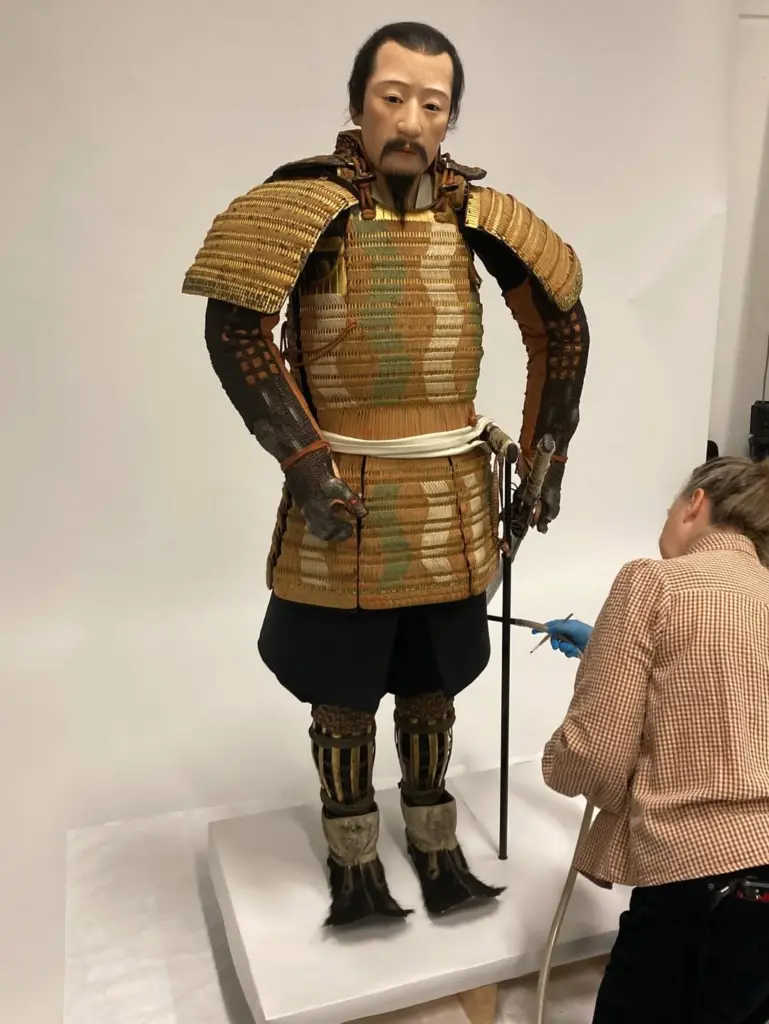
The final sections of the exhibition trace how the image of the samurai has been reinterpreted over time, moving into film, fashion, and global visual culture.
Rather than feeling detached, this transition is handled with clarity. It shows how a historical identity becomes stylised, exported, and reimagined, often stripped of its original context. The juxtaposition of historical artefacts with modern references underscores the gap between lived reality and constructed myth.
For a contemporary audience, this is where the exhibition feels most immediate. It invites reflection on how cultural narratives are formed and how they endure.
Viewing with Intention
A measured approach enhances the experience considerably. Early entry allows the exhibition to be absorbed at its intended pace, while late openings offer a quieter, more atmospheric setting.
Advance booking is advisable, particularly as the exhibition draws a steady international audience. Membership access provides a more seamless arrival, along with opportunities to attend curator-led discussions that expand on the themes explored in the galleries.
For those seeking a more tailored experience, a private guide offers valuable context, particularly when navigating the exhibition’s more nuanced sections.
Extending the Experience in London

The exhibition lends itself naturally to a considered day in the city.
A short drive brings you to Nobu London Portman Square, where Japanese culinary traditions are approached with precision and restraint. For a quieter setting, Dinings SW3 offers a more understated interpretation, blending Japanese technique with European sensibility.
Nearby, The Bloomsbury provides a well-placed base within walking distance, while Claridge’s offers a more established address for those extending their stay into Mayfair.
A Cultural Perspective That Endures
What remains after leaving the gallery is not a singular image, but a more complex understanding. The samurai emerge as figures shaped by shifting roles, aesthetic codes, and cultural expectations, rather than as fixed symbols of combat.
In that sense, the exhibition offers something rare. It replaces familiarity with nuance, and spectacle with substance, while still retaining a strong visual presence.
For a London season defined by major cultural moments, Samurai stands out for its clarity of thought and depth of presentation. It is an exhibition best approached with time, attention, and a willingness to look beyond the obvious.