

All products are independently selected by our editors. If you buy something, we may earn an affiliate commission.
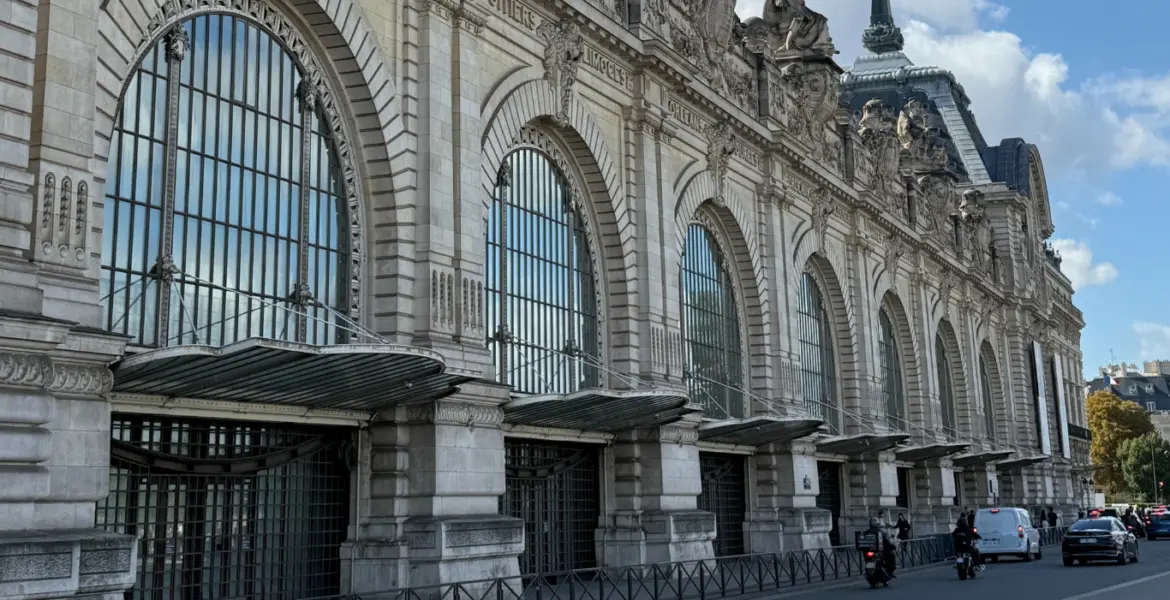
Housed within the former Gare d’Orsay on the Left Bank of the Seine, the Musée d’Orsay offers an exceptional introduction to the artistic movements that shaped modern European art. The building’s grand railway architecture provides a remarkable setting for one of the world’s most important collections of Impressionist and Post-Impressionist masterpieces.
Works by Claude Monet, Vincent van Gogh, Pierre-Auguste Renoir and Edgar Degas sit alongside an impressive collection of sculpture, photography and decorative arts. Beyond the galleries, the museum’s soaring interiors, monumental clocks and panoramic views across Paris make the experience particularly memorable.
From Railway Station to Parisian Landmark
The Musée d’Orsay occupies the former Gare d’Orsay, designed by French architect Victor Laloux for the Exposition Universelle of 1900. Originally built to welcome travellers arriving in central Paris, the station combined an elaborate Beaux-Arts façade with an innovative iron-and-glass structure.
As railway technology advanced, the station became unsuitable for longer trains, and its original purpose gradually diminished. Following several alternative uses, the building was transformed into an art museum, opening to the public in 1986.
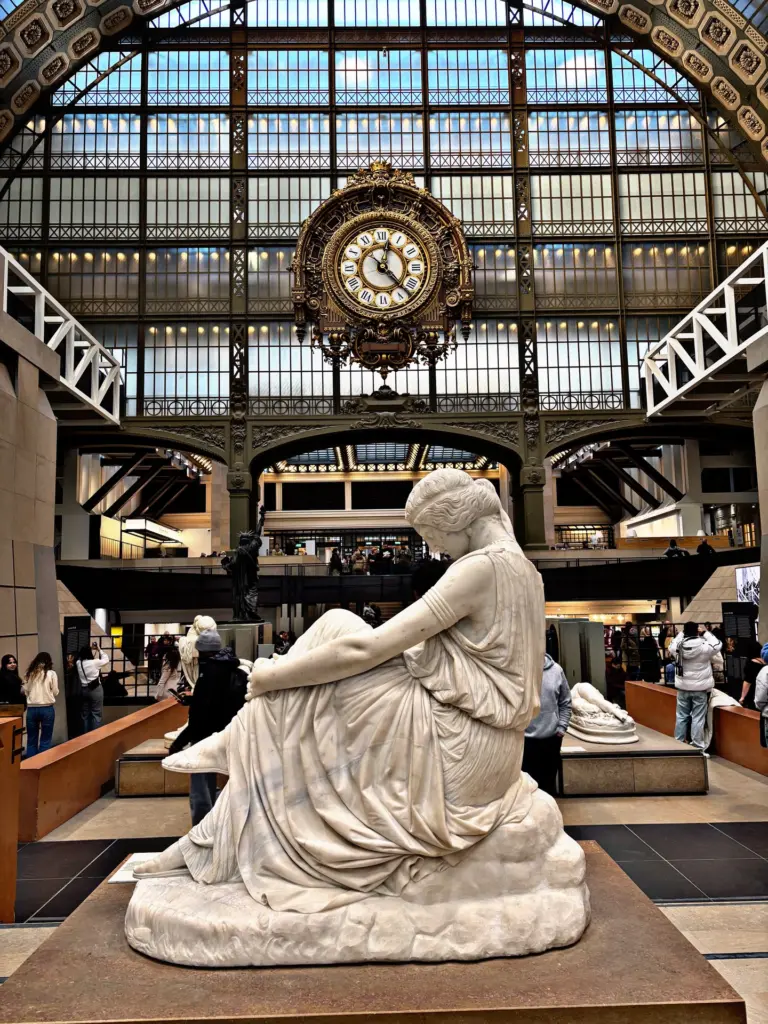
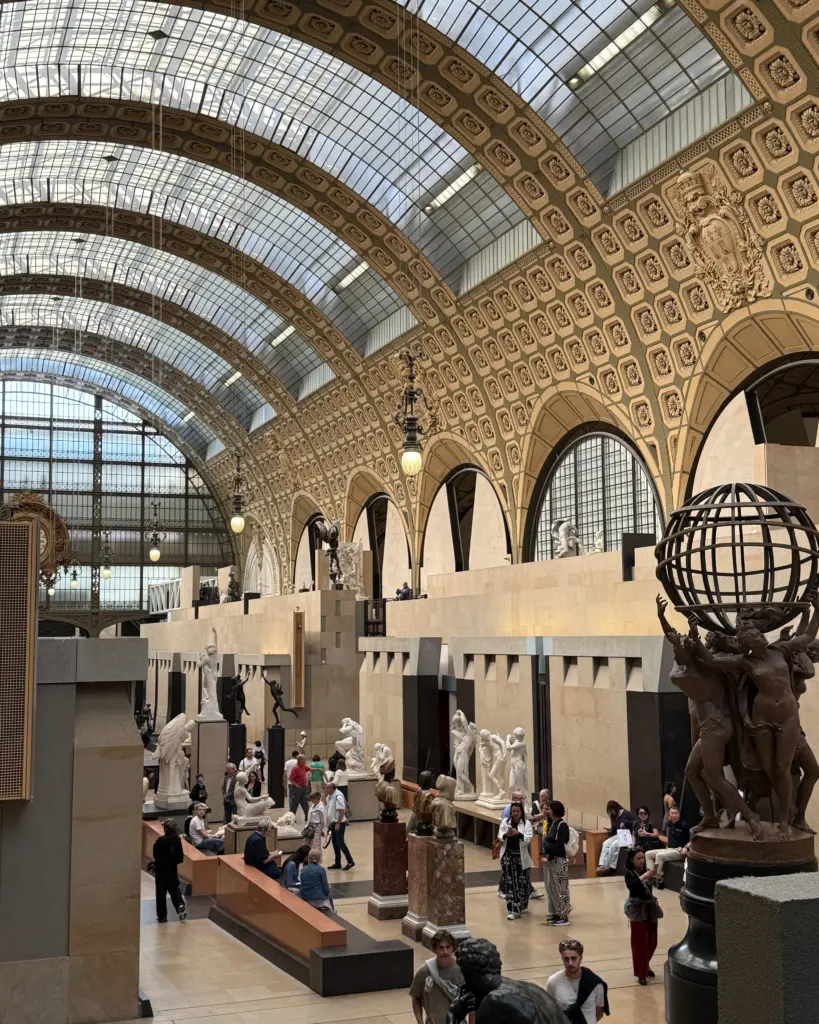
Much of its architectural character remains intact. The soaring central nave, vast arched glass roof and ornate detailing provide a striking backdrop for the collections, while the monumental clocks recall the building’s railway heritage. The conversion, with interiors designed by Italian architect Gae Aulenti, introduced exhibition spaces that complement the original structure.
Masterpieces of the Musée d’Orsay
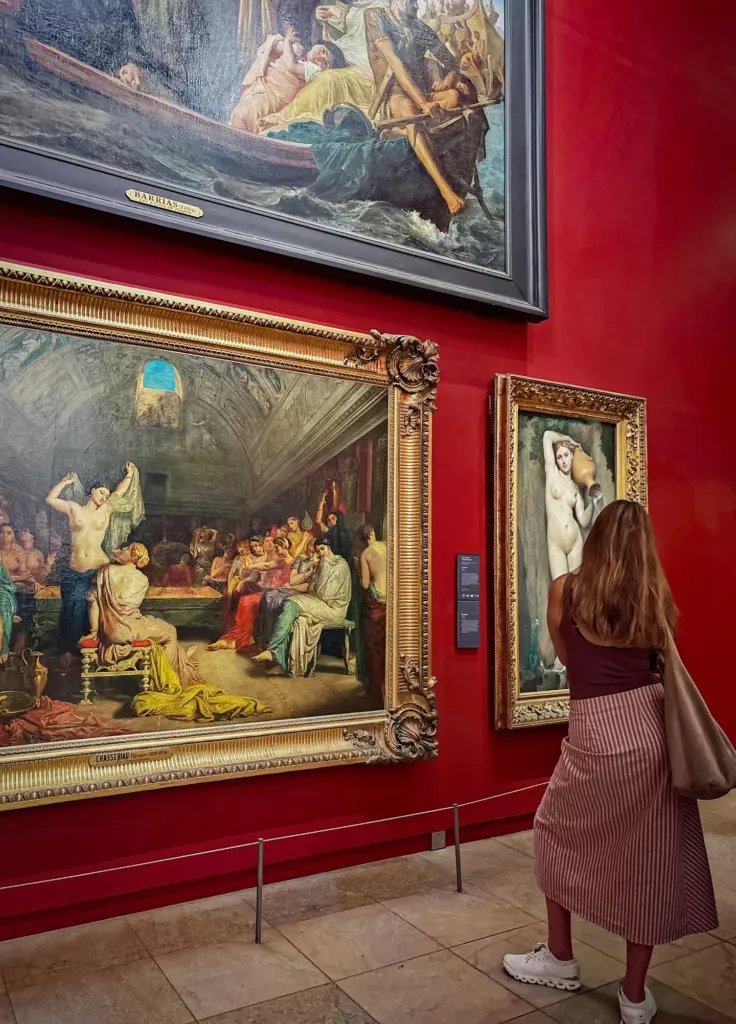
The museum’s collections cover the period from 1848 to 1914, documenting a remarkable era of artistic development. Although its Impressionist and Post-Impressionist paintings attract much of the attention, the sculpture, decorative arts and photography collections are equally rewarding.
Impressionism and Post-Impressionism
The Impressionist galleries feature works by artists who transformed the representation of light, landscapes and everyday life.
Claude Monet is particularly well represented, with paintings including Poppy Field and The Saint-Lazare Station. Pierre-Auguste Renoir’s Bal du moulin de la Galette captures a lively gathering in Montmartre, while Edgar Degas explores movement and the human figure through his paintings and sculptures, particularly his celebrated ballet dancers.
The Post-Impressionist collection includes Vincent van Gogh’s Starry Night Over the Rhône and Bedroom in Arles, alongside works by Paul Cézanne, Paul Gauguin and Georges Seurat. Together, they illustrate the increasingly experimental approaches to colour, composition and expression that emerged towards the end of the 19th century.
Celebrated Works and Artistic Movements
Beyond Impressionism, the museum houses several paintings that helped redefine modern art. Édouard Manet’s Olympia and Le Déjeuner sur l’herbe challenged artistic conventions through their unconventional treatment of traditional subjects.
Gustave Courbet’s A Burial at Ornans and The Artist’s Studio offer an introduction to Realism, while Jean-François Millet’s The Gleaners reflects the growing interest in rural life and ordinary working people.
These works provide valuable context for understanding the artistic and social changes that influenced subsequent generations of painters.
Sculpture, Decorative Arts and Photography
Sculpture occupies a prominent place throughout the museum, particularly in the central nave, where marble and bronze works are displayed beneath the station’s expansive roof. Pieces by Auguste Rodin, Camille Claudel and other influential sculptors demonstrate the period’s evolving approaches to form and expression.
The decorative arts galleries feature furniture, ceramics, glassware and objects associated with Art Nouveau and other design movements, revealing how artistic innovation extended into domestic interiors.
An important photography collection further explores the medium’s development during the 19th century, adding another dimension to the museum’s examination of the period.
Exploring the Galleries and Grand Interiors
The museum is arranged across three principal levels, with the central nave forming its main axis. Rows of sculptures beneath the vaulted glass ceiling create an impressive introduction, while the surrounding galleries lead visitors through the different artistic movements.
The upper floor houses the celebrated Impressionist galleries and some of the museum’s most recognisable architectural features. Among them is the enormous clock window overlooking the Seine and the Parisian rooftops, with views towards Montmartre and the Sacré-Cœur Basilica.
The interior arrangement by Gae Aulenti balances the original station architecture with carefully designed exhibition spaces. Pale stone, natural light and the building’s monumental proportions give the galleries a distinctive atmosphere, making the architecture an important part of the visit.
Exhibitions and Curated Experiences
Alongside its permanent collections, the Musée d’Orsay presents temporary exhibitions exploring individual artists, artistic movements and wider cultural developments. These often bring together works from international collections, offering new perspectives on familiar figures and lesser-known aspects of art history.
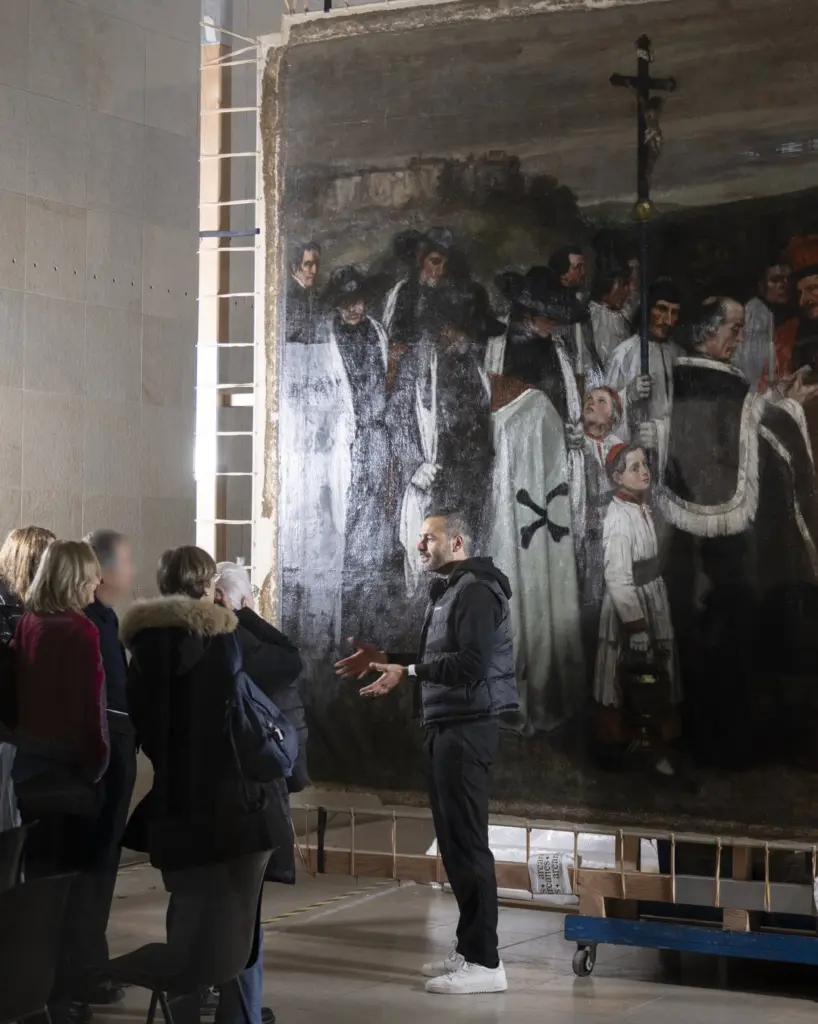
Guided tours provide a more structured introduction to the museum. Masterpieces of the Musée d’Orsay explores significant works across the collections, while themed experiences such as Color examine how artists used colour to express light, space and emotion.
Audioguides are available in several languages, including English, with commentary on more than 300 works. They offer a convenient way to explore independently while gaining additional insight into individual artists and techniques.
The museum also hosts talks, performances and cultural events, with programmes changing throughout the year.
Dining at the Musée d’Orsay
The museum offers several dining options, including a historic Belle Époque restaurant and contemporary cafés ideal for a break between galleries.
Le Restaurant
Set within the former dining room of the Gare d’Orsay hotel, Le Restaurant retains its ornate painted ceilings, gilded detailing and grand chandeliers. Chef Yann Landureau’s menu draws on classic French cuisine and seasonal ingredients, with lunch, afternoon tea and Thursday evening dining available.
Café Campana
Located on the fifth floor near the Impressionist galleries, Café Campana overlooks one of the museum’s monumental clocks. Designed by Fernando and Humberto Campana, its distinctive Art Nouveau-inspired interiors provide a colourful setting for seasonal dishes, salads and desserts.
La Terrasse and Café de la Gare
La Terrasse offers seasonal outdoor dining with views across the Seine and Parisian rooftops, serving drinks and light refreshments. Beneath the central nave, Café de la Gare provides a casual option for sandwiches, salads, pastries and desserts.
Planning a Visit to the Musée d’Orsay
The Musée d’Orsay stands on the Left Bank of the Seine, within walking distance of the Louvre, the Tuileries Garden and several of Paris’s historic neighbourhoods. Its central location makes it easy to include in a day exploring the city’s cultural attractions.
The museum generally opens Tuesday to Sunday from 9.30 am to 6 pm, with extended opening until 9.45 pm on Thursdays. Evening visits offer an appealing alternative for those who prefer exploring later in the day.
Allow approximately three hours to appreciate the principal collections, although art enthusiasts may wish to spend considerably longer. Advance booking is recommended, particularly during busy periods and major exhibitions.
Free admission is available on the first Sunday of each month with advance reservation, alongside concessions and complimentary entry for eligible visitors. As renovation work may affect visitor access, checking the museum’s latest entrance arrangements before arrival is advisable.
A Lasting Impression of Parisian Art
The Musée d’Orsay brings together an extraordinary collection of art within one of Paris’s most distinctive historic buildings. Its Impressionist masterpieces, sculpture galleries and beautifully preserved interiors offer a rewarding experience for visitors with an interest in art, architecture and French cultural history.
With its remarkable setting and collections spanning some of the most influential movements in modern art, the Musée d’Orsay remains an essential part of Paris’s cultural landscape.
Location: Esplanade Valéry Giscard d’Estaing, 75007 Paris, France