

All products are independently selected by our editors. If you buy something, we may earn an affiliate commission.
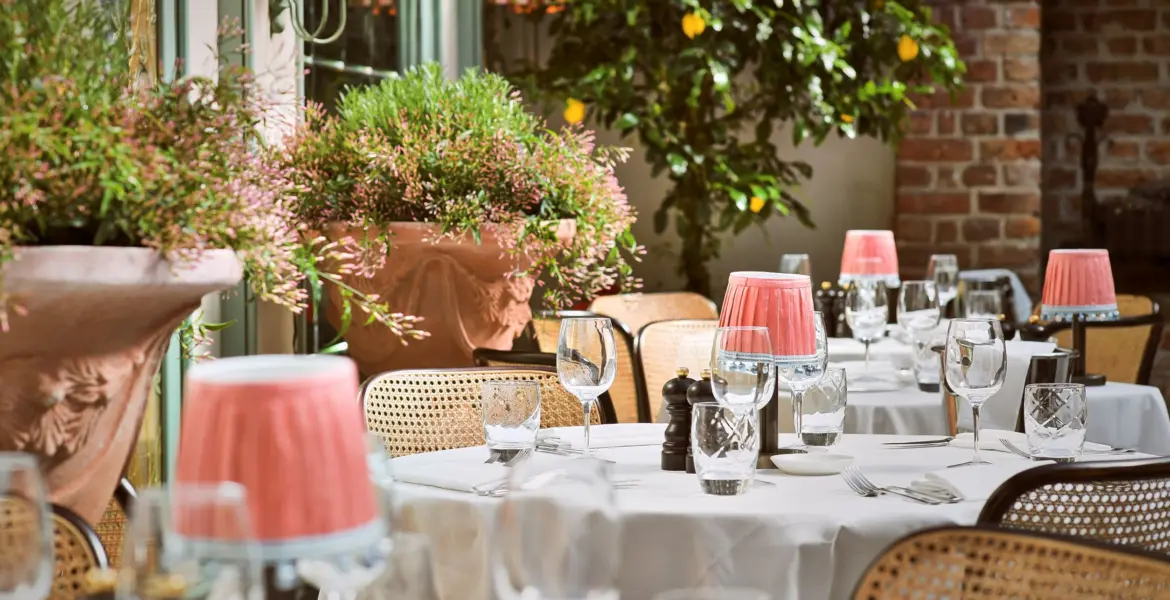
On a quiet stretch of Draycott Avenue, Daphne’s has spent decades remaining genuinely relevant to the people who live around it. Positioned between Chelsea and South Kensington, the restaurant still feels comfortably in step with modern London dining, thanks to its polished Italian cooking, warm hospitality, and interiors that encourage long, unhurried evenings.
Even on an ordinary weekday evening, there is a sense that people arrive here with purpose. Some are regulars who know exactly where they like to sit. Others are drifting in after shopping around Brompton Cross or meeting friends for late dinners over Barolo and pasta. Few restaurants in this part of London manage to feel simultaneously established, fashionable, and genuinely comfortable. Daphne’s has long understood that balance.
A Chelsea Institution With Real Staying Power
Daphne’s first opened in 1964 under the direction of theatre agent Daphne Rye, whose connections to London’s creative and social circles quickly helped shape the restaurant’s reputation. Over the decades, it became one of Chelsea’s enduring dining addresses, attracting everyone from residents to visiting actors, fashion figures, and international regulars.
What has allowed Daphne’s to survive while so many once-fashionable dining rooms have faded is its refusal to chase trends too aggressively. The restaurant has evolved, certainly, particularly following its redesign by Martin Brudnizki Design Studio in 2014, but the essence remains intact. Italian hospitality still sits at the centre of the experience, and the atmosphere retains the sort of easy familiarity that many newer London openings struggle to create.
There is also something distinctly Chelsea about Daphne’s ability to feel glamorous without becoming performative. The crowd is stylish, the room immaculate, and the wine cellar extensive, yet the restaurant rarely tips into stiffness. That enduring ease is part of its appeal.
The Setting Behind the Green Façade
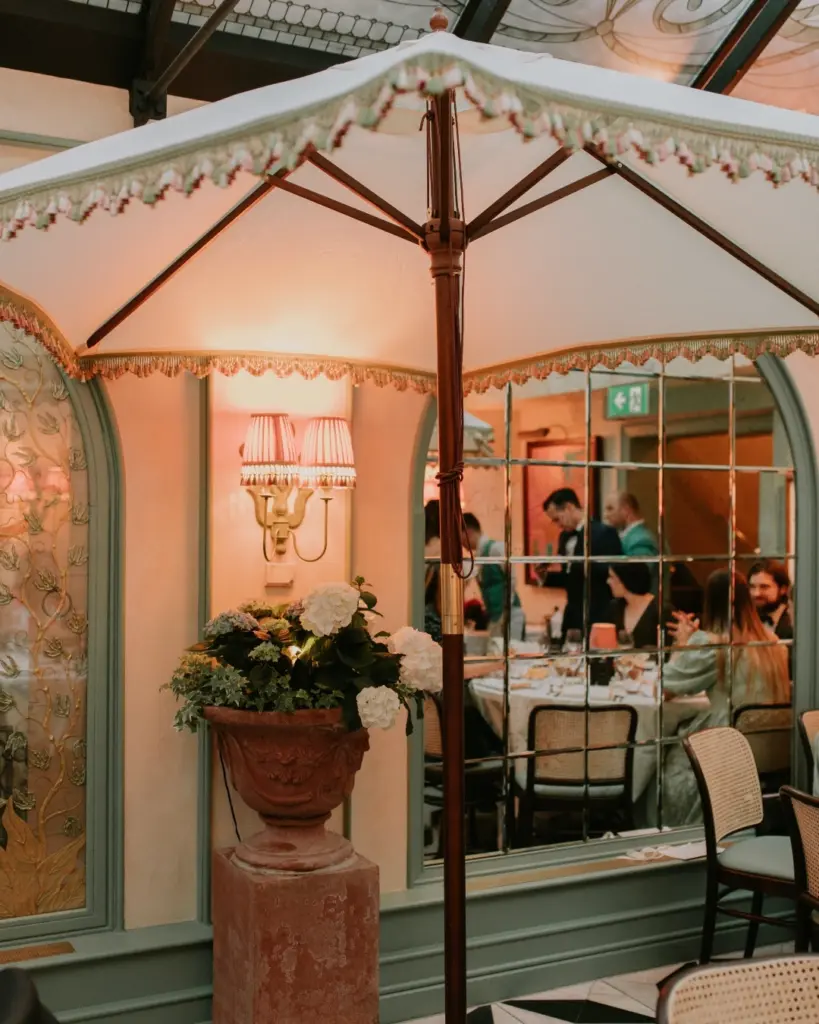
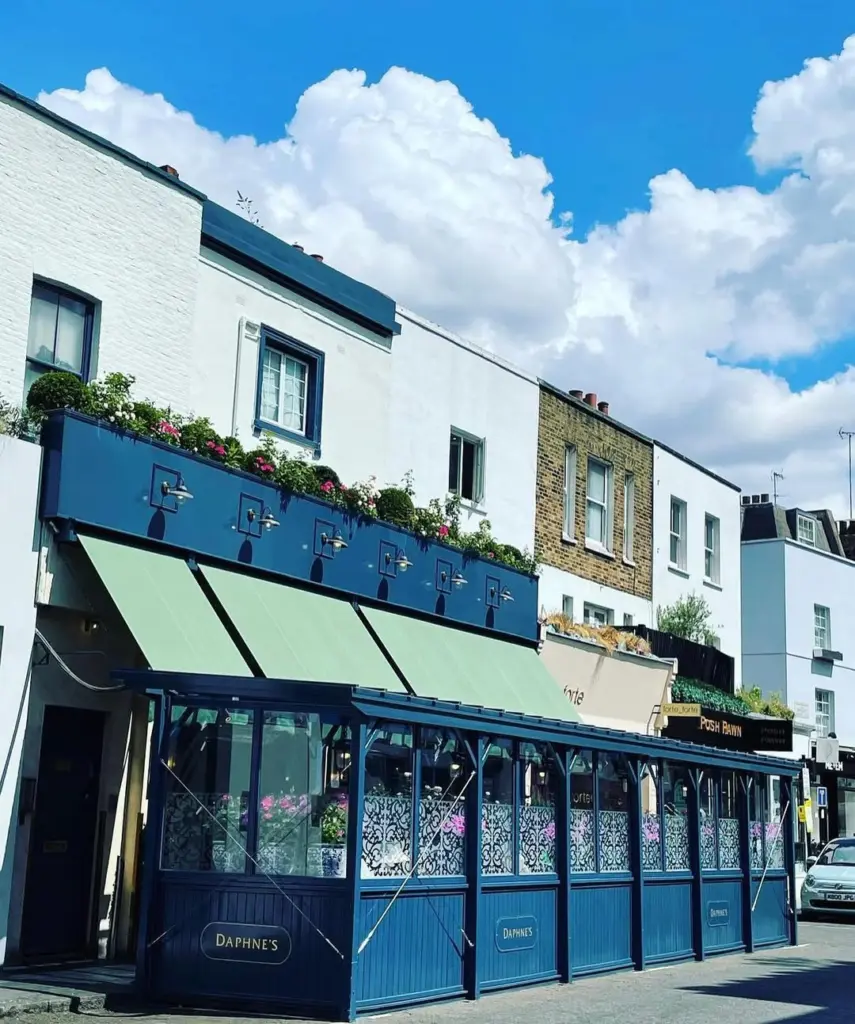
From the outside, Daphne’s retains the appearance of a classic neighbourhood restaurant, with its deep green frontage and understated signage blending naturally into Draycott Avenue. Inside, however, the mood shifts into something far more theatrical.
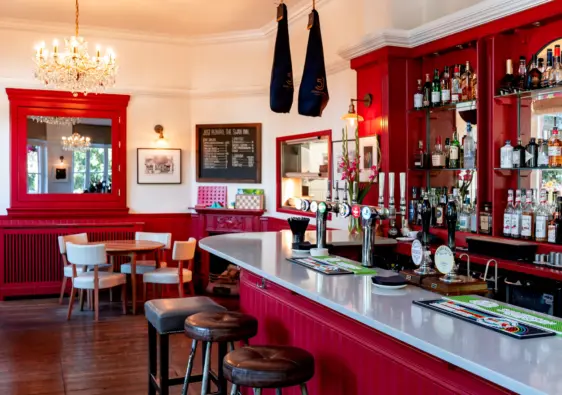
The dining room unfolds through a series of richly layered spaces, each with its own personality. The pink marble-topped bar immediately catches the eye, framed by Murano glass chandeliers and softly glowing lighting that becomes increasingly flattering as the evening progresses. Vintage Italian influences run throughout the interiors, though the space never feels themed or overworked.
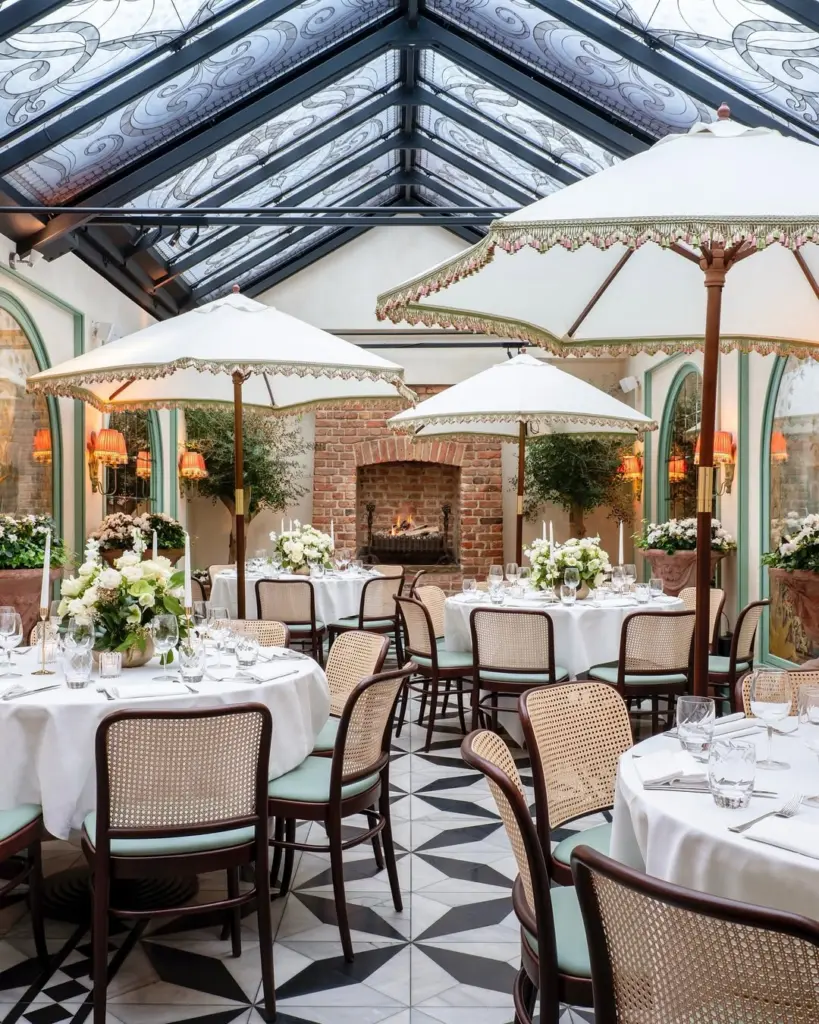
Towards the rear, the conservatory remains one of the restaurant’s defining features. Filled with natural light during the day and far moodier after dark, it creates the impression of dining in an elegant Italian winter garden tucked somewhere far beyond central London. Tables are close enough to feel lively without becoming cramped, and there is always enough movement in the room to give dinner a sense of occasion.
The artwork, plush banquettes and layered textures all contribute to the feeling that Daphne’s belongs to a more glamorous era of London dining, though one that has adapted comfortably to modern Chelsea.
Italian Cooking with a Chelsea Gloss
The menu at Daphne’s leans towards traditional Italian cooking with seasonal touches rather than dramatic reinterpretations. Much of its success comes from restraint. Plates are generous without feeling heavy, flavours are clean and recognisable, and the kitchen understands the value of allowing good ingredients to speak for themselves.
Antipasti and Opening Plates
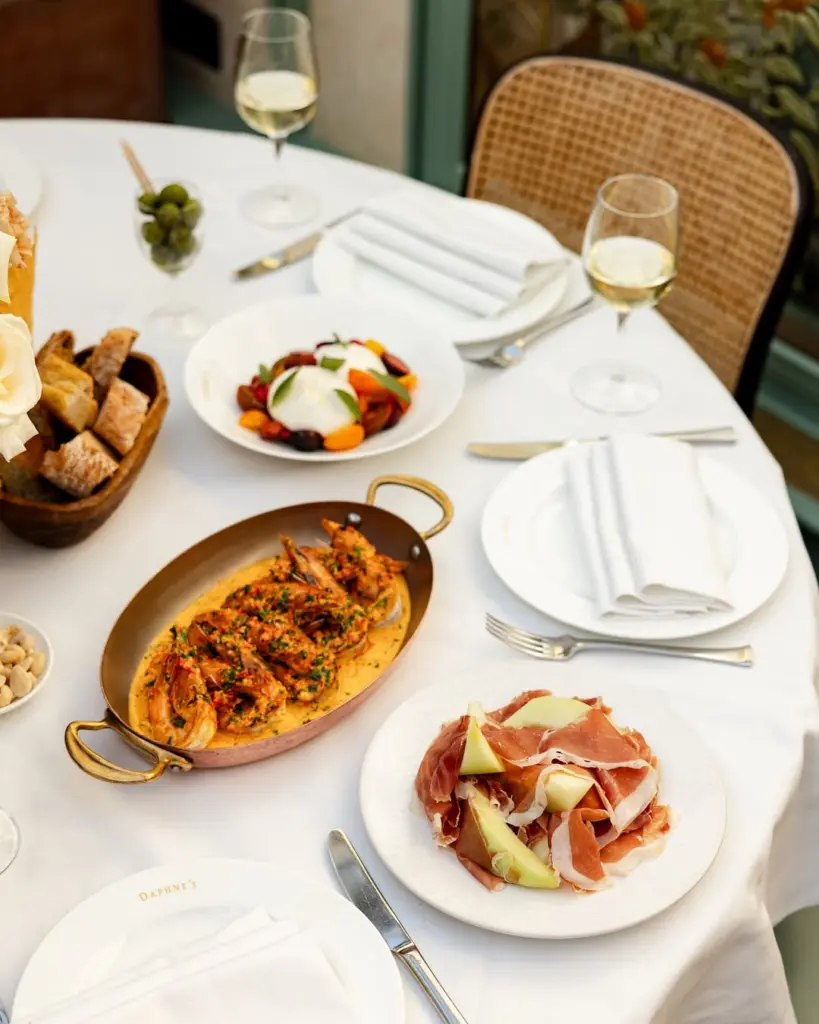
The opening section of the menu sets the tone quickly. Burrata with mixed tomatoes and basil arrives bright and uncomplicated, while the pea soup with goat’s curd and wild garlic feels particularly suited to a leisurely Chelsea lunch.
Seafood features strongly throughout the starters. The sea bream carpaccio with Amalfi lemon and herbs delivers exactly the sort of sharp freshness expected from a well-executed Italian crudo, while the yellowfin tuna crudo with shaved fennel and citrus brings a slightly more delicate balance.
Elsewhere, the kitchen handles richer plates equally well. Vitello tonnato remains one of the menu’s standout classics, and the Wagyu beef carpaccio with rocket and parmesan offers a more indulgent start without becoming overly heavy. The courgette flowers with stracciatella and Sorrento tomatoes are another highlight, particularly during warmer months when the conservatory is flooded with afternoon light.
Vegetarian diners are also unusually well catered for by London Italian restaurant standards. Dishes such as asparagus with stracciatella, beetroot salad with goat’s cheese, and baked aubergine parmigiana feel thoughtfully integrated into the menu rather than added as afterthoughts.
Handmade Pasta and Risotto
Pasta remains central to the Daphne’s experience, with the kitchen balancing comforting classics alongside slightly more elevated seafood-led dishes.
The spaghetti bigoli with lobster and wild fennel is one of the restaurant’s signature plates, delivering rich shellfish depth without overwhelming the pasta itself. Equally strong is the calamaretti pasta with Portland crab and chilli, where the spice is kept measured enough to allow the sweetness of the crab to come through clearly.
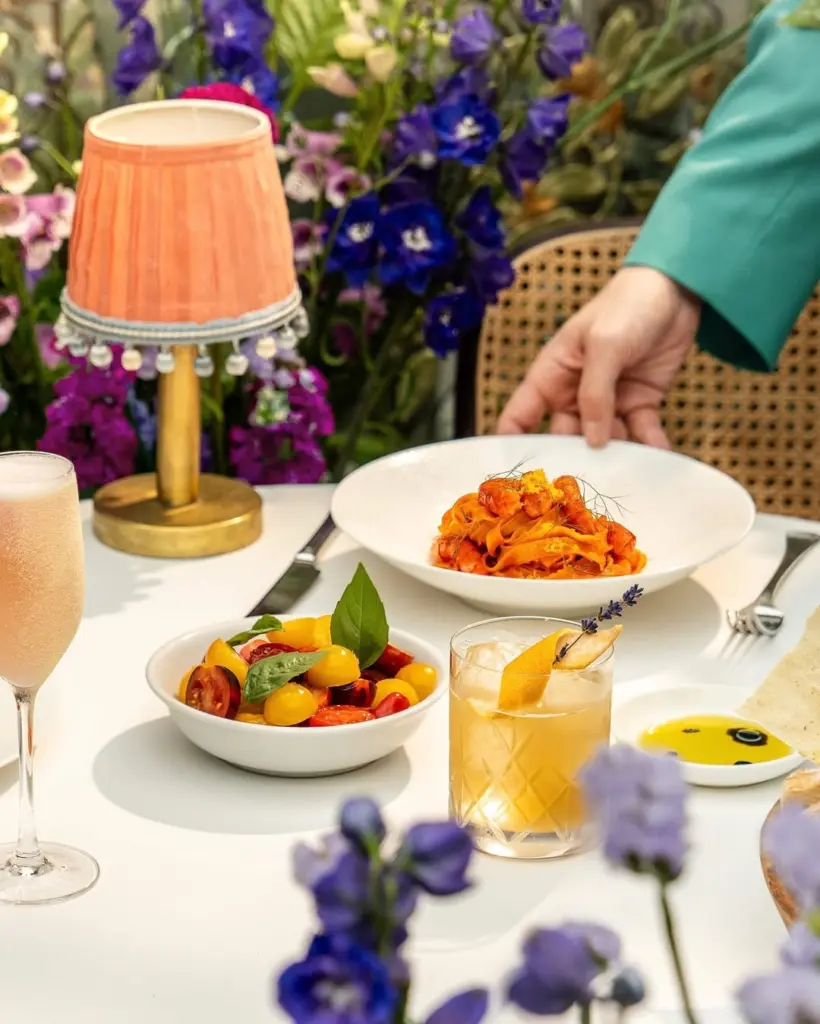
For something more traditional, the rigatoni with veal ragù offers exactly the sort of slow-cooked richness expected from a long-established Italian dining room, while the orecchiette with broccoli and Tuscan sausage leans into southern Italian comfort.
The vegetarian pasta selection deserves particular mention. Mozzarella and aubergine ravioli with Vesuvio tomatoes and basil is one of the stronger meat-free dishes on the menu, and the primavera risotto feels suitably seasonal rather than overly creamy or dense.
Even simpler dishes such as penne all’arrabbiata or spaghetti alla Sorrentina appear carefully handled, reinforcing the sense that Daphne’s understands the value of precision over unnecessary complication.
Mains From Land and Sea
The secondi continue the restaurant’s preference for confident Italian classics.
The veal Milanese remains one of the menu’s anchors, served traditionally with lemon and enough crispness to justify its long-standing popularity. Those looking for something more substantial may gravitate towards the chargrilled veal cutlet with sage and lemon butter, or the Black Angus sirloin finished with salsa verde.
Seafood is equally strong throughout the menu. The fillet of sea bass with artichokes, datterini tomatoes and basil feels particularly suited to the restaurant’s lighter Mediterranean direction, while the Dover sole keeps things reassuringly classic.
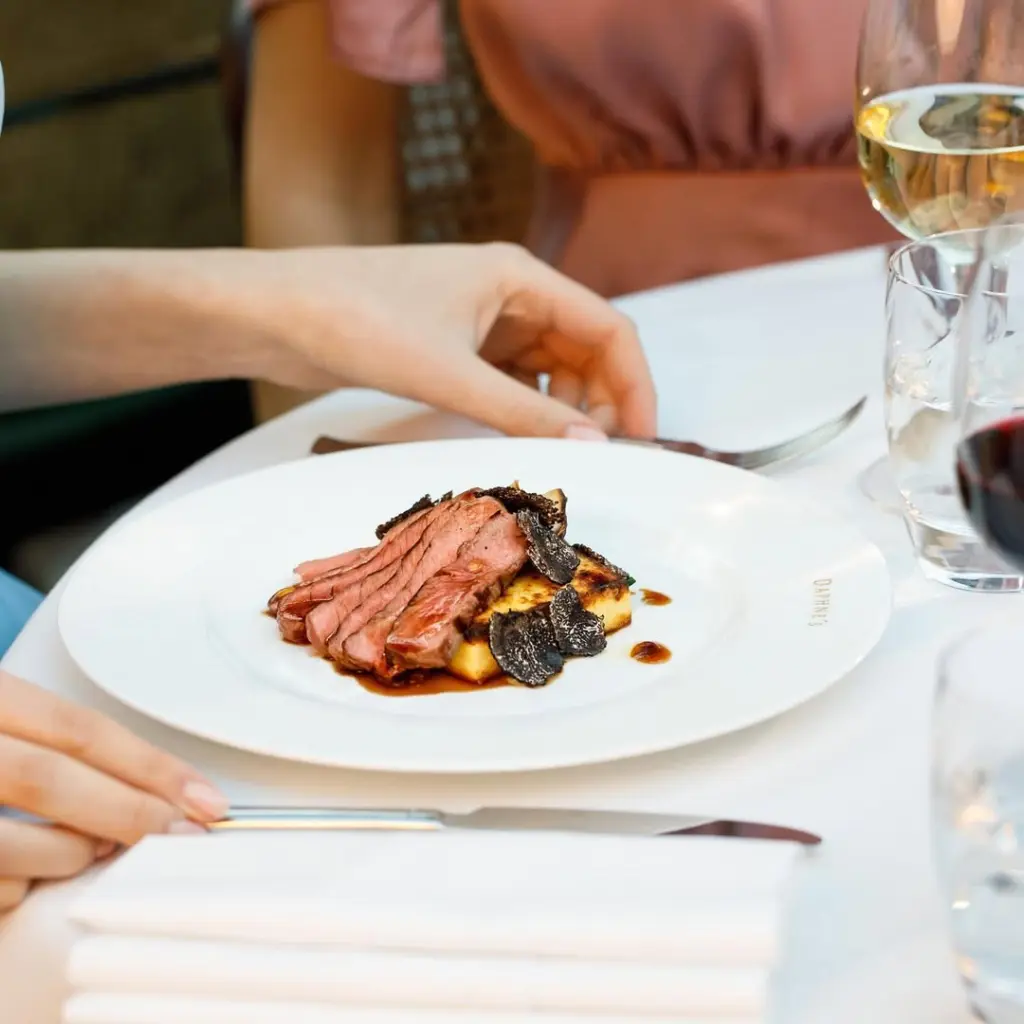
One of the more compelling seasonal dishes is the rump of lamb with peas, broad beans and artichokes, which captures the restaurant’s preference for understated refinement rather than overt theatrics.
Sides are simple but well chosen, from deep-fried courgettes and mixed tomato salad to spinach with garlic or olive oil.
Dolci and After-Dinner Rituals
Dessert at Daphne’s feels properly Italian in spirit: comforting, unfussy, and designed for lingering conversations rather than elaborate presentation.
The house tiramisu remains the obvious choice for many tables, though the panna cotta with black cherries and biscotti is equally satisfying. The baked vanilla cheesecake with strawberries and elderflower brings a lighter finish, while the zabaglione with raspberries offers something slightly more traditional.
For chocolate lovers, the Amedei chocolate and hazelnut coupe with warm chocolate sauce leans unapologetically indulgent, especially alongside an espresso martini or sweet Marsala.
The sweet wine offering is stronger than many London Italian restaurants, ranging from Moscato d’Asti and Vin Santo Chianti Rufina to Tokaji Aszú and Graham’s 20-year tawny port.
Cocktails, Wine, and The Bar Scene
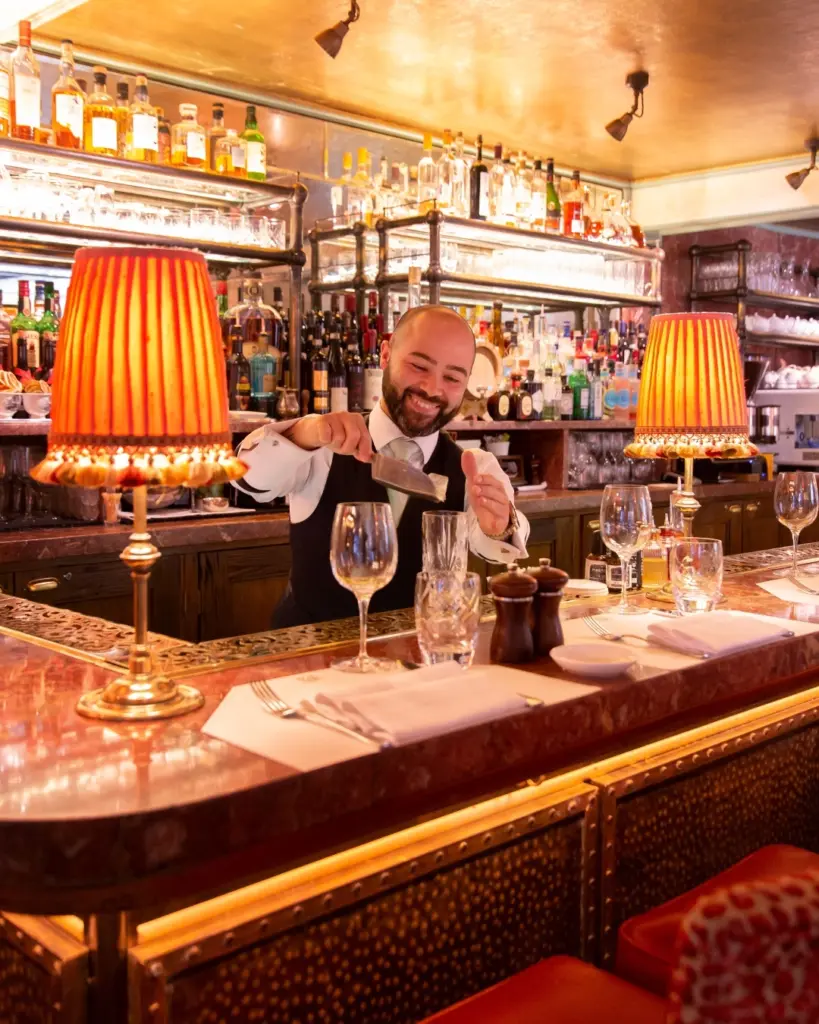
The bar at Daphne’s has its own social energy entirely. Earlier in the evening, it fills with Chelsea regulars stopping in for aperitivi, while later services lean towards negronis, tequila-led cocktails, and after-dinner whisky pours.
Cocktails retain a strong Italian influence throughout. The Daphne’s Negroni and seasonal rose-led variation both work particularly well before dinner, while the Lavender Spritz and Rosalita bring a softer, warmer-weather approach to the menu.
Several drinks lean more playful without losing polish. The Tutti Frutti combines Grey Goose vodka with strawberry, green apple and white chocolate, while the Nonna’s Biscuit layers Johnnie Walker Blue and Black Label whiskies with Marsala, cocoa, and coffee.
The wine programme is extensive and intelligently structured, with particularly strong Italian representation across Piedmont, Tuscany, Veneto, and Sicily. The by-the-glass offering alone includes everything from Gavi di Gavi and Greco di Tufo to Brunello di Montalcino and Tignanello via Coravin pours.
Those looking to explore further will find serious depth throughout the cellar. Barolo, Barbaresco, Super Tuscans and vertical Sassicaia selections sit comfortably alongside Burgundy, Bordeaux, and Rhône references.
There is also enough breadth within the spirits programme to reward diners lingering after dinner, particularly across grappa, whisky, and tequila selections.
The Service and The Crowd
Part of Daphne’s appeal lies in the way the restaurant changes character throughout the day without losing its identity.
Lunches tend to feel lighter and more relaxed, particularly in the conservatory where natural light softens the room considerably. By evening, however, the atmosphere becomes more animated. Tables fill quickly, conversations stretch late into the night, and the bar develops a lively rhythm that feels distinctly Chelsea.
The crowd itself is varied but consistent in tone. Long-time residents sit alongside fashion buyers, couples celebrating birthdays, international visitors, and groups lingering over multiple bottles of wine. Despite the restaurant’s reputation, the service never feels intimidating. Staff maintain a level of polish expected from a restaurant of this calibre, though there is enough warmth and familiarity to keep the room feeling genuinely welcoming.
That balance may ultimately explain why Daphne’s continues to resonate across generations. It remains glamorous, certainly, but never inaccessible.
Private Dining and Special Occasions
Daphne’s lends itself naturally to celebrations. The conservatory and surrounding dining spaces create an atmosphere that feels elevated without requiring excessive formality, making the restaurant particularly well-suited to birthdays, anniversary dinners, and fashion-week entertaining.
Private dining arrangements retain the same visual identity as the main restaurant, allowing events to feel integrated into the wider atmosphere rather than isolated from it. The combination of strong service, dependable Italian cooking and a substantial wine cellar makes the restaurant an easy choice for occasions where reliability matters just as much as ambience.
Exploring Chelsea Before or After Dinner
Part of the pleasure of dining at Daphne’s is its location within one of London’s most walkable luxury neighbourhoods.
Brompton Cross, Sloane Avenue and King’s Road are all within easy reach, making the restaurant a natural stopping point after shopping or gallery visits. South Kensington’s museums sit nearby, while Chelsea’s hotel scene offers several polished options for continuing the evening, from discreet cocktail bars to longstanding London institutions.
Daphne’s fits comfortably into that broader Chelsea rhythm. It works equally well as the centrepiece of an evening or as one elegant stop within a longer day spent moving through this part of west London.
The Lasting Appeal of Daphne’s
Many restaurants are fashionable. Far fewer are woven into the habits of a city.
Daphne’s has managed to remain relevant without abandoning the qualities that made it successful in the first place. The interiors remain striking, the atmosphere consistently inviting, and the cooking grounded in the kind of Italian comfort that rarely falls out of favour.
In a London dining scene increasingly dominated by short-lived openings and constant reinvention, there is something deeply appealing about a restaurant that still understands the pleasure of familiarity done properly.
Location: 112 Draycott Ave, London SW3 3AE