

All products are independently selected by our editors. If you buy something, we may earn an affiliate commission.
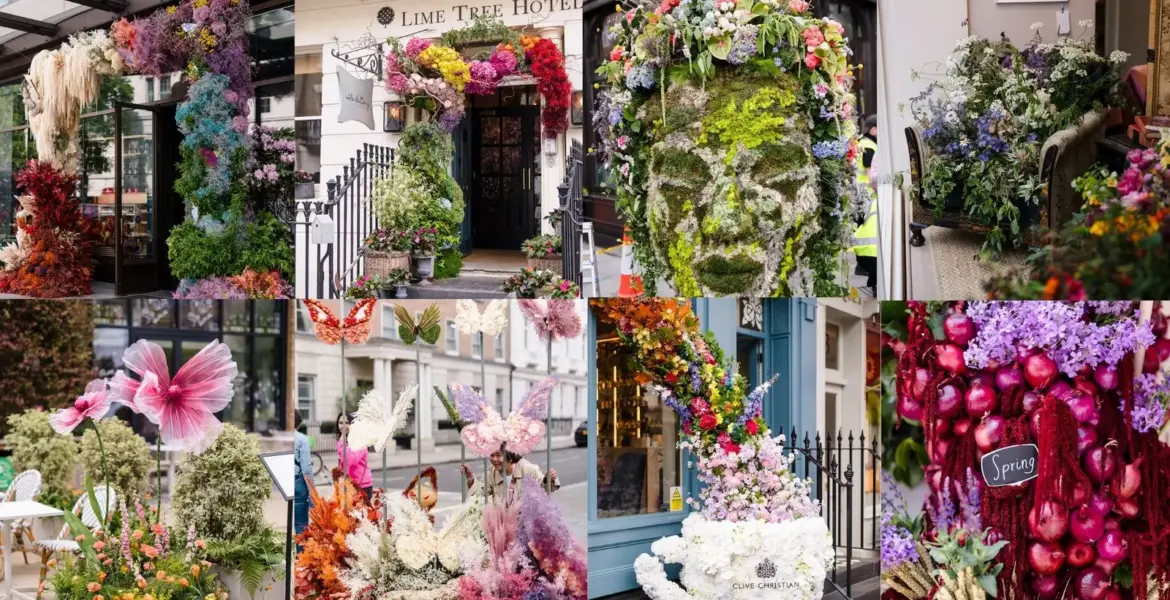
Each May, London enters one of its most visually captivating moments as Chelsea and Belgravia in Bloom return to transform the capital’s most elegant neighbourhoods into open-air floral galleries. Running from 18–24 May 2026, the festivals see townhouses, boutique façades, luxury hotels, cafés, and fashion houses become part of the seasonal spectacle, with installations ranging from delicate botanical artistry to large-scale sculptural creations that draw visitors from around the world.
Taking place alongside the RHS Chelsea Flower Show, both festivals have become firmly woven into London’s social calendar. For many visitors, the week marks the beginning of the capital’s late-spring season, when terraces fill, garden squares burst into colour, and Chelsea and Belgravia feel particularly alive. The atmosphere is polished yet relaxed, with stylish crowds moving between floral trails, champagne lunches, gallery visits, and afternoon appointments along Sloane Street and Elizabeth Street.
For those planning a visit, understanding how the two neighbourhoods differ, where to stay, and how to approach the week makes all the difference.
Two Distinct Sides of London’s Floral Season
Although often spoken about together, Chelsea in Bloom and Belgravia in Bloom each bring a different mood to the week.
Chelsea carries a livelier energy throughout the festival. Around King’s Road, Sloane Square, Duke of York Square, and Pavilion Road, the displays often feel theatrical and fashion-led, with luxury boutiques and restaurants competing to create some of the festival’s most photographed installations. Visitors spill onto café terraces throughout the afternoon, while floral arches and dramatic window displays become part of the streetscape.
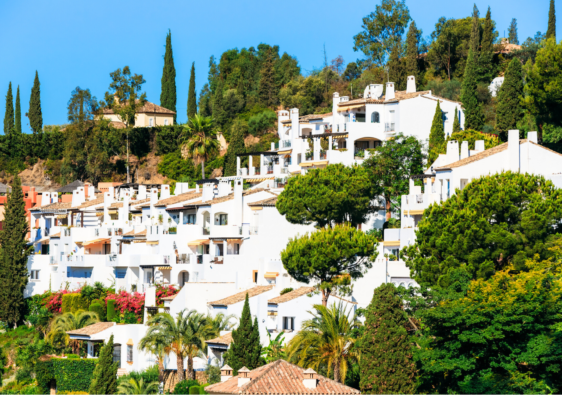
Belgravia, meanwhile, feels quieter and more residential. Around Motcomb Street, Eccleston Yards, and Elizabeth Street, the experience becomes gentler and more intimate, with refined floral styling woven into the area’s white stucco architecture and village-like atmosphere. The installations here often lean towards understated elegance rather than spectacle, making it particularly appealing for visitors who prefer a slower pace.
Experiencing both neighbourhoods across several days offers the most rewarding way to approach the festivals.
The Installations Everyone Talks About
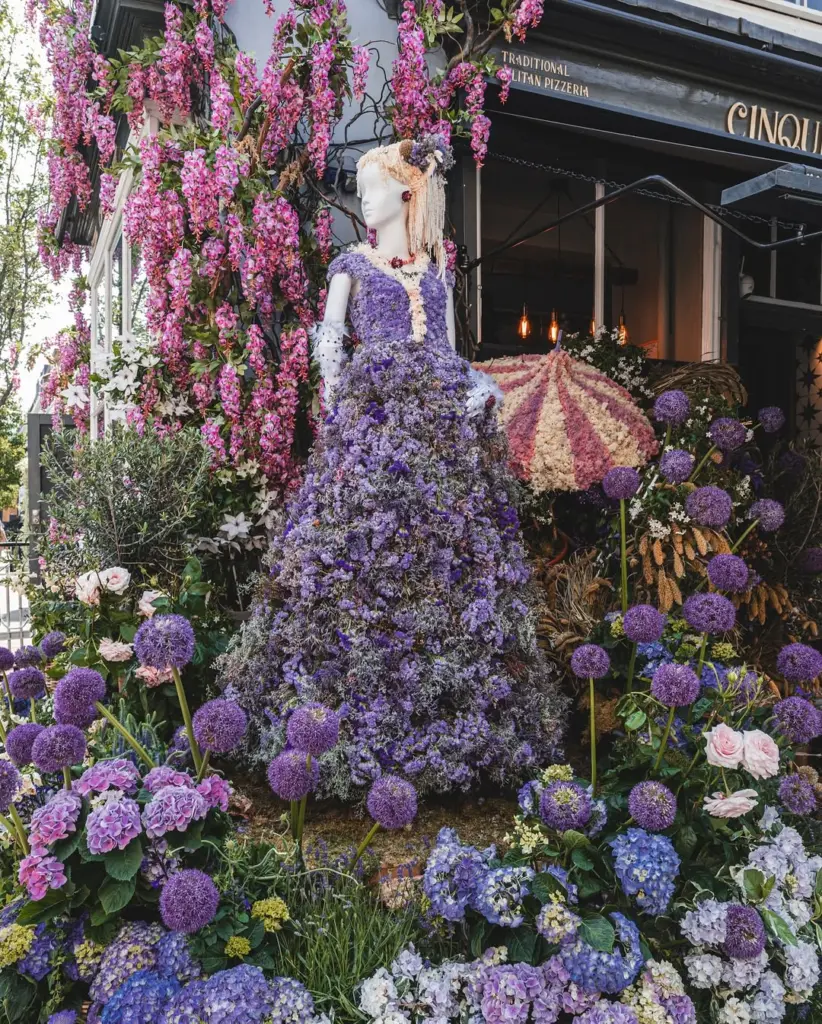
One of the pleasures of Chelsea in Bloom and Belgravia in Bloom lies in the unpredictability of the displays themselves. Each festival follows its own annual theme, interpreted differently by participating businesses, hotels, designers, and retailers. In 2026, Chelsea in Bloom embraces the theme “Out of this World”, while Belgravia in Bloom takes inspiration from “Fairy Tales in Belgravia”. Some installations focus on craftsmanship and floristry, while others become elaborate artistic productions involving suspended sculptures, immersive façades, or couture-inspired botanical designs.
Luxury boutiques, restaurants, and hotels regularly embrace the festivals enthusiastically, particularly along Sloane Street and Pavilion Road, where many of the week’s most photographed displays can be found.
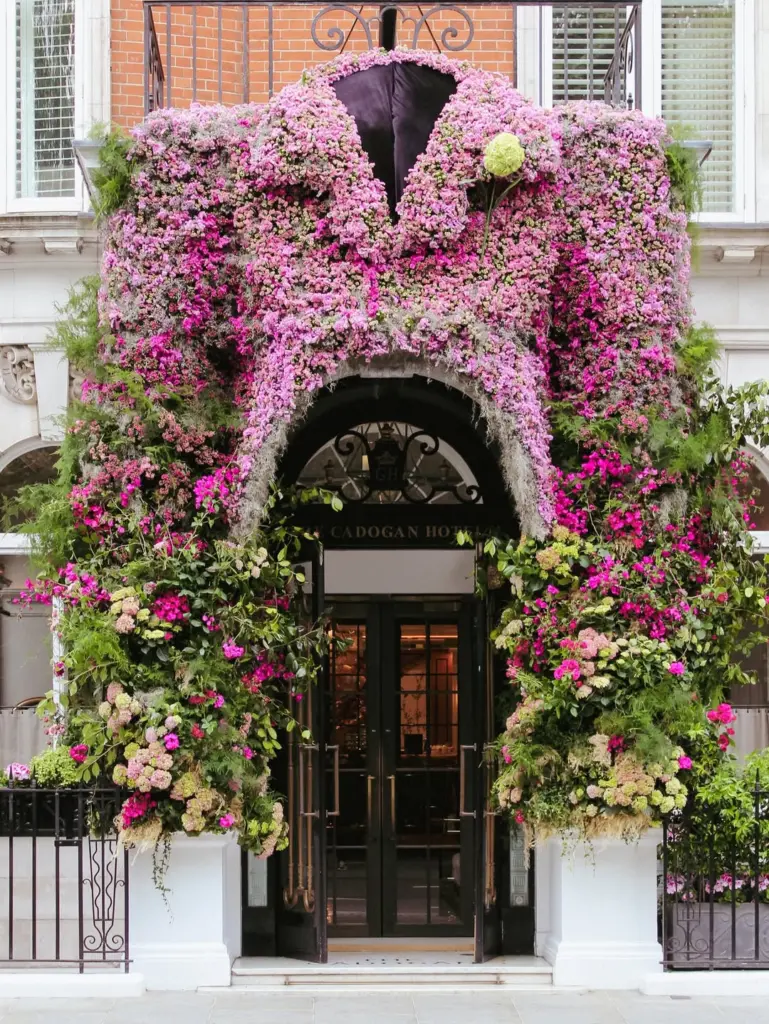
Hotels also play a significant role in shaping the atmosphere. The Cadogan, A Belmond Hotel, often becomes one of the area’s most elegant stopping points during the week, while The Berkeley draws visitors looking for seasonal afternoon teas and terrace dining after exploring the floral routes.
Part of the appeal lies in wandering without a rigid schedule. Some of the most memorable displays appear unexpectedly along quieter streets or tucked beside independent boutiques and cafés.
Timing Your Visit Well
The festivals usually unfold over several days in late May, coinciding with the height of London’s spring season. Early mornings provide the calmest experience, particularly for photography and leisurely walks before the neighbourhoods become busier by midday.
Late afternoon is equally appealing, especially once the light softens across the white façades of Belgravia and the restaurant terraces begin to fill. Many visitors choose to split their day between floral installations and long lunches, returning later for cocktails or dinner nearby.
Weekends naturally attract the largest crowds, particularly around Chelsea. Visitors looking for a quieter atmosphere often prefer weekday mornings or early evenings instead.
Because the festivals run alongside the RHS Chelsea Flower Show, the wider area becomes exceptionally lively throughout the week, with designers, horticultural enthusiasts, international visitors, and London’s social crowd moving between all three events.
Where to Stay During the Festival
Choosing the right base shapes the entire experience.
For visitors wanting immediate access to Chelsea’s floral routes and dining scene, 11 Cadogan Gardens remains one of the area’s most charming stays, tucked behind a row of Victorian townhouses moments from Sloane Square. The atmosphere feels intimate and residential, which suits the rhythm of the festivals particularly well.
Nearby, The Cadogan, A Belmond Hotel, offers one of the most polished addresses in the neighbourhood, balancing heritage architecture with discreet contemporary luxury. Its location places guests within walking distance of many of the week’s most photographed displays.
For those preferring Belgravia and Knightsbridge, The Hari provides a quieter retreat close to Motcomb Street and Belgravia’s floral routes, while COMO The Halkin appeals to visitors seeking a more understated, design-conscious atmosphere.
Meanwhile, The Berkeley continues to attract guests looking to combine the festivals with shopping, fine dining, and nearby access to Hyde Park and Knightsbridge.
Suites and terrace-facing rooms become particularly desirable during the week, especially for visitors planning a longer London stay around the festivals.
Dining Between Floral Trails
The dining scene becomes part of the experience itself during Chelsea in Bloom and Belgravia in Bloom. Pavement terraces fill quickly throughout the afternoon, while restaurants embrace the season with floral accents, limited-edition menus, and garden-inspired cocktails.
The Ivy Chelsea Garden feels especially fitting during the festivals, with its courtyard setting complementing the atmosphere of the surrounding streets. Reservations during bloom week are highly sought after, particularly for lunch.
On Pavilion Road, the atmosphere feels more relaxed and neighbourhood-focused, with cafés and wine bars drawing visitors between installations. Meanwhile, Stanley’s offers one of Chelsea’s most appealing courtyard settings for a leisurely afternoon meal.
In Belgravia, Wild by Tart remains a favourite for long lunches and stylish afternoon gatherings, while those looking for a more formal evening often gravitate towards Pétrus by Gordon Ramsay nearby.
Throughout the week, reservations become increasingly important, particularly from late afternoon onwards.
Shopping, Fashion, and the Wider Social Scene
Chelsea in Bloom and Belgravia in Bloom sit comfortably within London’s broader luxury landscape. Alongside the floral displays, the week brings an unmistakable sense of seasonal energy to the surrounding boutiques, galleries, and hotels.
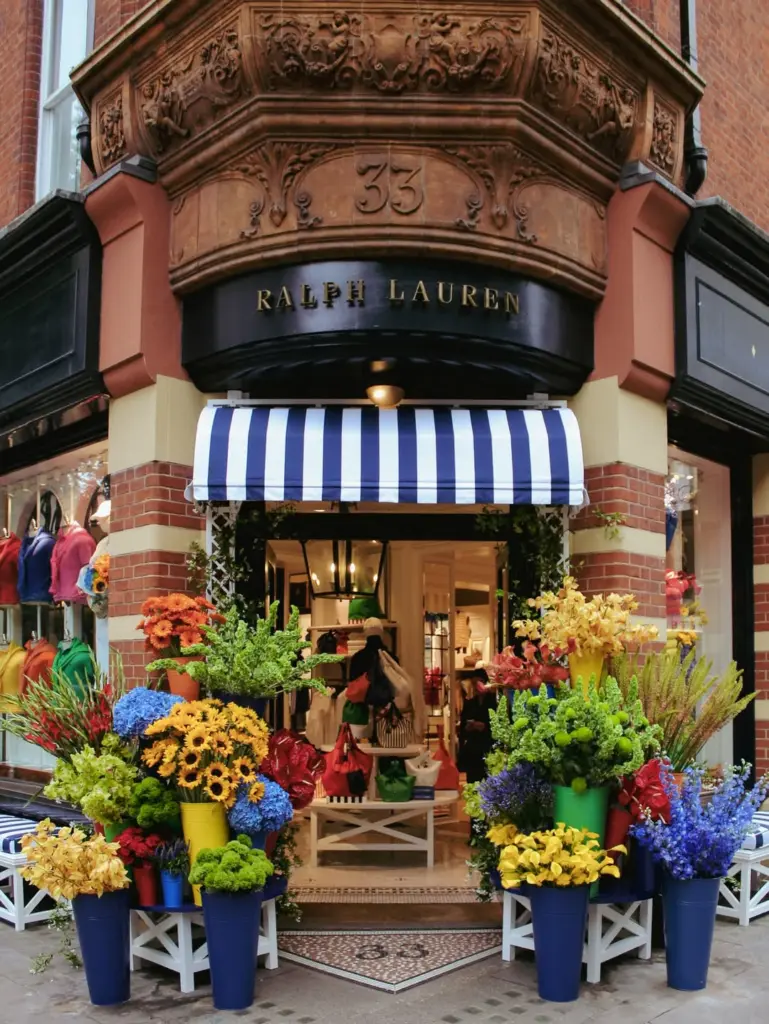
Sloane Street becomes particularly animated during this period, with luxury fashion houses unveiling spring collections and floral-inspired window installations. Boutiques throughout both neighbourhoods often use the festivals as an opportunity to create immersive seasonal displays that attract visitors throughout the week.
The events also attract an international audience that overlaps naturally with London’s May social calendar. It is common to see visitors pairing the festivals with private shopping appointments, gallery visits in Mayfair, evenings in Knightsbridge, or afternoons spent between Chelsea and the nearby RHS Chelsea Flower Show grounds.
That broader lifestyle dimension is part of what gives the festivals their enduring appeal.
Approaching the Festivals Like a London Regular
The most enjoyable visits tend to leave room for spontaneity. While official floral maps are useful, some of the most charming moments emerge from simply wandering through quieter streets and garden squares between larger installations.
Comfortable footwear becomes surprisingly important, particularly for visitors spending an entire day exploring both neighbourhoods on foot. Many guests alternate walking with short black cab journeys between Chelsea and Belgravia, especially later in the day, once restaurants and terraces become busier.
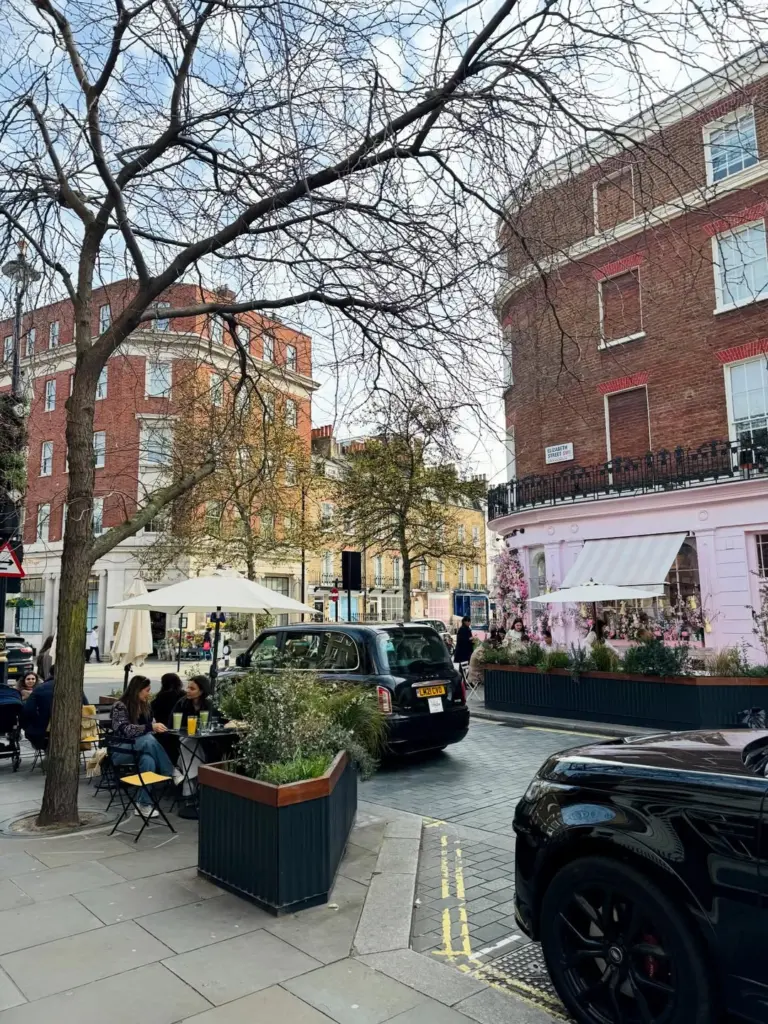
Photography is naturally part of the experience, though the atmosphere generally remains more refined and relaxed than heavily commercialised floral events elsewhere. Early mornings remain the best time for uninterrupted photographs, particularly around Elizabeth Street and Pavilion Road.
London at Its Most Beautifully Seasonal
There is something uniquely enjoyable about London during Chelsea in Bloom and Belgravia in Bloom. The city feels softer, brighter, and more sociable, with floral installations becoming part of the wider rhythm of spring in the capital.
Beyond the displays themselves, the festivals offer an opportunity to experience two of London’s most elegant neighbourhoods at their most atmospheric. Long lunches spill onto terraces, boutiques open onto flower-lined streets, and even familiar corners of Chelsea and Belgravia take on a different character for the week.
For visitors drawn to design, hospitality, fashion, and the quieter rituals of London luxury, the festivals remain among the capital’s most rewarding seasonal experiences.