

All products are independently selected by our editors. If you buy something, we may earn an affiliate commission.
Tucked behind Manchester Square in Marylebone, The Wallace Collection occupies a distinctive place within London’s cultural landscape. While the capital is home to some of the world’s most visited museums, few offer the same sense of intimacy. Here, masterpieces hang within grand domestic interiors rather than cavernous galleries, and a visit feels less like navigating a major institution and more like stepping inside an extraordinary private residence.
Hertford House, the collection’s home, sits only a short walk from Oxford Street and Bond Street, yet feels remarkably removed from both. The pace slows almost immediately upon entering. Chandeliers, gilded walls, ornate furniture and centuries of collecting combine to create an atmosphere that is both impressive and welcoming.
For those seeking a cultural afternoon in London that pairs exceptional art with elegant dining and the charm of Marylebone, few addresses reward a visit quite so generously.
A House Built For Collecting
The Wallace Collection traces its origins to the Marquesses of Hertford and, later, Sir Richard Wallace, whose passion for collecting helped shape one of Europe’s finest private collections. When Lady Wallace bequeathed the collection to the nation in 1897, she did so on the condition that it remain together and be displayed in the family’s London residence.
That decision continues to define the experience today.
Unlike many museums where collections have been assembled from multiple sources over decades, The Wallace Collection retains a remarkable sense of cohesion. Paintings, furniture, porcelain, sculpture and decorative arts sit alongside one another much as they would have within an aristocratic home.
The result is a collection that feels personal rather than encyclopaedic. Visitors move through rooms that still retain their residential character, creating a stronger sense of connection than is often possible within larger institutions.
Through The Rooms of Hertford House
Part of the pleasure of visiting The Wallace Collection lies in the building itself.
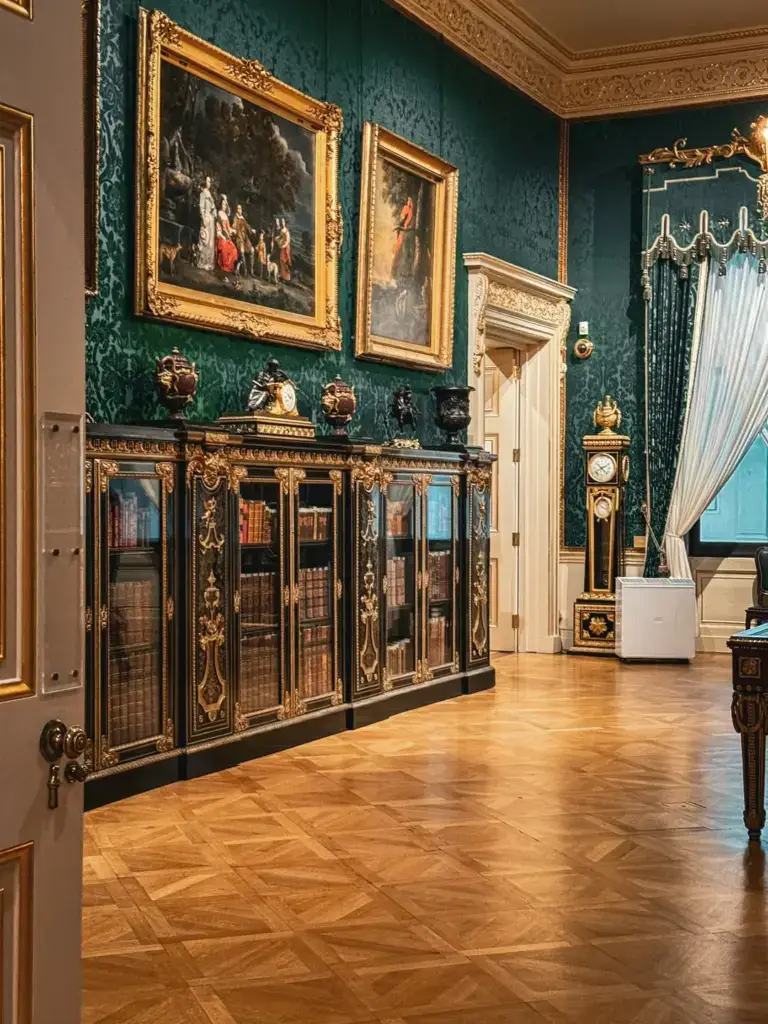
The State Rooms remain among the most impressive interiors in London, filled with French eighteenth-century furniture, gilt bronzes and decorative objects collected by generations of the Hertford family. The rooms flow naturally into one another, encouraging visitors to wander rather than follow a prescribed route.
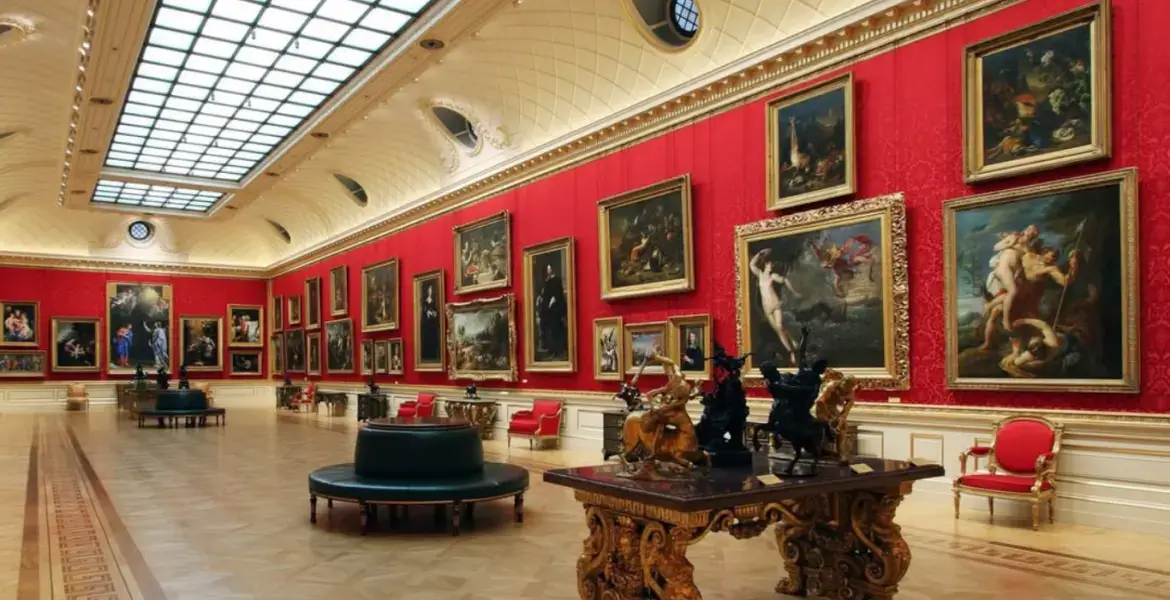
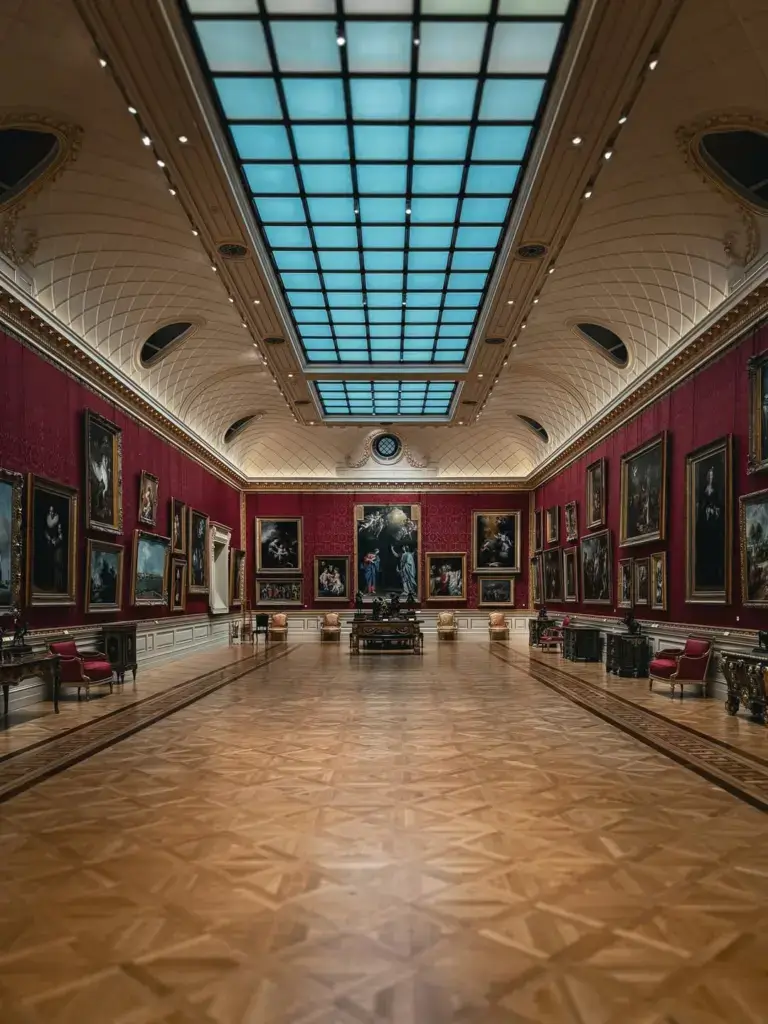
The Great Gallery is often the focal point for first-time visitors. Originally created as a picture gallery for the family, it remains one of the most striking museum spaces in Britain. Its rich red walls provide a dramatic backdrop for works by some of Europe’s most celebrated artists.
Elsewhere, quieter rooms reveal intricate porcelain collections, Renaissance treasures, and finely crafted furniture. The atmosphere never feels overwhelming. There is always space to pause, look closely and discover details that might easily be missed in busier museums.
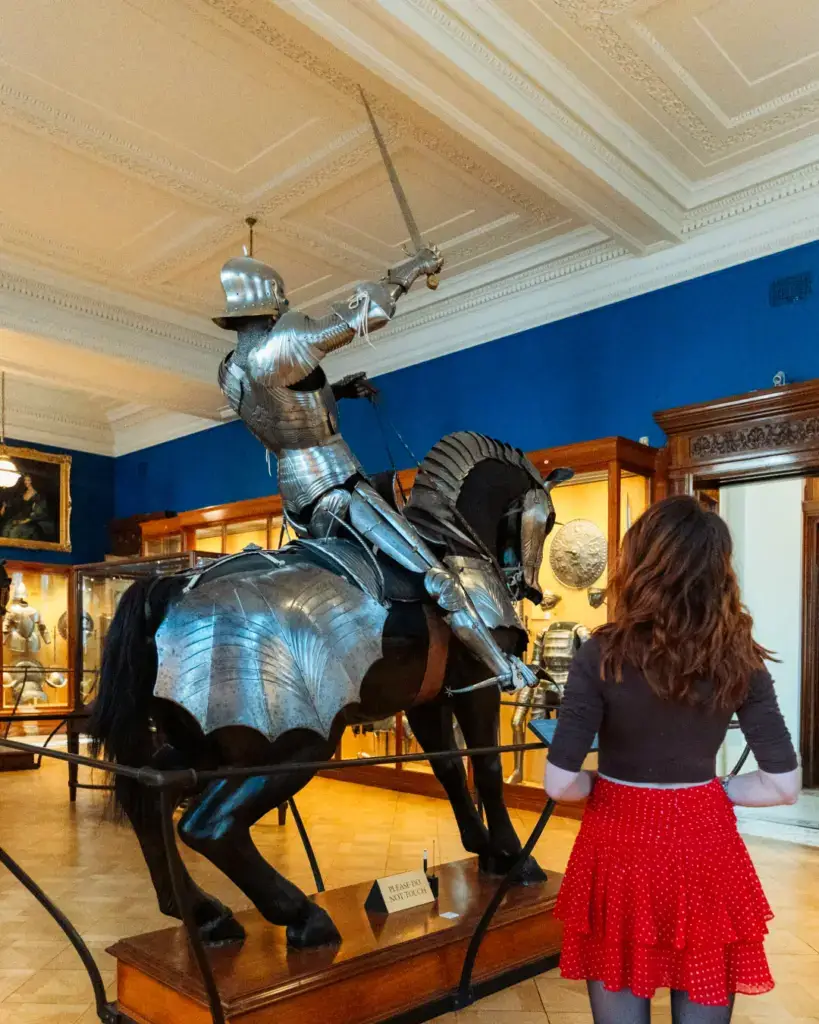
The Armouries add another layer entirely. Suits of armour, ceremonial weapons and historic firearms create one of the world’s most important collections of arms and armour, offering a fascinating contrast to the elegance of the surrounding rooms.
Masterpieces Worth Lingering Over

Certain works have become synonymous with The Wallace Collection, and rightly so.
Among the most famous is The Laughing Cavalier by Frans Hals. Painted in 1624, its confident sitter and extraordinary detail continue to draw visitors from around the world.
Nearby, works by Titian, Rembrandt, Canaletto and Velázquez demonstrate the breadth of the collection’s Old Master holdings.
Yet some of the most memorable pieces are not paintings at all. The French decorative arts collection is widely regarded as one of the finest outside France. Elaborately crafted commodes, writing desks, clocks and Sèvres porcelain reveal the extraordinary craftsmanship that defined eighteenth-century Europe.
The collection rewards repeat visits because it encourages curiosity. A painting may draw attention initially, but an intricately carved cabinet, a porcelain vase or a decorative clock often becomes the object that lingers longest in the memory.
The Art of a Slower Afternoon
Many of London’s major attractions are defined by queues, crowds, and carefully timed tickets.
The Wallace Collection offers something different.
Its scale encourages a more relaxed pace. Visitors can spend ten minutes in front of a single painting without feeling hurried or move through entire rooms entirely on instinct. Even during busier periods, the museum retains a sense of calm that has become increasingly rare in central London.
That atmosphere is perhaps its greatest luxury.
Rather than rushing between highlights, visitors are free to settle into the collection and appreciate the building as a whole. It is an experience that feels increasingly valuable in a city where time is often measured against schedules and reservations.
Lunch Beneath the Glass Courtyard
A visit to The Wallace Collection is best extended with lunch in the museum’s courtyard restaurant, one of London’s most attractive cultural dining settings.
The Setting
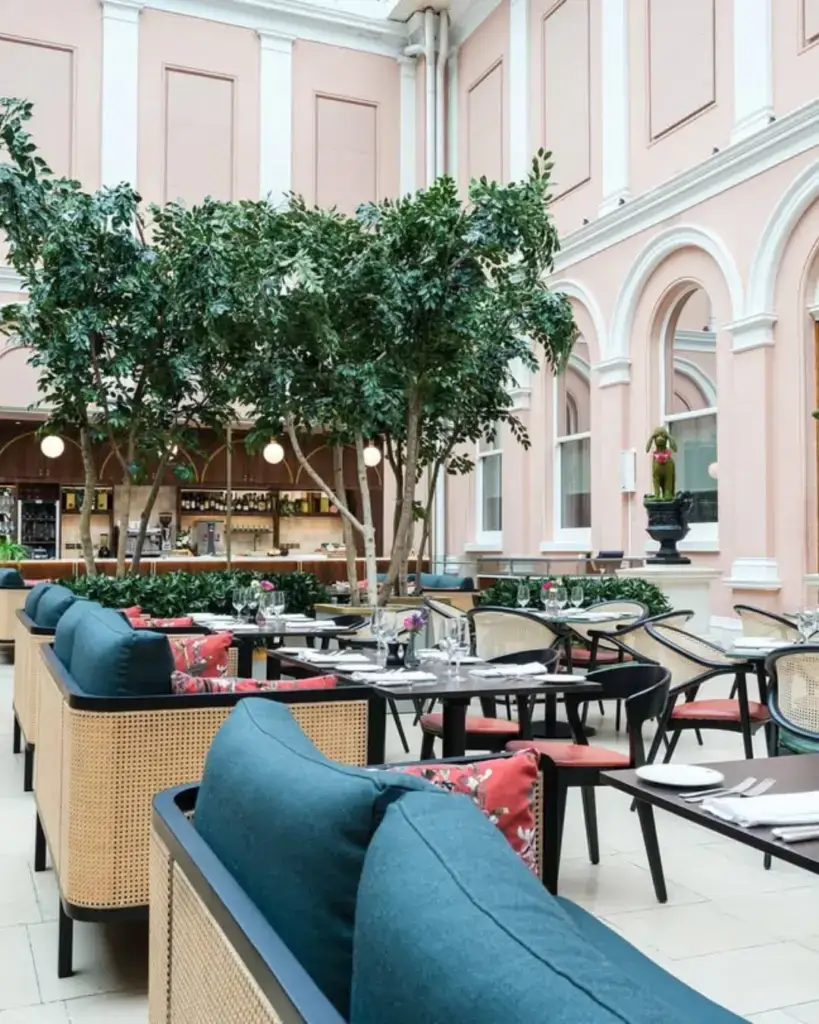
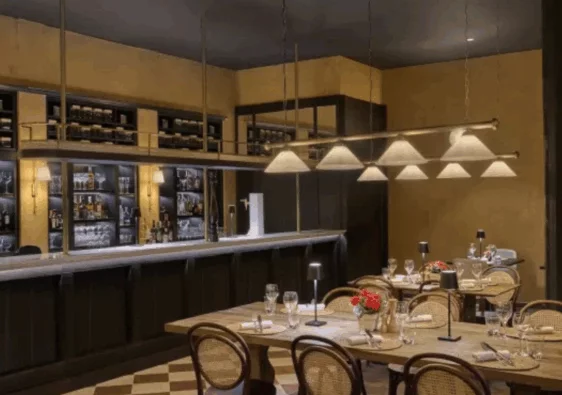
Located beneath a striking glass roof at the heart of Hertford House, the restaurant offers a bright, garden-like atmosphere throughout the year. Surrounded by the museum’s historic architecture yet filled with natural light, it feels pleasantly removed from the pace of central London. Whether stopping for lunch after exploring the galleries or settling in for afternoon tea, the setting encourages visitors to linger a little longer.
On the Menu
The kitchen’s seasonal menu balances approachable favourites with more refined dishes. Starters include a spring pea and turnip soup finished with whipped feta and olive crumbs, a smoked duck salad with charred endive and beetroot, and a prawn and crab salad served with lemon mayonnaise. Among the main courses, the sea trout pavé with caviar and fennel velouté is particularly appealing, alongside venison white ragù pappardelle, wild mushroom risotto with asparagus and blue cheese, and chicken supreme with ratatouille and thyme jus.
Those seeking something lighter will find a smoked salmon multi-seed bagel with dill and caper crème fraîche, a Mediterranean roasted vegetable focaccia, avocado on charred sourdough and the Wallace chicken and glazed bacon ciabatta among the all-day options.
Desserts continue the seasonal theme, with an elderflower Eton Mess, chocolate panna cotta with whisky compote, and a pistachio and apricot slice. Traditional cream teas remain a popular choice, pairing fruit scones with Devon clotted cream and strawberry preserve, while a savoury alternative combines a cheese and chive scone with plum and apple chutney. A British cheese board featuring Tunworth, Harrogate Blue and Westcombe Cheese provides a fitting finish for those lingering over lunch.
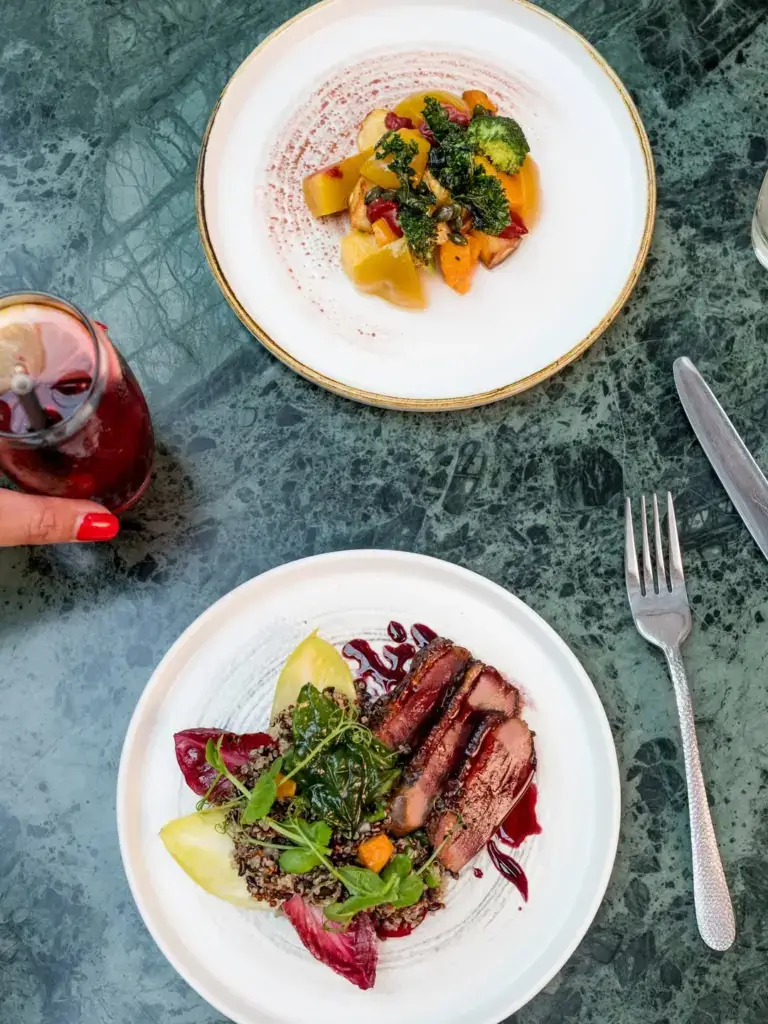
The drinks offering is equally considered. Signature cocktails include the Lady Wallace, combining sparkling wine, elderflower and mint, and the Chartwell Garden Negroni, finished with rosemary. English sparkling wines from Kent’s Balfour estate sit alongside Pol Roger Champagne, while a concise wine list ranges from Albariño from Rías Baixas to Burgundy Chardonnay and Rioja Crianza. For a quieter afternoon, speciality coffees and hand-filled NEMI loose-leaf teas complement the restaurant’s relaxed pace.
A Marylebone Day Well Spent
Part of The Wallace Collection’s appeal is its setting within one of London’s most enjoyable neighbourhoods.
A visit can easily extend beyond the museum itself. Marylebone High Street remains one of the capital’s most attractive shopping streets, lined with independent boutiques, specialist food shops, bookshops and cafés that encourage a slower pace than nearby Oxford Street. Nearby cultural landmarks such as Wigmore Hall add another dimension to the area, with its internationally respected programme of chamber music and recitals.
The surrounding streets are equally rewarding to explore. Elegant Georgian architecture, garden squares and discreet galleries contribute to a neighbourhood that feels distinctly residential despite its central location.
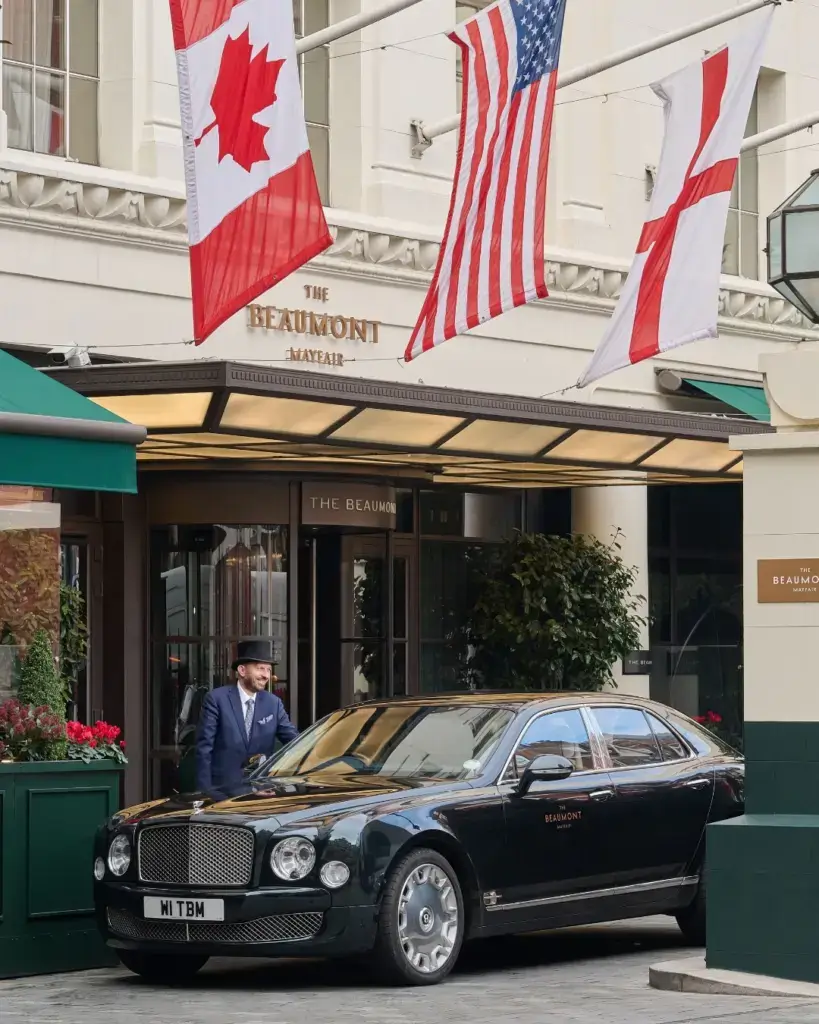
For those planning an overnight stay, several of London’s most established luxury hotels sit within easy reach. The Langham brings grand London heritage just south of Regent’s Park, while The Beaumont offers a more intimate Mayfair address with strong Art Deco character. The Marylebone remains a natural choice for visitors wishing to stay within the neighbourhood itself.
Together, the museum and its surroundings create the foundations for a thoroughly enjoyable London day, combining culture, dining, architecture, and one of the city’s most appealing districts.
The Enduring Appeal of The Wallace Collection
London offers no shortage of museums, galleries, and historic houses. What distinguishes The Wallace Collection is the way these elements exist together under one roof.
The art is exceptional, the interiors remain among the city’s most beautiful, and the experience feels refreshingly unhurried. Add a memorable lunch beneath the glass courtyard and an afternoon exploring Marylebone, and it becomes clear why this remarkable house continues to reward both first-time visitors and long-time Londoners.
Some destinations impress through scale. The Wallace Collection succeeds through character, detail, and atmosphere. More than a century after opening to the public, it remains one of London’s most satisfying cultural escapes.
Location: Hertford House, Manchester Square, London W1U 3BN