

All products are independently selected by our editors. If you buy something, we may earn an affiliate commission.
London’s cultural calendar in 2026 is filled with major exhibitions, but few arrive with the same sense of anticipation as Schiaparelli: Fashion Becomes Art at the Victoria and Albert Museum. For a house built on provocation, fantasy, and technical brilliance, the setting feels particularly fitting. The V&A has long understood fashion’s place within wider artistic history, and this exhibition places Schiaparelli alongside sculpture, painting, photography, and Surrealist art rather than treating couture as a separate discipline.
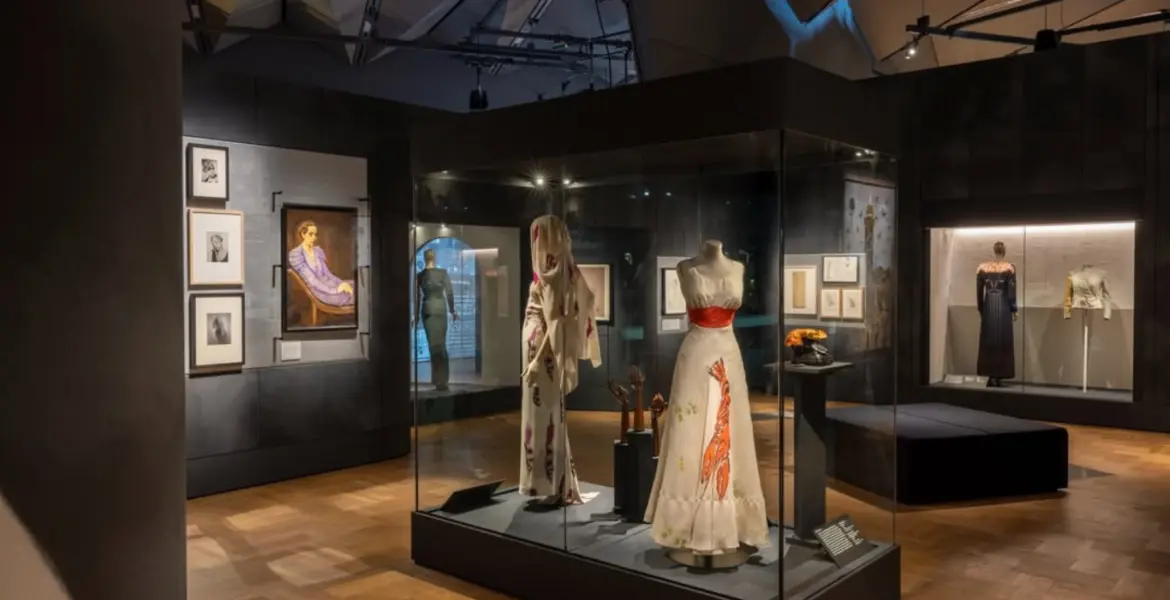
Opening at a moment when couture once again dominates celebrity dressing and red-carpet culture, the exhibition traces the extraordinary imagination of Elsa Schiaparelli while also examining the modern revival of the house under Daniel Roseberry. Across the galleries, visitors move between archival couture, jewellery, sketches, perfume bottles, artworks, and contemporary creations that reveal how thoroughly Schiaparelli reshaped the relationship between fashion and art.
For visitors planning a London cultural itinerary around the exhibition, this is one of the city’s defining fashion events of 2026.
The Woman Who Turned Couture Into Surrealism
Elsa Schiaparelli’s influence on fashion feels unusually contemporary for a designer whose most famous works emerged in the 1930s. Long before fashion houses began speaking in the language of spectacle and conceptual dressing, Schiaparelli approached couture with wit, irreverence, and artistic ambition.
Her collaborations with Salvador Dalí and Jean Cocteau remain among the most recognisable intersections between fashion and fine art. The Lobster Dress, the Skeleton Dress, and the Shoe Hat continue to appear in fashion history books because they challenged expectations of what couture could communicate. Schiaparelli treated clothing almost as a visual conversation, layering symbolism, illusion, embroidery, and surrealist references into garments that still feel startlingly modern.
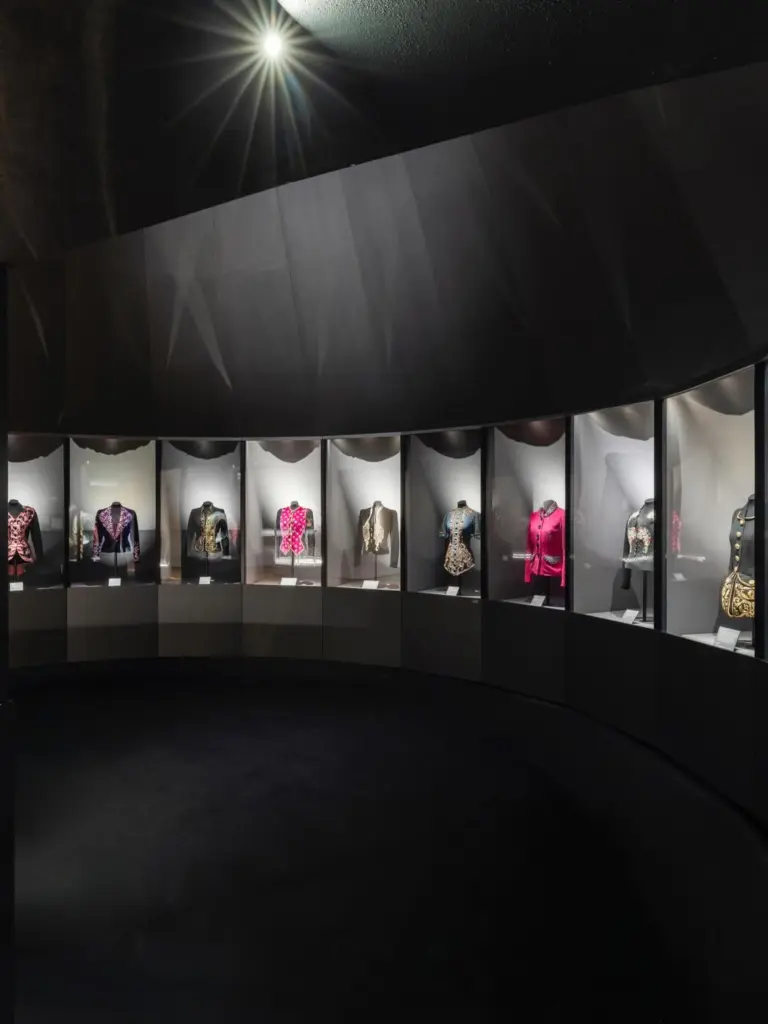
The exhibition explores this world through couture pieces, sketches, jewellery, fragrance, photography, and artworks that reveal how deeply connected Schiaparelli’s vision was to the wider avant-garde movement in Paris during the interwar years.
It also revisits the designer’s rivalry with Coco Chanel, whose restrained elegance stood in sharp contrast to Schiaparelli’s bold theatricality. Where Chanel refined simplicity, Schiaparelli embraced exaggeration, fantasy, and visual shock. Even today, much of contemporary couture leans closer to Schiaparelli’s instinct for drama than Chanel’s restraint.
Exploring the Exhibition at the V&A
The exhibition brings together more than 200 objects spanning couture, jewellery, photography, sketches, perfume, archival materials, and Surrealist artworks connected to Schiaparelli’s world. For visitors familiar only with the house’s modern celebrity visibility, the scale of the historical archive becomes one of the exhibition’s biggest revelations.
The House’s Most Iconic Couture Creations
Several of Elsa Schiaparelli’s most celebrated couture works appear throughout the galleries, including the Lobster Dress from 1937, developed with Salvador Dalí and famously photographed on Wallis Simpson by Cecil Beaton. Displayed within the exhibition alongside Surrealist artworks and fashion photography from the era, the gown feels less like a historic costume piece and more like a radical artistic statement that still carries visual impact today.
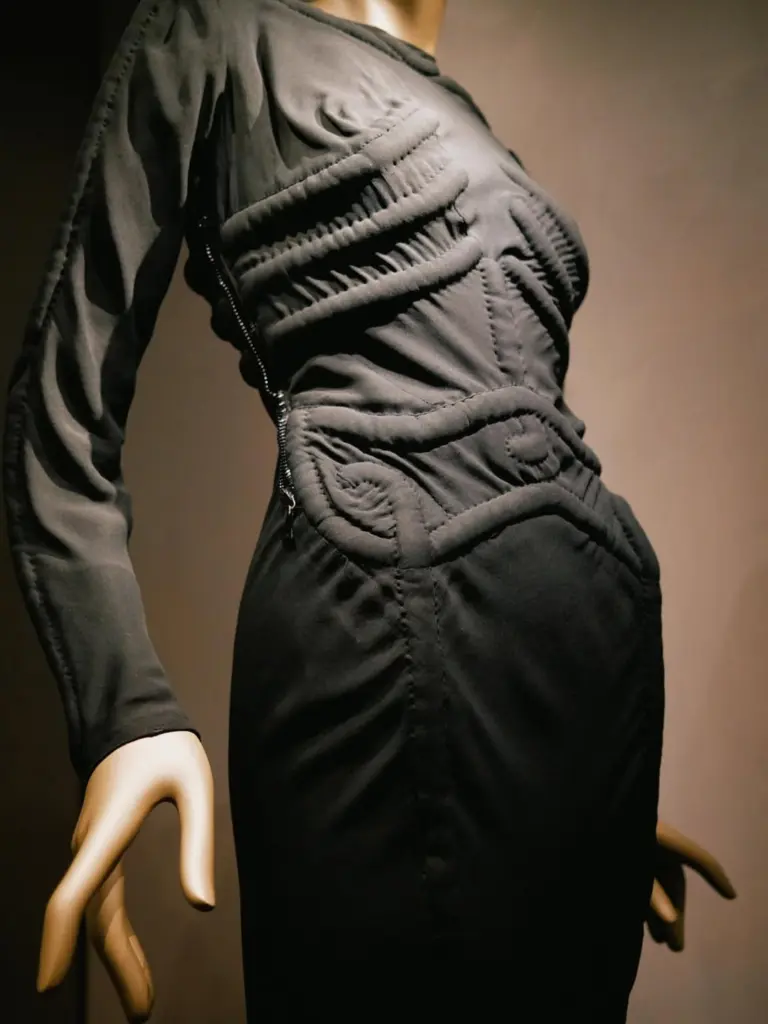
The Skeleton Dress from the 1938 Circus Collection remains another defining highlight. Constructed with padded quilting to imitate protruding ribs, spine, and bones beneath black crepe fabric, the piece demonstrates Schiaparelli’s fascination with illusion, anatomy, and visual provocation.
Nearby, visitors encounter the Tears Dress, also from the Circus Collection, printed with trompe-l’oeil tears designed to resemble ripped flesh beneath the fabric. Even now, the effect feels remarkably modern.
The exhibition also includes the Shoe Hat created with Dalí, one of Schiaparelli’s most recognisable Surrealist accessories, alongside examples of her extraordinary evening jackets embroidered with Jean Cocteau’s line drawings. The Cocteau Evening Coat, with embroidered profiles forming a vase of roses across the body, stands among the clearest examples of couture functioning as wearable art.
Astrology, Illusion, and Surrealist Motifs
Several galleries focus on Schiaparelli’s fascination with astrology, mythology, and celestial symbolism. Visitors can expect embroidered Zodiac motifs, evening capes decorated with constellations and stars, and pieces featuring suns, moons, and astrological references that later became recurring signatures within the modern maison.
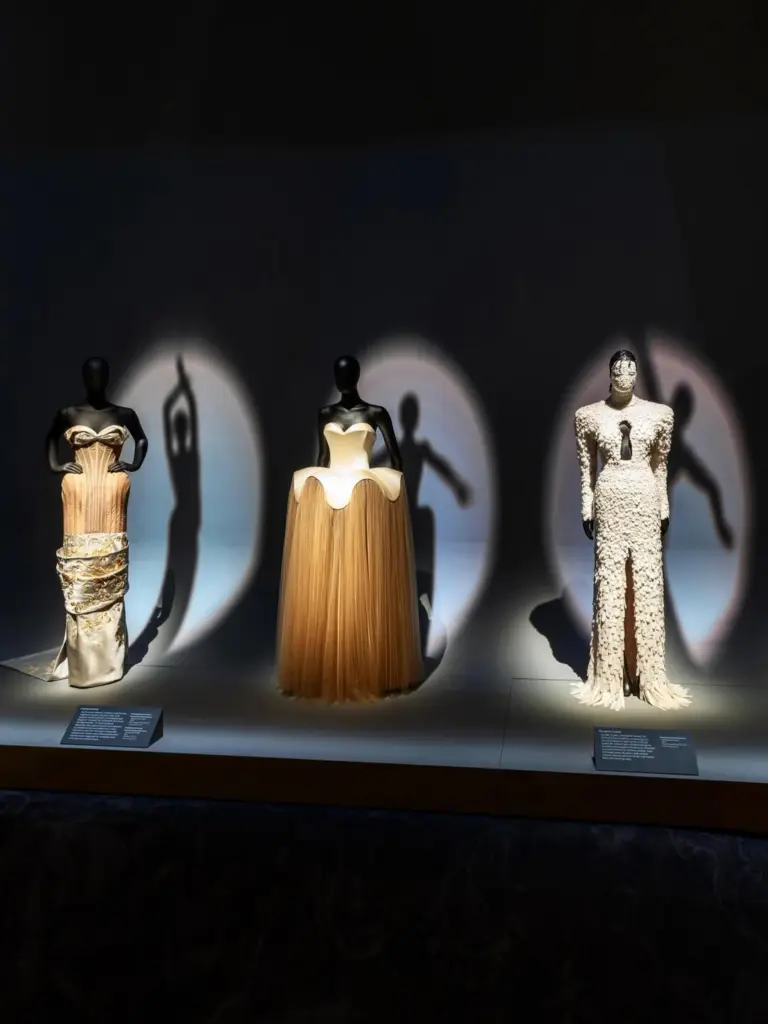
Her earlier trompe-l’oeil knitwear also receives significant attention. Sweaters designed to imitate bows, layered scarves, sailor collars, and jewellery through knitted illusion techniques reveal how Schiaparelli first gained recognition in Paris during the late 1920s. Though quieter than the dramatic eveningwear, these pieces remain among the most technically influential garments in the exhibition.
Jewellery, Accessories, and the Wider Schiaparelli Universe
Accessories and jewellery form another particularly strong section of the exhibition. Oversized insect brooches, surrealist buttons, telephone-inspired compact cases, and sculptural costume jewellery demonstrate how Schiaparelli extended artistic experimentation far beyond couture silhouettes.
The exhibition also features examples of the house’s perfume bottles and beauty packaging, including references to the famous Shocking! fragrance and the vivid “Shocking Pink” shade that became synonymous with the house.
Archival Couture Meets the Modern Maison
One of the most compelling aspects of the exhibition is the way these archival works are placed in conversation with Daniel Roseberry’s modern couture. Contemporary Schiaparelli pieces featuring gilded anatomical jewellery, sculpted corsetry, oversized gold embellishment, and celestial motifs make the continuity between Elsa Schiaparelli’s original vision and the current maison immediately visible.
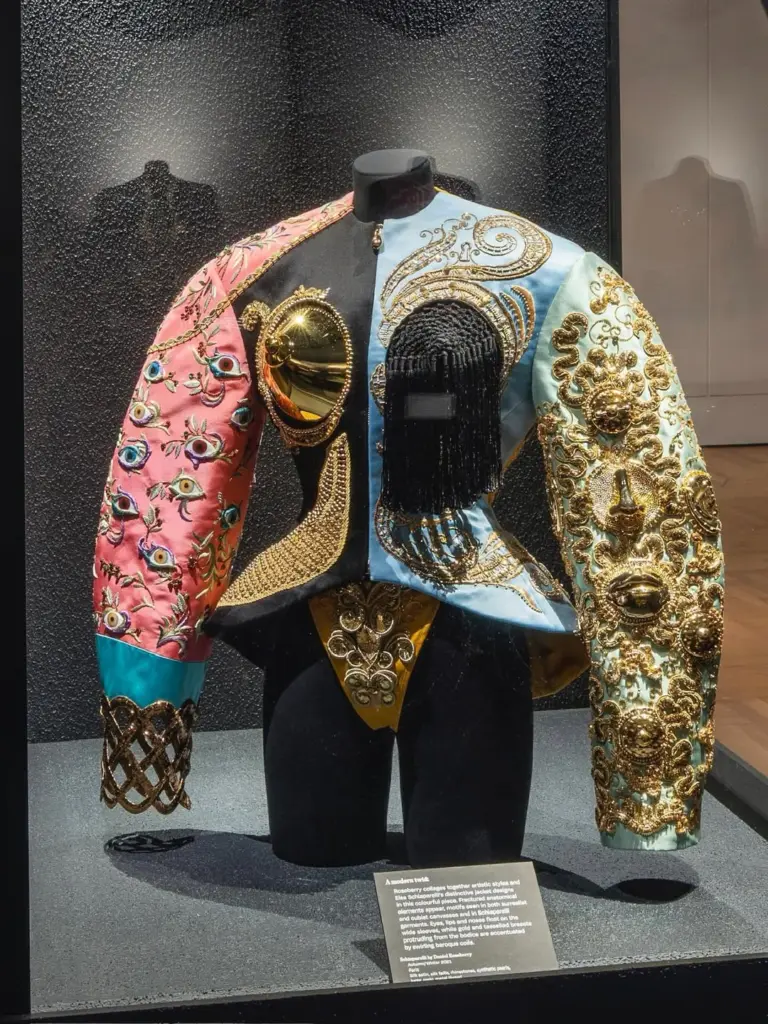
Rather than separating past and present too rigidly, the V&A allows visitors to trace recurring ideas across decades of couture history. Anatomy, illusion, Surrealism, theatricality, and fantasy appear repeatedly throughout the galleries, linking the house’s 1930s creations with the red-carpet couture now worn by figures such as Zendaya, Bella Hadid, and Ariana Grande.
The exhibition’s presentation itself is expected to feel richly atmospheric. Mirrored installations, theatrical lighting, and sculptural staging allow many of the garments to feel suspended somewhere between couture, performance, and gallery art. Up close, the workmanship becomes extraordinary. Embroidery from ateliers such as Lesage, intricate beadwork, padded quilting, and complex textile manipulation reveal the immense technical precision behind pieces often remembered primarily for their spectacle.
Daniel Roseberry and the Modern House of Schiaparelli
For many visitors, Schiaparelli’s current cultural prominence comes through Daniel Roseberry’s couture collections, which have transformed the house into one of fashion’s most visually recognisable names once again.
The exhibition draws direct parallels between Elsa Schiaparelli’s original Surrealist instincts and Roseberry’s contemporary couture. Gold anatomical jewellery, sculpted bodices, exaggerated silhouettes, celestial symbolism, and illusion dressing all echo ideas introduced by Schiaparelli herself decades earlier.
Modern looks expected within the exhibition include several couture pieces worn during recent celebrity appearances and runway presentations that helped reignite global interest in the house. Roseberry’s gilded lung necklace and anatomical jewellery pieces, which became instantly recognisable after appearing on celebrities including Bella Hadid and Doja Cat, reflect the same fascination with anatomy and symbolism seen in the original Skeleton Dress.
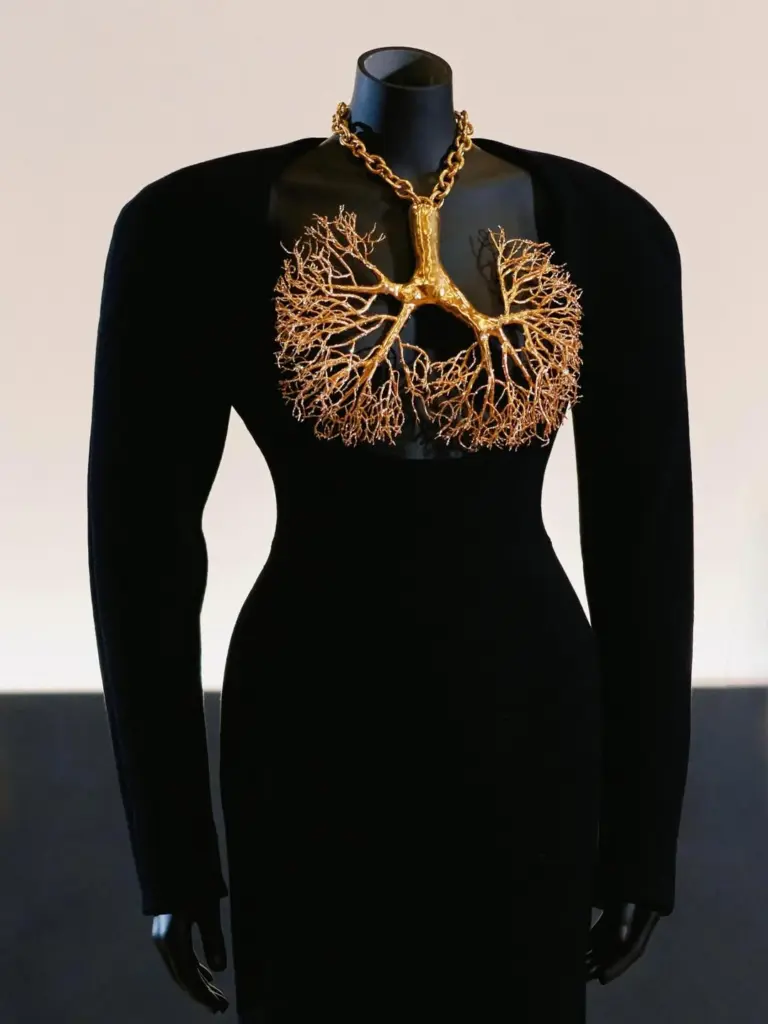
The exhibition also explores Schiaparelli’s contemporary couture through runway photography, celebrity dressing, and modern craftsmanship, showing how the house has evolved without losing its Surrealist identity.
This dialogue between archival and contemporary work becomes one of the exhibition’s strongest curatorial decisions. Rather than separating Elsa Schiaparelli’s legacy from the modern maison, the exhibition demonstrates how thoroughly her original ideas still shape the house today.
Why Schiaparelli Feels Especially Relevant in 2026
Fashion’s renewed embrace of spectacle makes this exhibition particularly timely. After years shaped heavily by minimalism and understated luxury, couture has returned to bold visual storytelling.
Schiaparelli’s work feels remarkably suited to the current cultural landscape. The house’s surrealist silhouettes, symbolic jewellery, and theatrical construction translate powerfully across photography, social media, red carpets, and digital fashion coverage.
At the same time, there is growing appreciation for craftsmanship at the highest level of couture. Exhibitions like this allow visitors to understand the immense technical labour behind garments that are often consumed online in seconds.
That balance between artistry, craftsmanship, and visual drama explains why Schiaparelli continues to resonate across generations.
Planning a Visit to the Exhibition
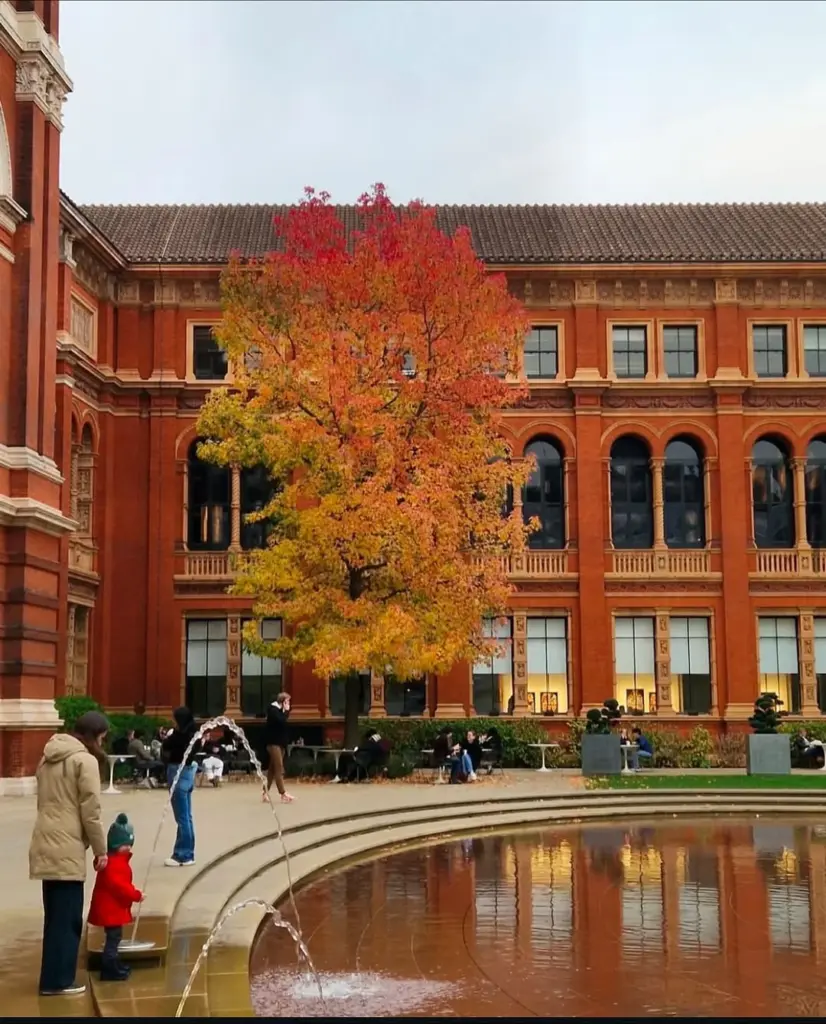
Schiaparelli: Fashion Becomes Art runs from 28 March to 8 November 2026 at the Victoria and Albert Museum in South Kensington.
For visitors travelling specifically for the exhibition, weekday mornings tend to offer the calmest viewing experience, particularly during the spring months before peak summer tourism arrives in London. Friday late openings also work particularly well for those planning dinner or cocktails afterwards in Knightsbridge or Chelsea.
Allow at least two hours for the exhibition itself. Visitors with a strong interest in couture construction, embroidery, or fashion history could easily spend longer studying the details within the galleries.
The museum’s South Kensington location places visitors within close reach of Harrods, Sloane Street, Bond Street, and several of London’s strongest luxury hotels.
Where to Stay for a London Fashion Weekend
The Berkeley remains one of the strongest nearby choices for visitors building a fashion-focused London itinerary around the exhibition. Long associated with the fashion industry itself, the hotel combines discreet luxury with direct access to Belgravia, Knightsbridge, and Mayfair.
Mandarin Oriental Hyde Park offers another compelling base, particularly for guests planning shopping appointments around Sloane Street and Bond Street alongside museum visits.
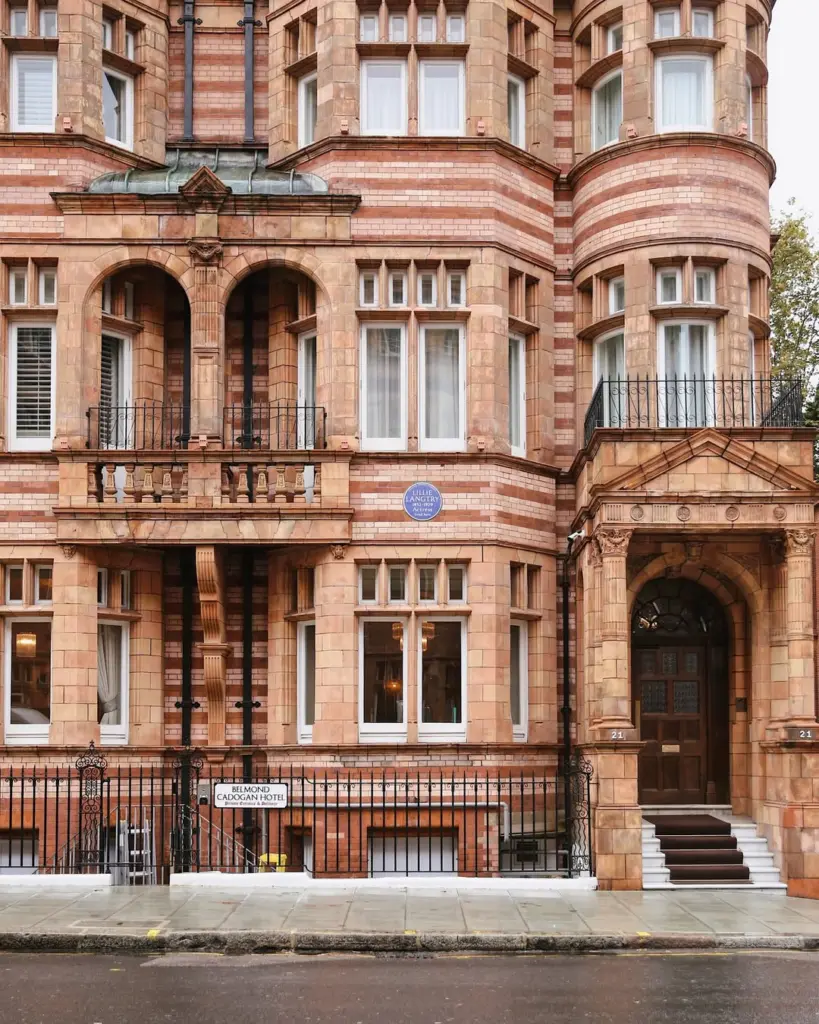
For a quieter residential atmosphere, The Cadogan in Chelsea brings strong Belmond service and an elegant sense of privacy, while The Franklin appeals to travellers looking for a more boutique-style experience within walking distance of South Kensington’s museums.
Dining and London Addresses to Pair With the Exhibition
The exhibition naturally lends itself to a particularly polished London itinerary.
Lunch at The Tiffany Blue Box Café inside Harrods works well before an afternoon museum visit, while Dinner by Heston Blumenthal remains one of the area’s strongest evening reservations afterwards.
For cocktails, Scarfes Bar continues to offer one of London’s most atmospheric settings, particularly later in the evening when the space feels livelier without losing its refinement.
Visitors extending the day into shopping appointments will also find themselves well positioned for the couture houses, jewellery boutiques, and private showrooms of Mayfair and Knightsbridge.
Where Couture Becomes Cultural History
What makes Schiaparelli: Fashion Becomes Art especially compelling is the way it reveals fashion’s ability to provoke emotion, challenge convention, and operate as serious artistic expression.
The exhibition moves far beyond a retrospective of beautiful garments. Through pieces such as the Lobster Dress, Skeleton Dress, Tears Dress, Shoe Hat, and Cocteau embroideries, visitors are reminded how radically Schiaparelli reshaped couture during the twentieth century and how deeply those ideas continue to influence fashion today.
For London in 2026, it stands comfortably among the year’s most significant cultural exhibitions.