


All products are independently selected by our editors. If you buy something, we may earn an affiliate commission.
Few events on the global calendar draw quite the same convergence of music, fashion, and social momentum as Coachella Valley Music and Arts Festival. Set within the vast openness of the Californian desert, it unfolds as a carefully choreographed weekend where headline performances sit alongside private gatherings, brand-led moments, and a quietly competitive sense of presence. The experience tends to reward those who arrive with a clear sense of how the weekend should feel, rather than a fixed list of what must be seen.
The Desert Setting and the Palm Springs Orbit
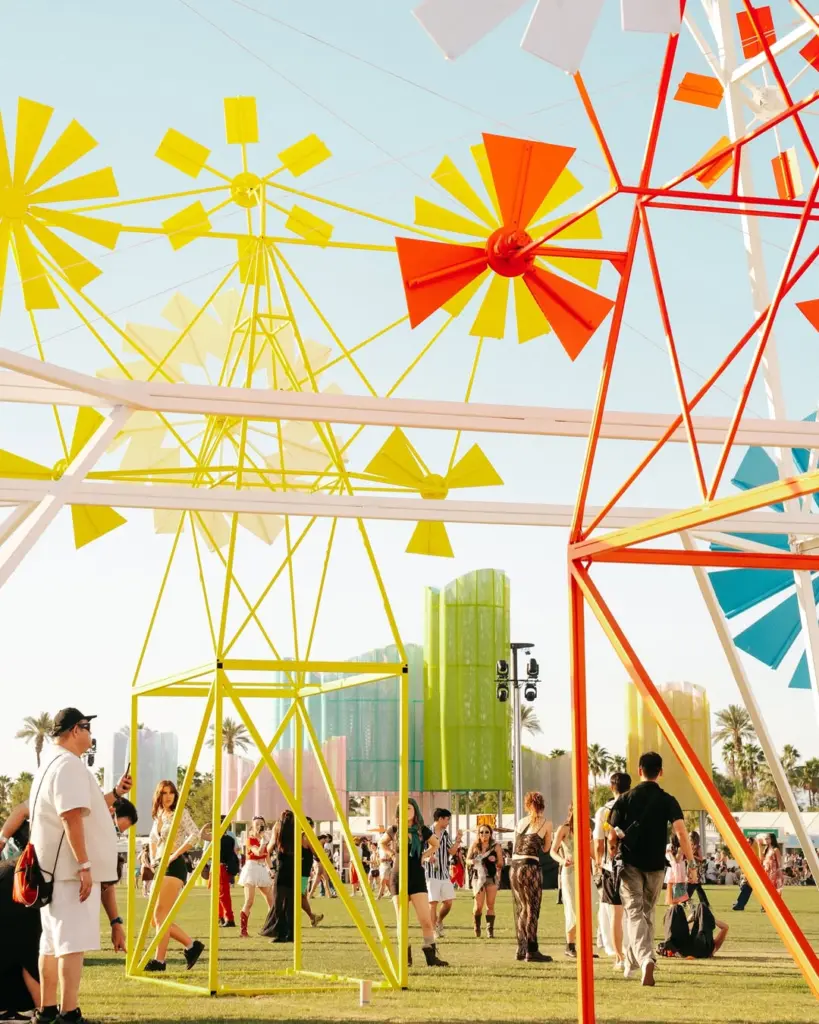
The festival takes place at the Empire Polo Club in Indio, though the rhythm of the weekend begins well before reaching the gates. Palm Springs, Rancho Mirage, and La Quinta form a natural circuit of bases, each shaping the pace in different ways.
Palm Springs carries a certain visibility, with its mid-century architecture and long-established social scene. Rancho Mirage offers a quieter, more contained atmosphere, where privacy is easier to maintain. La Quinta, set closest to the grounds, becomes the most practical choice once traffic begins to build in the late afternoon.
The desert itself dictates the tempo. Mornings move slowly, afternoons call for shade, and by early evening, the valley shifts with intent towards the festival.
Access and the Real Hierarchy of Entry
General admission rarely defines the experience. VIP passes provide a more composed way of moving through the grounds, with dedicated entrances, access to the Rose Garden, and spaces that allow for pause rather than constant movement.
A further tier operates with less visibility. Artist credentials, brand-issued passes, and private guest lists open access to compounds and off-schedule environments where the atmosphere is notably more controlled. These layers tend to be arranged in advance, often through longstanding relationships rather than last-minute planning.
Desert Addresses That Set the Tone
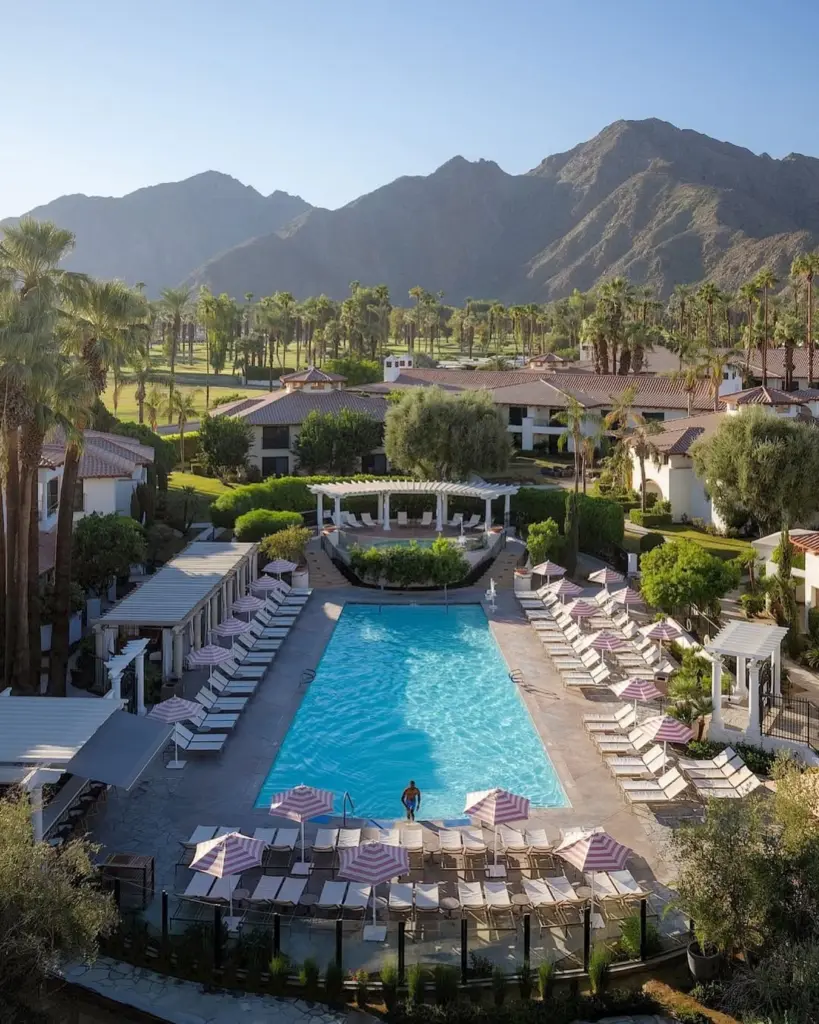
Where you stay has a direct influence on how the weekend unfolds. La Quinta Resort & Club remains one of the most effective choices, with its casita-style layout, private courtyards, and proximity that shortens each journey to the grounds.
For a more design-led setting, Parker Palm Springs brings a livelier energy, its interiors layered with colour, and its pool areas are rarely still during festival weekends.
At the more private end of the spectrum, Sensei Porcupine Creek offers a markedly different pace. Set within an expansive estate, it combines wellness, golf, and a level of seclusion that allows the weekend to unfold at a distance from the main crowds. Fully staffed villas remain a preferred alternative, where chefs, drivers, and security can be arranged discreetly, and the schedule can be managed with ease.
Moving Through the Valley Without Friction
Distances across the valley can feel longer than expected once the festival begins. Chauffeured vehicles offer consistency, particularly during peak arrival and departure hours when ride-share options become less reliable.
Helicopter transfers provide a more direct route between Los Angeles and the desert, with private landings arranged ahead of time. On the ground, timing becomes the deciding factor. Early arrivals ease the approach, while later departures benefit from careful positioning near exit routes.
A considered approach to movement preserves the shape of the day.
Inside Coachella at a Different Level
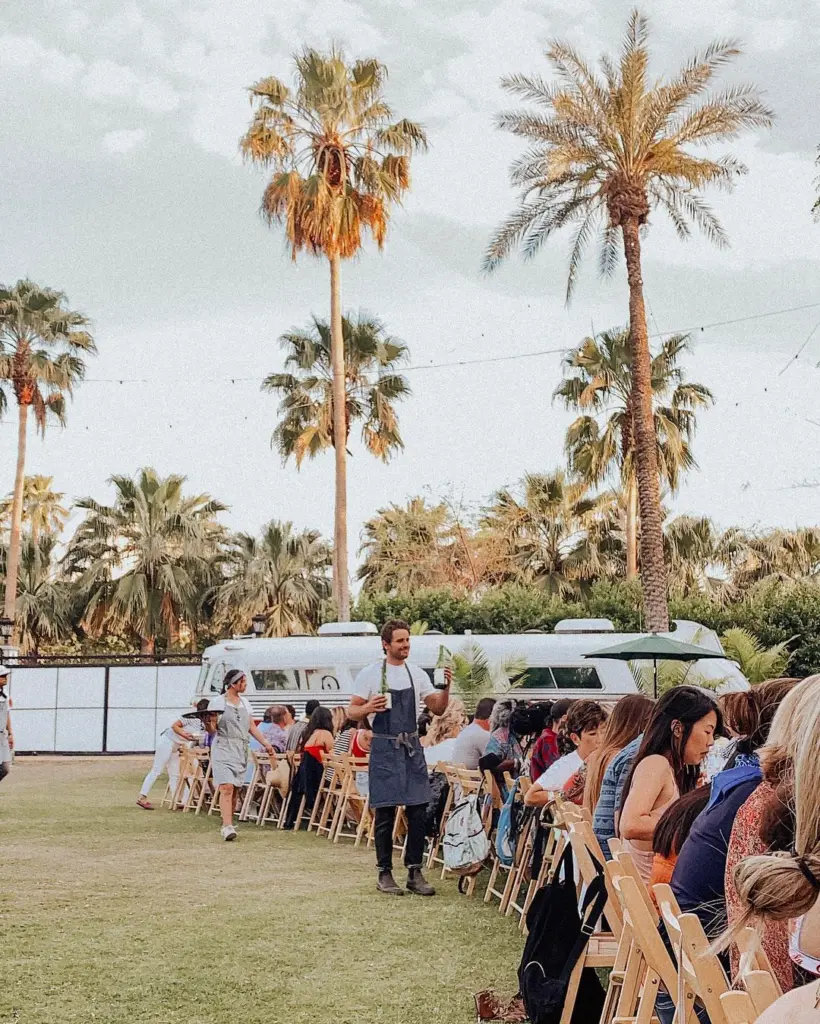
Within the festival grounds, the experience shifts depending on where time is spent. The Rose Garden provides space to sit, eat, and reset between sets, with a calmer atmosphere and more considered food and beverage options.
Safari camping introduces a fully serviced alternative to off-site stays, with furnished tents, dedicated hosts, and transport into the festival. It suits those who value proximity, though many still prefer to return to private residences once the evening draws to a close.
Backstage areas and artist compounds remain deliberately understated, designed to offer privacy rather than spectacle, with access limited and carefully managed.
The Invitations That Shape the Weekend
A parallel calendar unfolds across the valley, defined less by tickets and more by invitation. Events such as the Neon Carnival and Revolve Festival draw a curated mix of fashion, entertainment, and media, with guest lists that are tightly controlled.
Luxury houses and global brands host their own gatherings in private estates and discreet venues, ranging from daytime poolside events to late-night celebrations that continue long after the festival closes. Access is often arranged quietly, with plans shifting as the weekend progresses.
Style in the Desert

Coachella’s aesthetic has evolved into something more considered, with lightweight tailoring, linen, and silk forming the foundation of most wardrobes. Accessories carry weight, though practicality remains essential given the terrain and climate.
Many arrive with looks prepared in advance, often shaped by stylists or brand collaborations. Even so, the most effective approach tends to favour ease, allowing the environment to guide the overall impression.
Dining, Recovery, and the Pace of the Weekend
Away from the festival, the valley offers a dining scene that balances energy with restraint. Workshop Kitchen + Bar brings a modern, architectural setting suited to evening reservations, while Spencer’s Restaurant provides a more classic atmosphere for long lunches in a garden setting.
Private dining remains a popular choice, with chefs brought into villas for smaller, more controlled gatherings that extend into the evening.

Recovery becomes part of the rhythm. Spa treatments, hydration, and unhurried mornings by the pool allow the weekend to maintain its pace without feeling overextended.
Reading the Weekend Well
The structure of each day benefits from a measured approach. Arriving in the late afternoon allows the atmosphere to build naturally, with headline sets anchoring the evening.
Balancing performances with social commitments calls for selectivity. Not every invitation requires attendance, and not every set needs to be prioritised. A well-paced schedule allows space for both.
A Festival That Extends Beyond the Stage
Coachella holds its position through a combination of cultural relevance and careful curation. Music remains central, though the wider experience is shaped by access, setting, and the ability to move through the weekend with ease.
With the right arrangements in place, the desert begins to feel expansive rather than demanding, and the festival settles into its natural rhythm.