

All products are independently selected by our editors. If you buy something, we may earn an affiliate commission.
Each winter, Venice enters a season shaped almost entirely by culture. As Carnival approaches, the city shifts in mood and movement. Masked figures begin to appear in quiet squares. Tailors and ateliers work behind shuttered windows. Classical music returns to palace halls. By the time the first official ceremonies unfold, Venice feels less like a destination and more like a stage.
For luxury travellers, Venice Carnival is defined by historic palazzi, invitation-led gatherings, formal balls, private fittings, and the discreet social life that moves along the canals after dusk. To experience Carnival well is to understand how heritage, craftsmanship, and society converge for a brief and carefully orchestrated season.
Venice Carnival as a Cultural Season
The Carnival in Venice dates back to the Middle Ages, when masks allowed citizens to move through the city beyond the limits of social rank. Over centuries, this freedom evolved into a codified culture of costume, performance, and ritual that placed Venice at the centre of Europe’s artistic life.
Today, the Carnival unfolds across the final weeks of January and February, building gradually towards its closing days before Lent. The season opens with ceremonial water processions and public performances, often centred around the Grand Canal and historic quarters such as Cannaregio and San Marco. As the calendar advances, activity turns increasingly inward, towards palazzi, theatres, and salons where the most refined events are held.
Weekends bring the grandest gatherings, while weekdays lend themselves to private appointments, atelier visits, and cultural evenings. Many seasoned Carnival travellers favour the earlier part of the season, when Venice retains a calmer rhythm, and the social calendar is rich without feeling compressed.
Inside the World of Venice Carnival
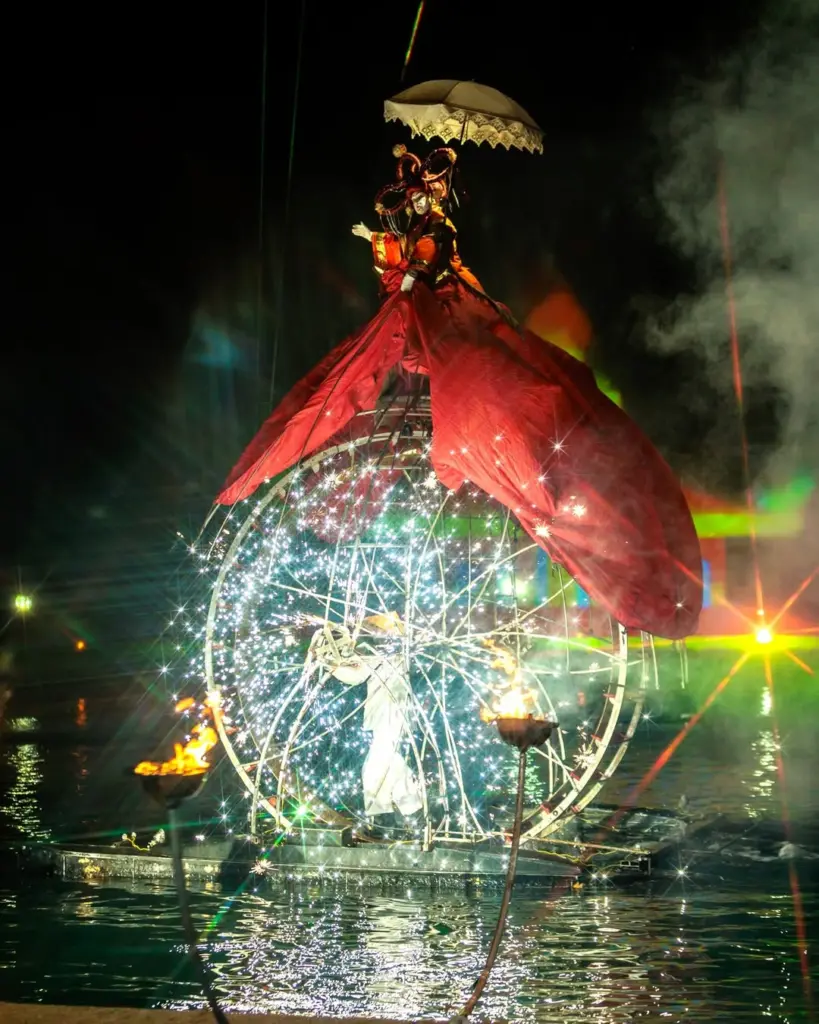
The most sought-after Carnival experiences take place behind historic façades.
Among the most recognised is Il Ballo del Doge, staged each year within one of Venice’s grand palazzi. The event has become a fixture of the international Carnival calendar, drawing patrons, designers, and collectors for evenings shaped by performance, costume, and formal dining.
Elsewhere, masked balls and gala evenings are hosted in venues such as Palazzo Pisani Moretta and Ca’ Vendramin Calergi, both closely tied to Venice’s aristocratic and cultural past. These gatherings recall the ceremonial traditions of the Republic, accompanied by period music, theatrical interludes, and candlelit salons.
Music remains closely woven into Carnival’s identity. Teatro La Fenice plays a central role throughout the season, with operatic and classical programmes that ground Carnival in its artistic heritage. Across the city, churches, scuole, and palace halls host chamber concerts and cultural evenings that form a quieter layer of the calendar.
On the water, opening and mid-season ceremonies bring the canals into focus. Gondola processions and historic regattas trace traditional routes, while private boats carry guests between palazzi long after the public spectacles have ended.
The Mask, the Costume, and the Language of Carnival
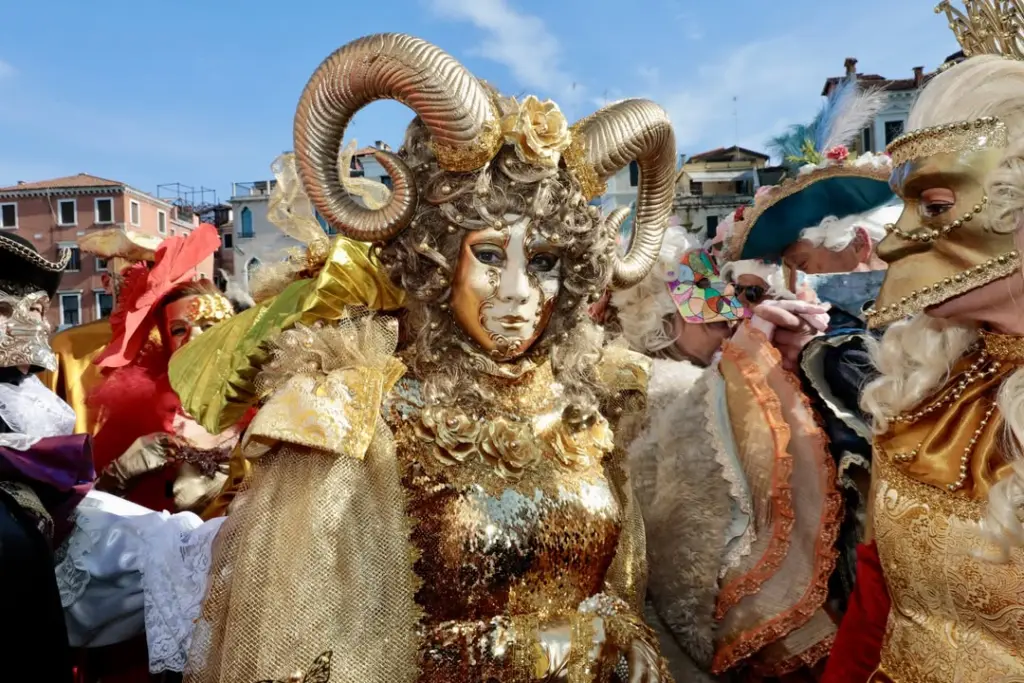
The visual language of Venice Carnival is inseparable from its traditions.
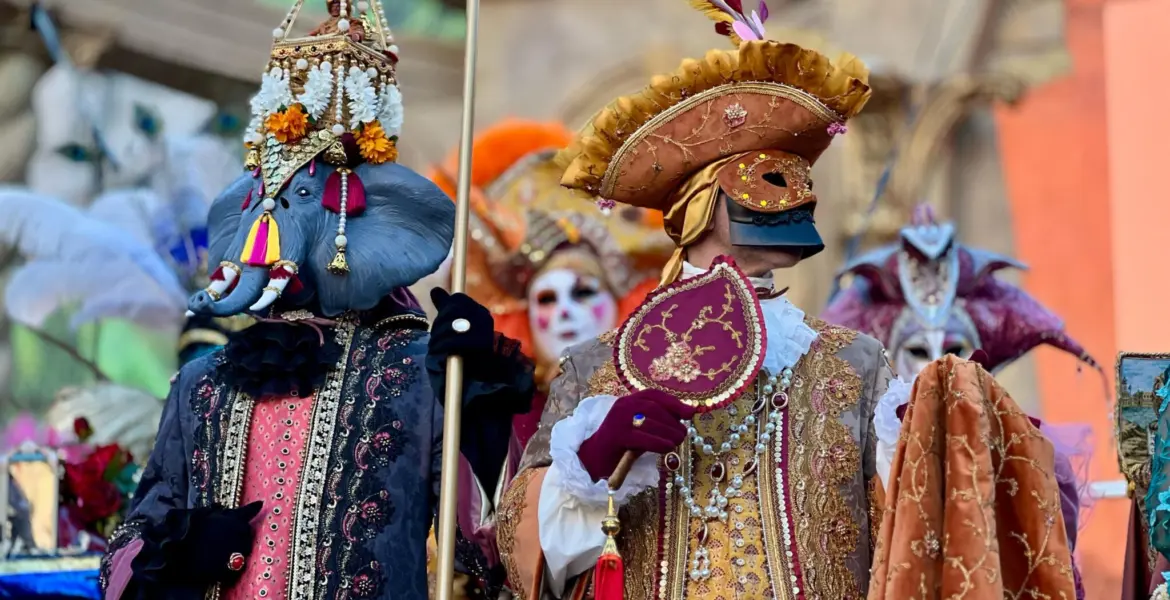
Venetian masks draw on centuries-old forms, once worn throughout the Republic as part of daily and ceremonial life. Many continue to be crafted by hand in historic workshops using papier-mâché, leather, and gold leaf techniques passed down through generations.
Ateliers such as Ca’ Macana, Atelier Marega, and Tragicomica Venezia remain among the city’s most respected names, producing masks for private clients, theatrical productions, and formal Carnival events. Appointments allow visitors to commission pieces or select hand-finished designs created by Venetian artisans rather than commercial replicas.
For those attending formal balls, historical costume forms the natural extension of this tradition. Bespoke fittings and curated rentals draw on Baroque and Rococo silhouettes, often completed with hand embroidery, structured corsetry, and custom headpieces. The process becomes part of the season, unfolding over days through atelier visits and private consultations.
The Palazzi and Grand Hotels That Shape Carnival
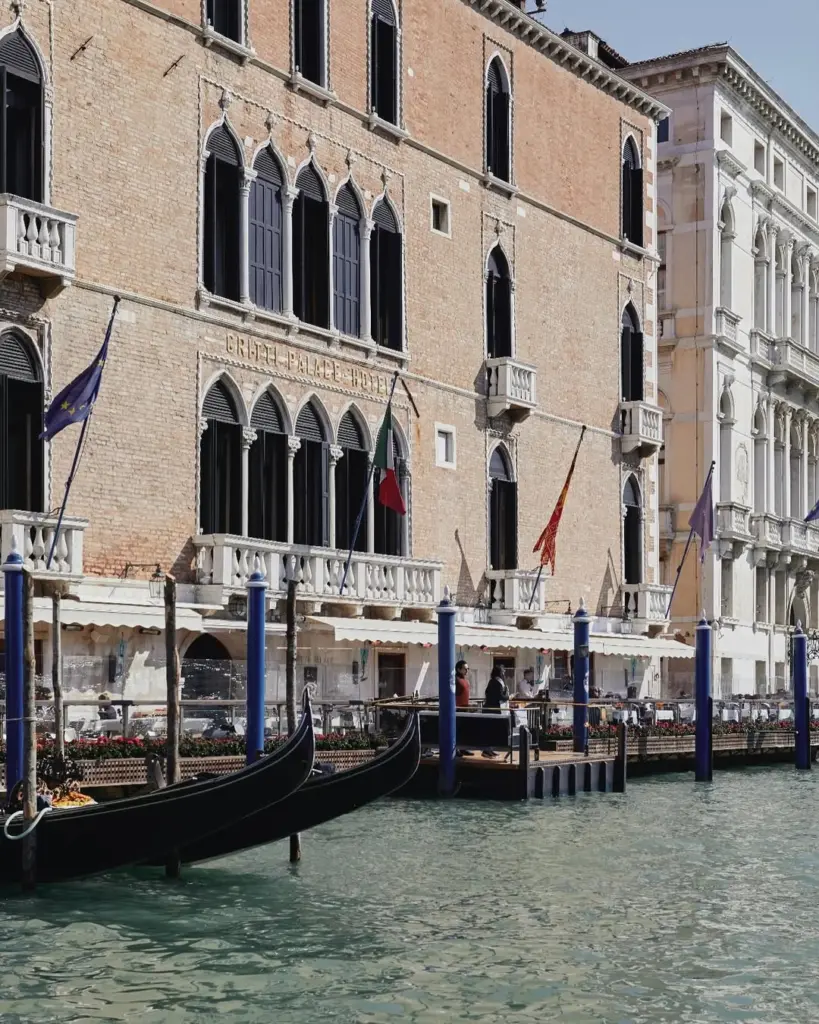
During Carnival, accommodation takes on a more social role.
Properties such as Aman Venice, set within Palazzo Papadopoli on the Grand Canal, offer one of the city’s most immersive settings. Historic salons, water-level entrances, and private dining rooms place guests within the architectural fabric of the season, where evenings often unfold without leaving the building.
The Gritti Palace remains a long-established Carnival address, valued for its Grand Canal presence and discreet salons that host lunches, receptions, and private dinners. Hotel Danieli, close to St Mark’s Basin and ceremonial routes, continues to attract visitors attending the season’s formal programme.
Across the Giudecca, Belmond Hotel Cipriani provides a more secluded rhythm, frequently chosen by those who prefer to begin or conclude evenings away from the city’s most active quarters. Ca’ Sagredo Hotel, itself a museum-palazzo, offers an atmosphere closely aligned with Venice’s artistic heritage, where art and architecture frame the Carnival experience.
Dining, Salons, and the Social Life of Carnival
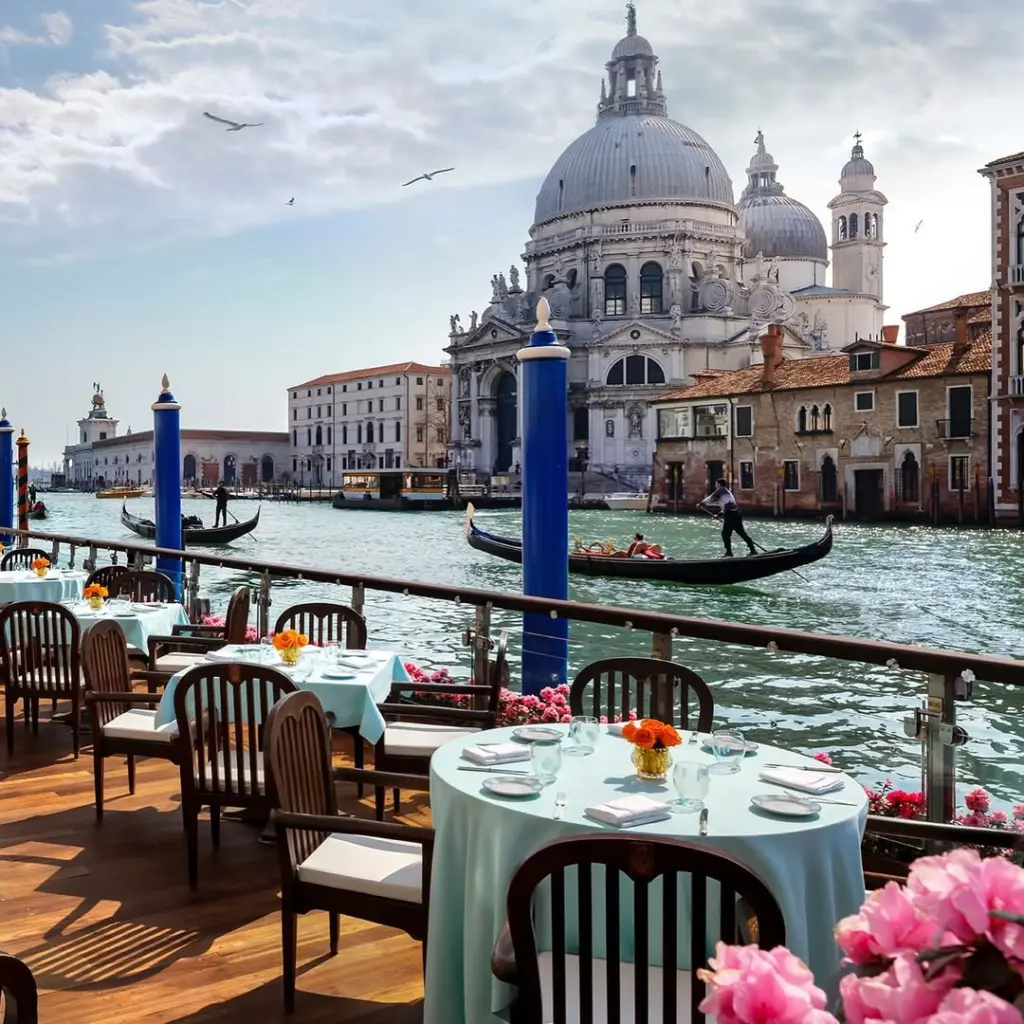
Much of Carnival’s social life unfolds around tables.
Historic cafés including Caffè Florian and Caffè Quadri continue to serve as daytime meeting points, where costumed figures, patrons, and designers gather between fittings, exhibitions, and rehearsals.
Lunches and early dinners often take place within grand hotel dining rooms and palace restaurants. Club del Doge at The Gritti Palace and the dining rooms of Palazzo Venart, home to Glam, are regularly chosen for their setting as much as their cuisine.
As evening approaches, fine dining becomes part of the progression towards formal events. Restaurants such as Ristorante Quadri and Il Ridotto frequently appear on private schedules, offering refined settings before guests depart for masked gatherings. Private dinners hosted within historic residences form a quieter dimension of the season, where conversation continues long after the city’s public rhythms subside.
Moving Through Venice During Carnival
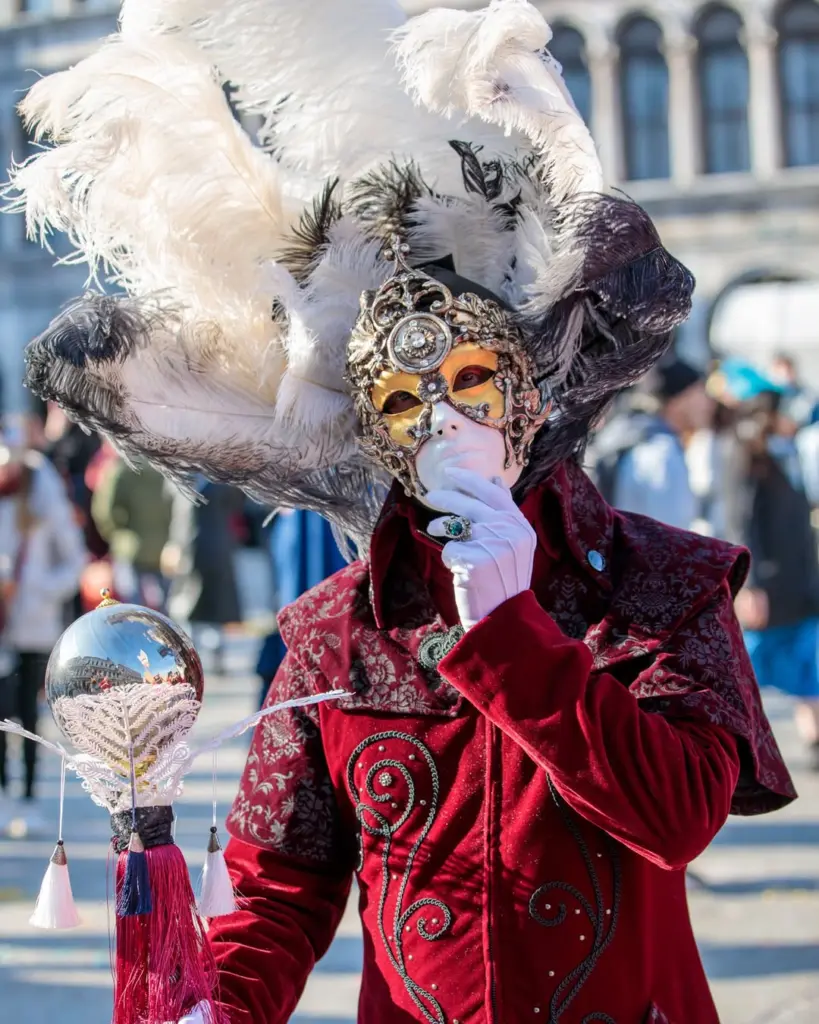
Carnival is best experienced with an awareness of the city’s shifting tempo.
Late mornings and early evenings concentrate the greatest activity around St Mark’s Square and major bridges. Early hours reveal a gentler Venice, where masked figures cross near-empty campi and photographers work in soft winter light. Late nights return the city to those moving between palazzi by boat.
Private water taxis are commonly used for formal engagements, allowing discreet arrivals along the Grand Canal and Dorsoduro. Many luxury itineraries are shaped around private appointments, hosted lunches, and evening events, creating a natural balance between the city’s public and private moments.
Formal events typically observe dress codes, with full costume or black tie and mask expected at historic balls. Invitations and tickets are arranged in advance, and etiquette leans towards elegance, restraint, and respect for the historic spaces that continue to host the season.
A Season That Belongs to Those Who Enter It
Venice Carnival reveals itself gradually. In the reflection of lantern light across the canals. In the quiet movement of silk along palace staircases. In the final crossings by boat, the city feels momentarily suspended.
Those who experience the season fully often speak less of events than of atmosphere. Of a city briefly aligned with its past. Of traditions carried forward through craftsmanship, music, and private society. For a few winter weeks, Venice opens one of its oldest cultural rituals to those willing to move within its cadence and leave with its memory.