


All products are independently selected by our editors. If you buy something, we may earn an affiliate commission.
There is something particularly compelling about staying somewhere whose history extends far beyond its life as a hotel. Across the world, former palaces, monasteries, convents and centuries-old neighbourhoods have been carefully adapted into exceptional places to stay, often preserving architecture that reveals several chapters of the past.
The most unique hotels in historical locations combine that heritage with a distinctly elevated stay. Some occupy ancient cave dwellings or royal residences, while others place guests within UNESCO-listed cities and monumental complexes. These ten stand out for the significance of their settings, the care with which their histories have been preserved, and the quality of the experience surrounding them.
1. Parador de Granada, Spain
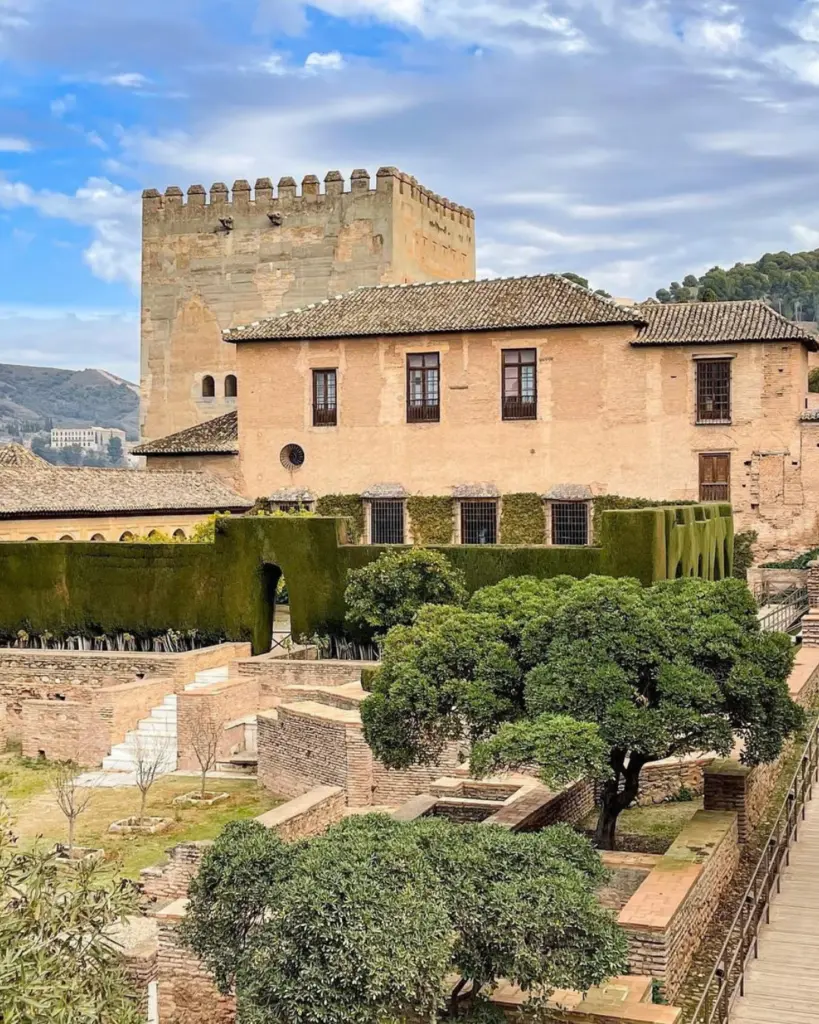
Few hotels can claim a setting within the Alhambra itself. Parador de Granada occupies the former Nasrid Palace of Los Infantes, later converted by the Catholic Monarchs into the first Christian monastery established within the newly conquered Alhambra. Elements of both periods remain, including the original patio adapted into a cloister, an Arabic room, the qubba and palace baths discovered in the 20th century.
Its position also places the Generalife gardens close at hand, making the wider Alhambra complex part of the stay rather than a separate excursion. Guest rooms retain the building’s historic character, while the restaurant serves Andalusian cuisine in surroundings shaped by the former palace and monastery. Here, the luxury lies largely in the privilege of staying within one of Spain’s most significant historic sites.
2. Sextantio Le Grotte della Civita, Matera
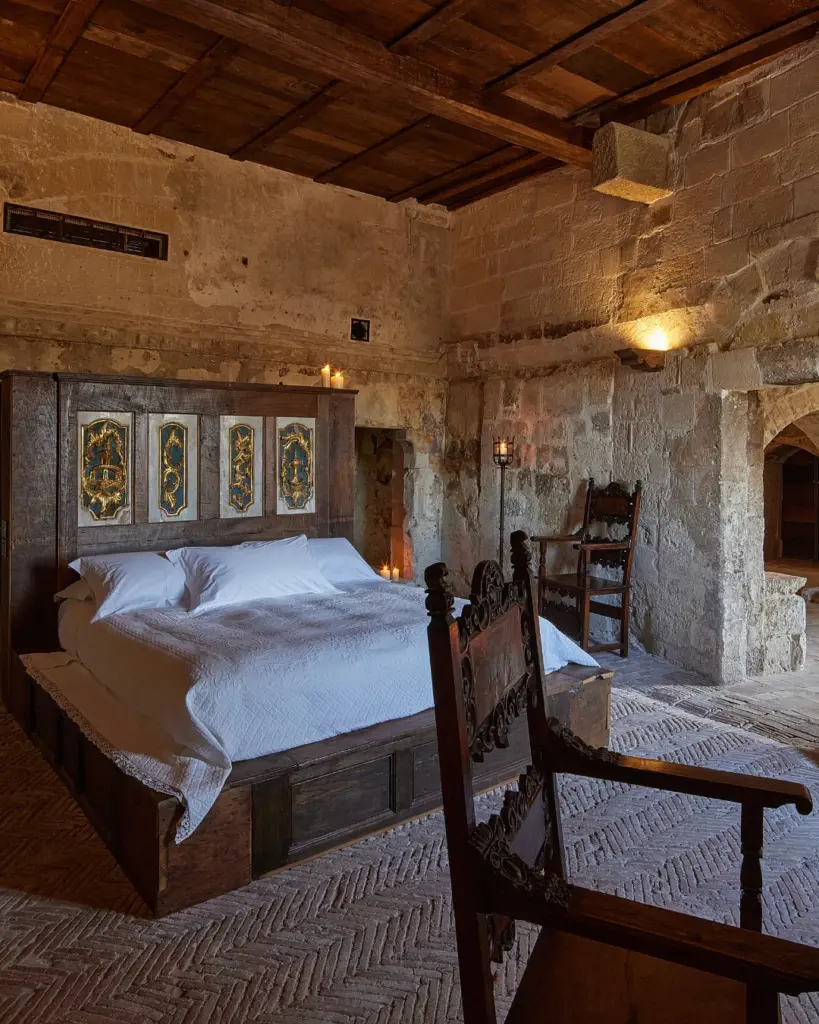
Carved into Matera’s extraordinary Sassi, Sextantio Le Grotte della Civita approaches luxury through conservation rather than reinvention. The hotel occupies restored cave dwellings within one of the world’s oldest continuously inhabited landscapes, with 18 cave rooms complemented by accommodation in the Palazzo della Civita.
The restoration deliberately preserved the caves’ irregular forms and traces of their former domestic use, pairing stone interiors with understated furnishings, freestanding baths and carefully chosen contemporary comforts. A former rock-hewn church now serves as a communal space, while private dining and tailored experiences reinforce the hotel’s intimate character. Its position within the UNESCO-listed Sassi keeps Matera’s lanes, churches and cave architecture integral to the stay.
3. Fontevraud L’Érmitage, Anjou
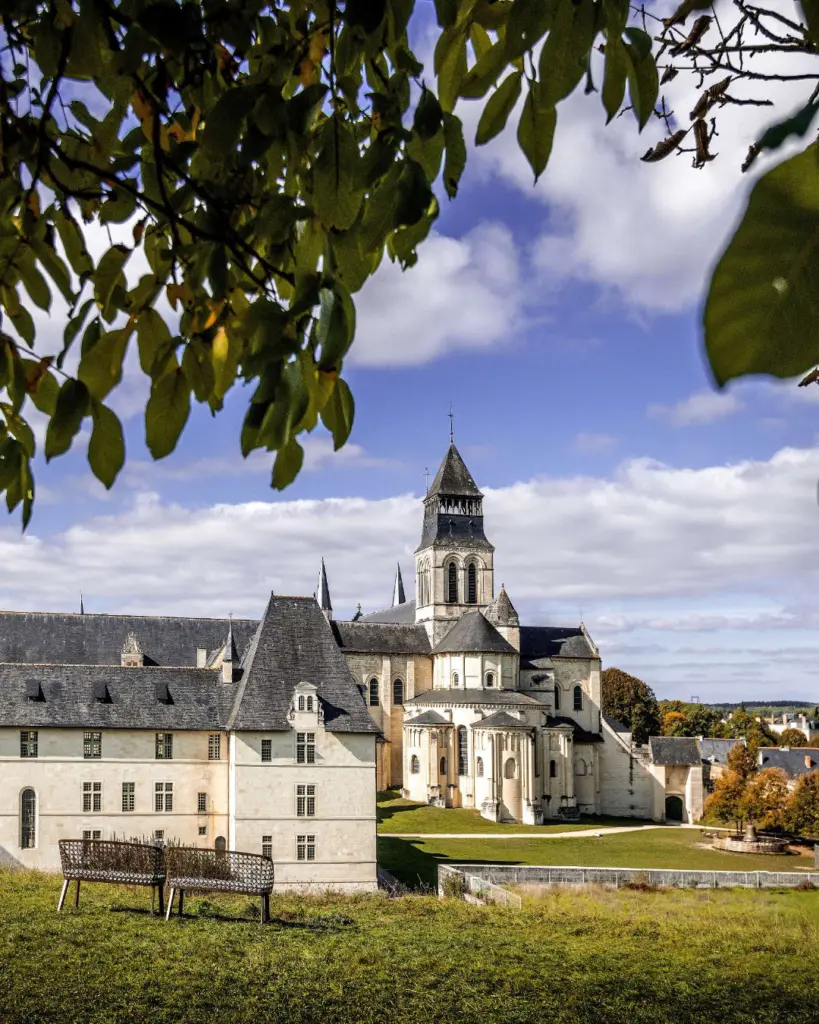
Fontevraud L’Ermitage sits within the Saint-Lazare Priory of the Royal Abbey of Fontevraud, a vast monastic complex founded in 1101. Its history is closely tied to the Plantagenets, and the abbey church contains the recumbent effigies of Henry II, Eleanor of Aquitaine, and Richard the Lionheart.
The hotel’s 54 rooms occupy spaces including former nuns’ dormitories, attics and duplexes, with restrained contemporary interiors allowing the medieval architecture to remain prominent. Its Michelin-starred restaurant, Fontevraud Le Restaurant, adds a fine-dining dimension, while hotel guests receive extended access to the Royal Abbey until after midnight. Experiencing its cloisters and monumental spaces once daytime visitors have departed is one of the property’s most distinctive privileges.
4. Monasterio, A Belmond Hotel, Cusco
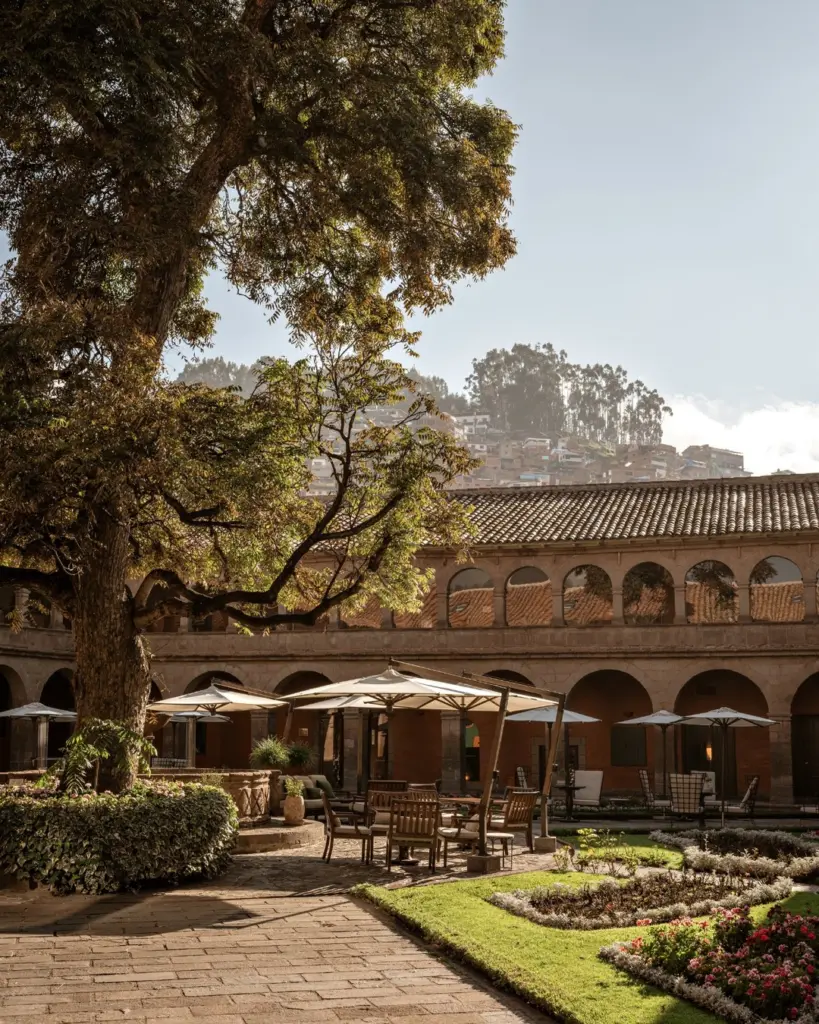
Monasterio reveals two defining chapters of Cusco’s history within a single property. The hotel stands on the foundations of a palace associated with Inca Emperor Amaru Qhata, where sections of Inca stonework survive. In 1595, the site became the San Antonio Abad Monastery, introducing the cloisters, chapel and religious art that continue to characterise the building.
Today, the former monastery retains its baroque architecture and collection of Cusco School art, with rooms and suites arranged around historic courtyards. A centuries-old Andean cedar stands at the centre of the main cloister, while fine dining, spa treatments and experiences exploring Peruvian culture bring Belmond’s polished hospitality into the historic setting. Some accommodations can also be enriched with additional oxygen to ease adjustment to Cusco’s altitude.
5. Amangalla, Galle
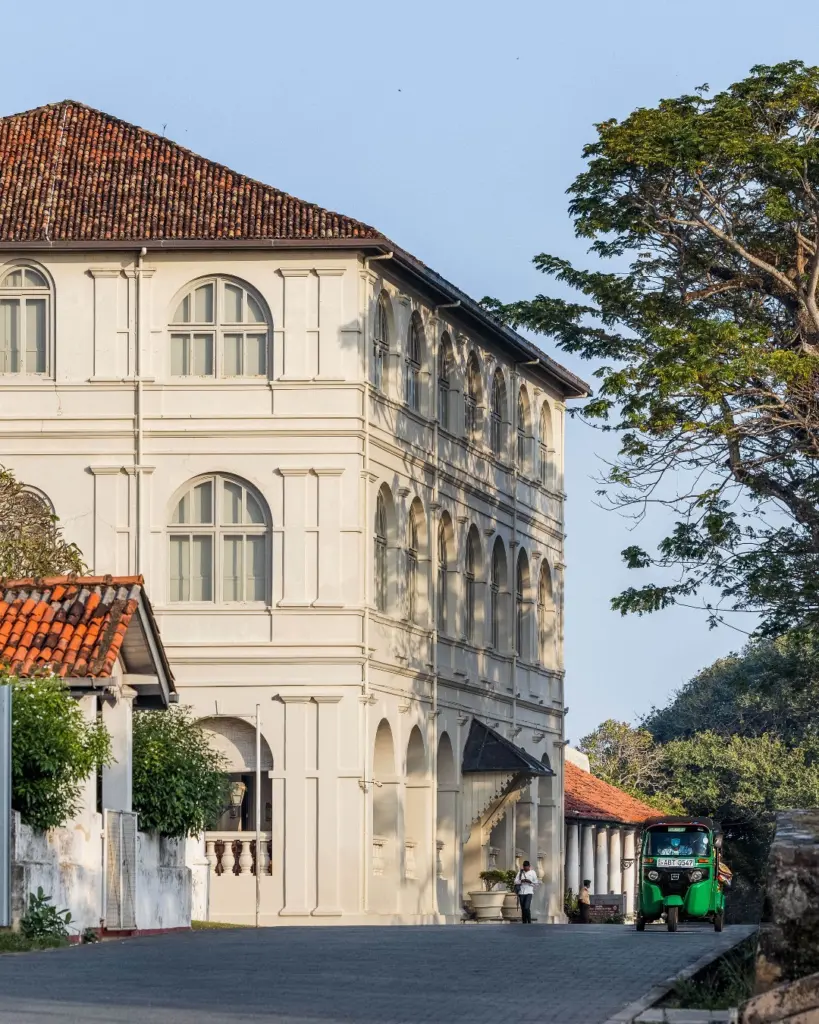
Amangalla forms part of Galle Fort, the fortified coastal city shaped by successive Portuguese, Dutch and British rule. Its buildings include structures dating to the Dutch colonial period, while the property itself has a long hospitality history, operating for generations as the New Oriental Hotel before becoming Amangalla.
High ceilings, polished floors, verandas and antique furnishings retain the old building’s character, complemented by Aman service and spacious suites. The Baths provide hydrotherapy chambers, sauna and steam facilities alongside personalised wellness programmes, while the property’s gardens surround a secluded swimming pool. Stepping outside places guests directly among the ramparts, churches and historic houses of UNESCO-listed Galle Fort.
6. Taj Lake Palace, Udaipur
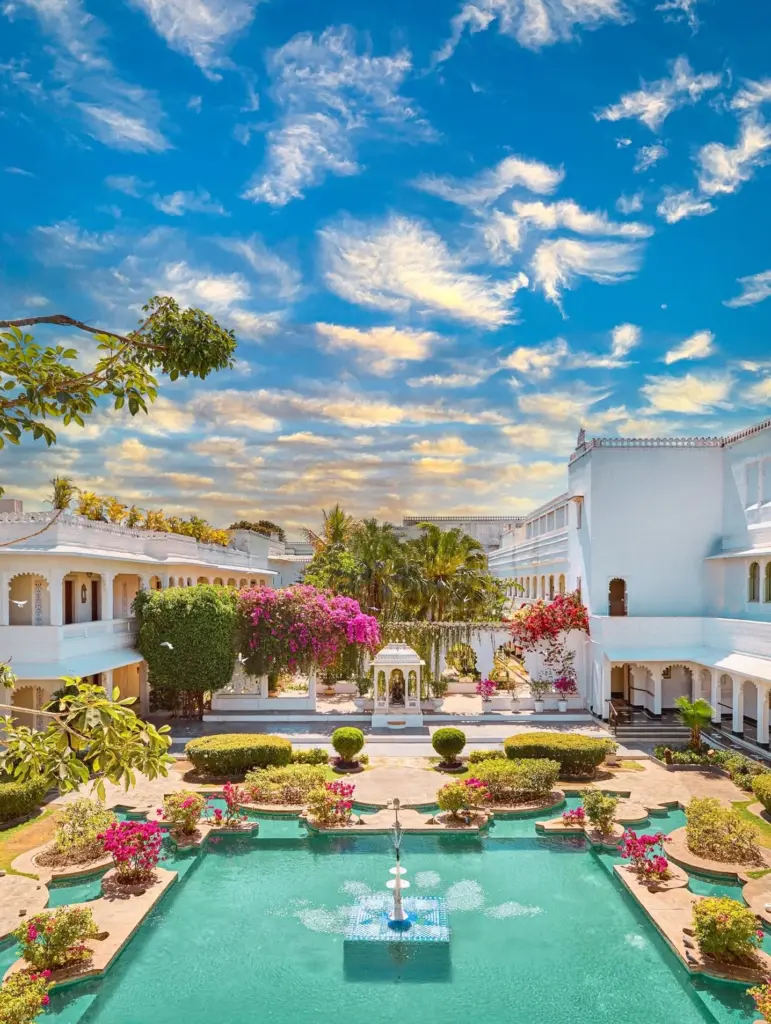
Rising from Lake Pichola, Taj Lake Palace began as Jag Niwas, the summer retreat commissioned by Maharana Jagat Singh II and completed in the 18th century. Built in white marble on its own island, the palace remains one of Udaipur’s most recognisable landmarks, surrounded by water with views towards the City Palace and Aravalli Hills.
Arrival by private boat preserves much of the sense of separation that defined the original royal retreat. Courtyards, terraces, gardens and decorative interiors retain its palace character, while heritage walks, traditional boat experiences and Taj’s signature butler service deepen the sense of occasion. Dining ranges from Indian fine dining at Neel Kamal to European cuisine at Bhairo, set on the rooftop overlooking the lake.
7. Mandarin Oriental Qianmen, Beijing
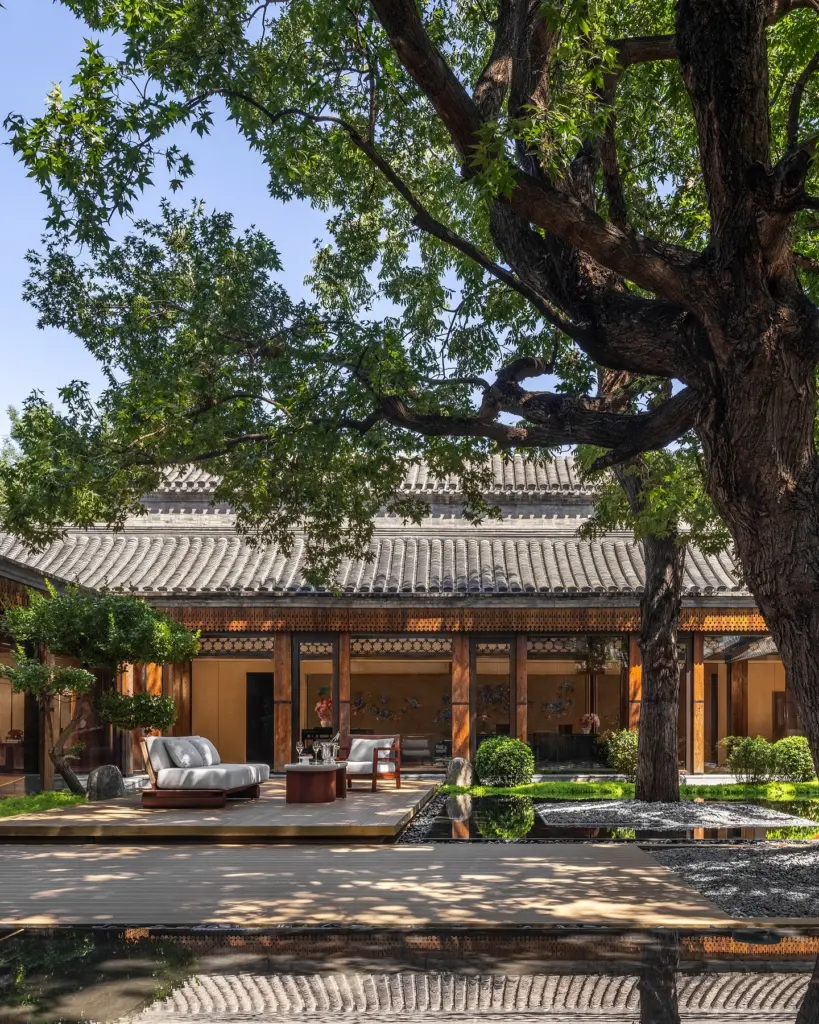
Mandarin Oriental Qianmen offers an unusually residential interpretation of a historic hotel. Rather than concentrating its accommodation within a single building, the property comprises 42 courtyard houses spread across several alleyways in a traditional hutong neighbourhood close to Beijing’s historic central axis.
Many of the courtyard houses are original and have varied histories, including former residences and spaces associated with imperial scholars and inspectors. Private courtyards and architecture inspired by traditional siheyuan houses have been retained alongside exceptionally spacious contemporary interiors. The hotel adds a spa, private cultural experiences and refined dining, including VICINI and the signature Chinese restaurant Yan Garden by Chef Fei, while its dispersed layout allows everyday hutong life to remain part of the stay.
8. Sofitel Legend Santa Clara, Cartagena
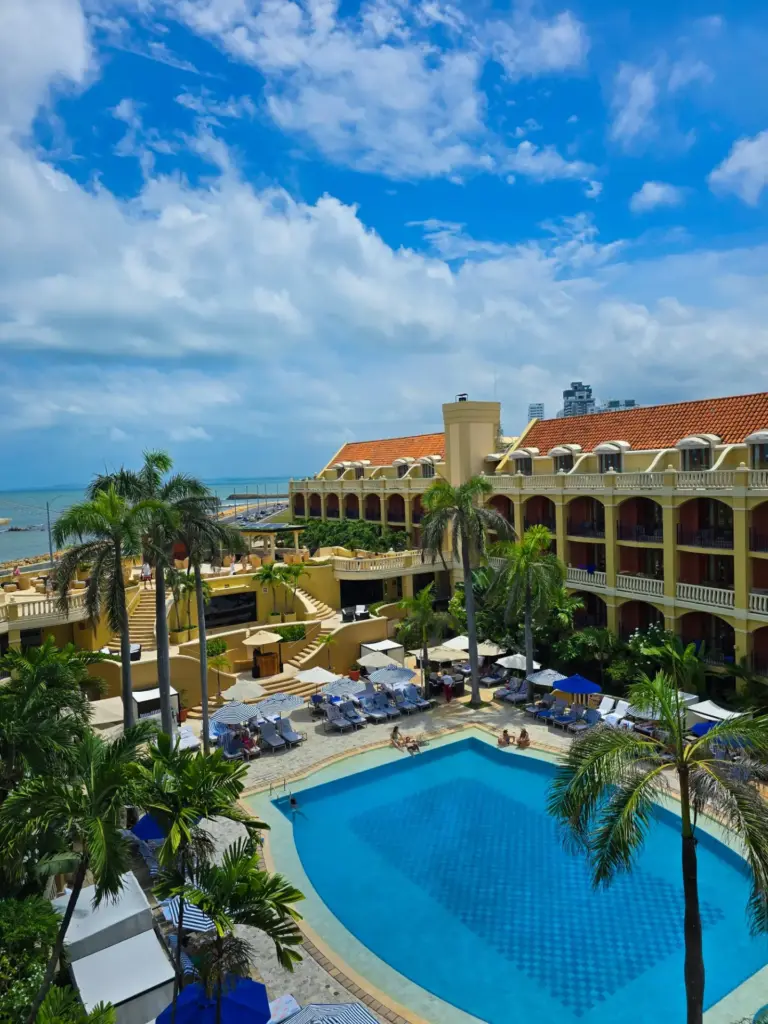
Within Cartagena’s historic walled city, Sofitel Legend Santa Clara occupies the former Convent of Santa Clara de Asís, founded for the Poor Clares in the 17th century. The building has passed through several uses over the centuries, yet its colonial architecture and religious origins remain visible throughout the property.
The central cloister, historic wells, confessionals, doors and archaeological remains provide tangible links to its convent past. Its crypt has an additional literary connection through Gabriel García Márquez, whose reporting on discoveries there later influenced Of Love and Other Demons. The hotel pairs this history with butler service in selected suites, the Sofitel Spa, a large courtyard pool and fine dining at Restaurant 1621, while Cartagena’s fortifications and colonial streets extend the historical setting beyond the property.
9. Museum Hotel, Cappadocia
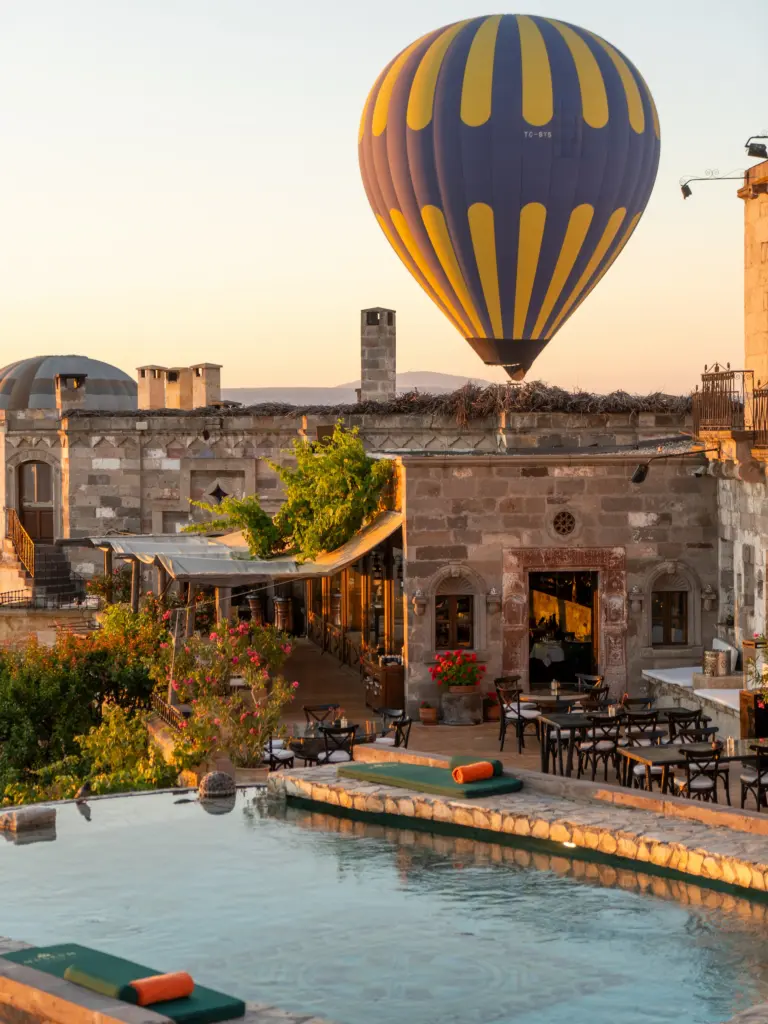
Museum Hotel occupies restored caves, ruins and traditional stone houses in Uçhisar, overlooking some of Cappadocia’s most distinctive valleys. The structures have served different purposes across centuries, including as homes, kitchens, stables and storage spaces, before being carefully restored as part of the hotel.
Its 34 individually designed cave and stone rooms and suites contain antiques, while hundreds of registered historical artefacts from Hittite, Roman, Seljuk and Ottoman periods are displayed throughout the property. Its Relais & Châteaux membership reflects the hotel’s emphasis on distinctive hospitality and gastronomy, complemented by a heated Roman-style pool and Lil’a Restaurant. The result is particularly appropriate to Cappadocia, where rock-cut architecture and successive civilisations have left visible layers across the landscape.
10. Aman Venice, Italy
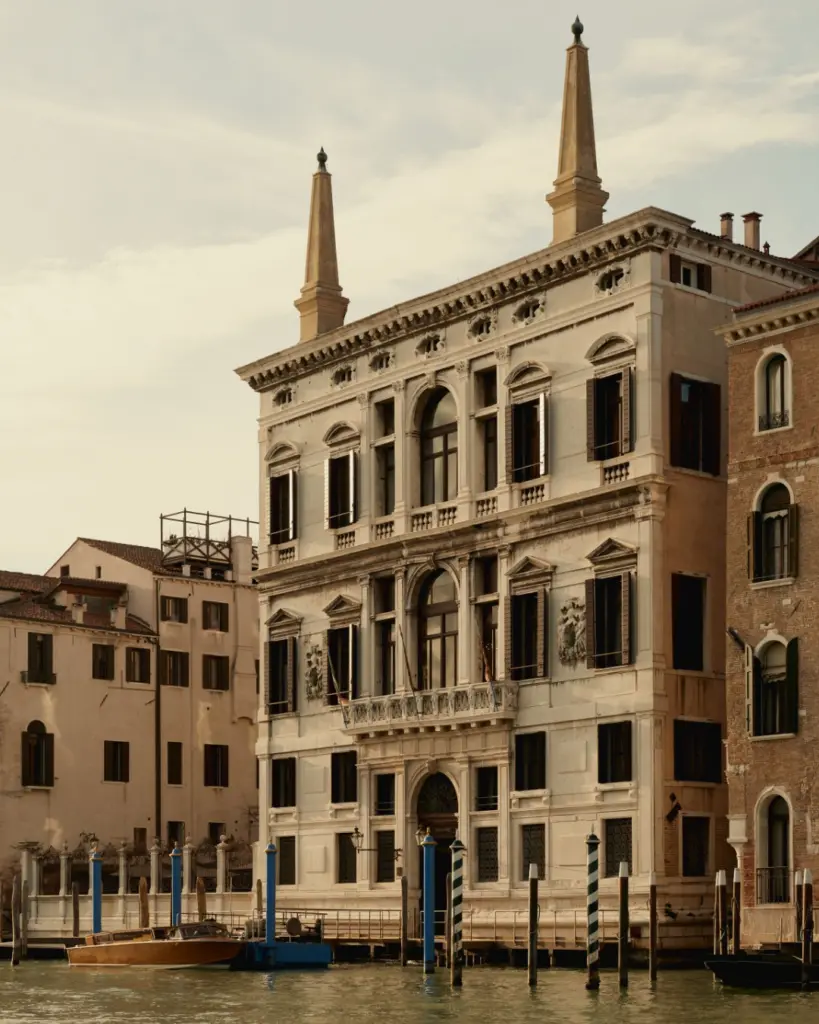
Aman Venice occupies Palazzo Papadopoli, a 16th-century palazzo overlooking the Grand Canal. Completed around 1570 for the Coccina family, the residence passed through several prominent Venetian families, including the Tiepolos, before being acquired by the Papadopoli family in the 19th century.
The palazzo retains frescoes, painted ceilings, carved fireplaces and other decorative features associated with centuries of Venetian patronage. Just 24 rooms and suites preserve an intimate residential character, complemented by the Aman Spa, private dining experiences and two secluded gardens, a considerable rarity in Venice. Arriving directly from the Grand Canal further reinforces the sense of staying in a private Venetian residence rather than a conventional city hotel.
These hotels preserve very different chapters of history, spanning Nasrid Granada, medieval France, imperial China, Inca Cusco and the cave settlements of Cappadocia and Matera. Their luxury is equally varied, expressed through exceptional settings, discreet service, fine dining, thoughtful design and forms of access that few conventional hotels can offer. Together, they show how historic preservation can remain central to a sophisticated contemporary stay.