


All products are independently selected by our editors. If you buy something, we may earn an affiliate commission.
For nearly a century, the Academy Awards have stood as the film industry’s highest form of recognition. Presented by the Academy of Motion Picture Arts and Sciences, the Oscars remain the benchmark against which careers, studios, and creative legacies are measured. A nomination can recalibrate professional standing; a win can alter the commercial trajectory of a film overnight. Viewed through a luxury lens, the ceremony is also a convergence of influence, access, and global visibility.
Heritage, Authority, and a Changing Industry
First staged in 1929, the Academy Awards were conceived as a peer-recognised honour within a still-maturing industry. Nearly a century later, the statuette retains a singular authority. It is voted on by thousands of Academy members across disciplines, and its peer-based structure continues to distinguish it from many global award platforms.
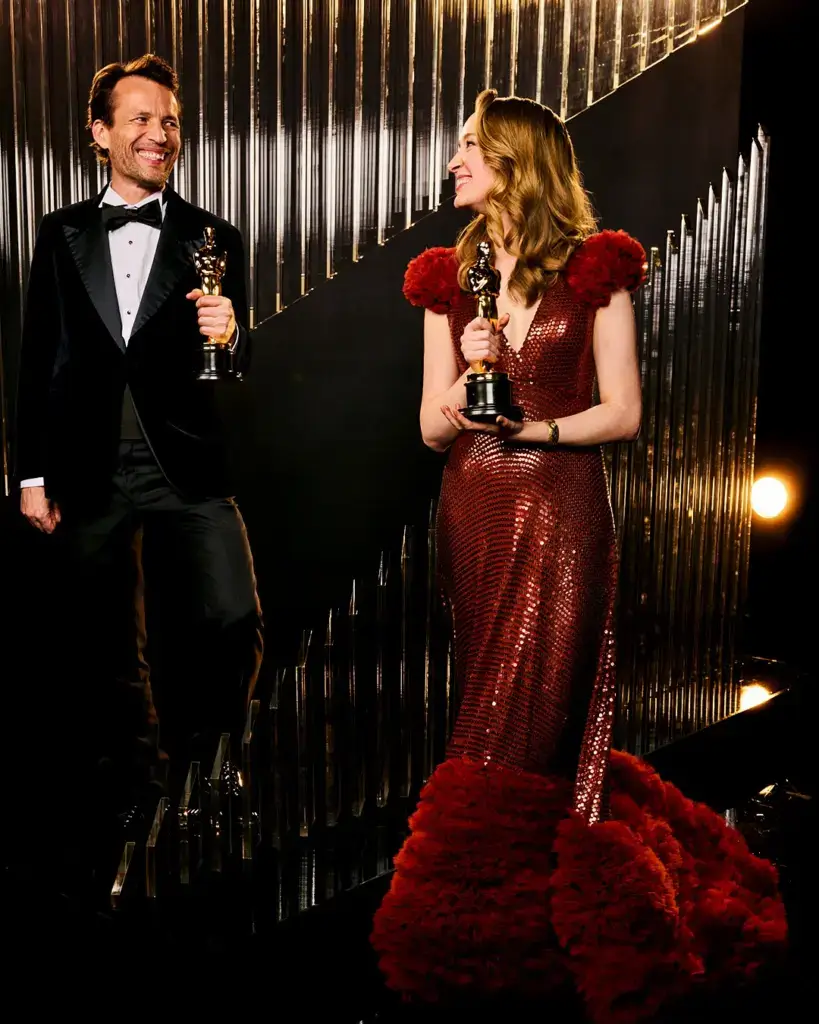
That authority has evolved alongside the industry itself. In recent years, the Academy has expanded and diversified its membership, reshaping the voting body and, by extension, the range of films recognised. Eligibility rules have adapted to reflect the dominance of streaming platforms and changing release strategies, acknowledging that prestige cinema now premieres in more varied ways. Campaigning has grown more global, with studios investing heavily in international screenings and targeted industry events.
The ceremony’s broadcast and format have also shifted in response to changing audience habits, yet the Oscars continue to command cultural primacy. For luxury houses, studios, and talent agencies, the night remains one of the most visible stages in the world.
The Setting: Hollywood’s Most Controlled Evening
The ceremony takes place at the Dolby Theatre in Los Angeles, where Hollywood Boulevard is transformed into a tightly choreographed corridor of red carpet, media platforms, and security checkpoints. Access is meticulously tiered. Nominees, presenters, and Academy members form the core guest list, joined by studio executives, financiers, and select partners.
Seating inside the theatre is a quiet signal of influence. Front-row placements and camera sightlines are carefully considered. Publicists and producers negotiate positioning with the same precision applied to film campaigns. The result is an evening where visibility equates to industry standing.
The Red Carpet as High Jewellery and Couture Theatre

Before a single award is announced, the red carpet sets the commercial tone of the night. Major maisons such as Chopard, Harry Winston, and Bulgari regularly place multi-million-pound diamond suites on leading talent. Archival pieces are flown in under security escort, insured for sums that rival feature film budgets.
Couture houses compete for placement on nominees whose global exposure will justify months of atelier preparation. Stylists operate as power brokers, negotiating loans, ambassadorial alignments, and future campaigns. A carefully chosen necklace or gown can anchor a long-term partnership, extending far beyond a single appearance.
The Architecture of Access
The theatre’s guest list is narrower than its global audience might suggest. Beyond nominees and presenters, attendance is largely restricted to Academy members, senior studio leadership, key financiers, and select sponsors. Corporate partners secure limited allocations, often linked to significant long-term relationships with the Academy.
Inside, proximity matters. Conversations during commercial breaks, introductions facilitated by agents, and informal exchanges in the lobby frequently carry as much weight as the awards themselves. Seating arrangements reflect standing within the industry, and movement within the room is carefully managed. The Oscars remain a place where alliances are strengthened and future projects quietly discussed.
The After-Parties That Shape the Industry

Once the ceremony concludes, attention shifts to the official and unofficial gatherings that define Oscars night. The Governors Ball serves as the Academy’s formal celebration, where winners have their statuettes engraved, and guests dine on menus curated by leading culinary teams.
Elsewhere, the Vanity Fair Oscar Party has become a parallel stage of influence, attracting actors, directors, designers, and global business figures. The Elton John AIDS Foundation Academy Awards Viewing Party blends philanthropy with high-profile attendance, raising significant sums while drawing an elite guest list.
Invitation lists for these events are closely guarded. Brand partners, fashion executives, and international investors often find more meaningful access here than inside the theatre itself.
Where the Industry Stays
Oscars week sees heightened activity across Beverly Hills and West Hollywood. Properties such as The Beverly Hills Hotel, The Peninsula Beverly Hills, and Chateau Marmont become informal headquarters for studios and talent.
Suites are reserved months in advance, often under private booking arrangements. Discreet entrances, controlled lift access, and on-site security are standard. Luxury brands host invitation-only lounges and fittings, while agents conduct back-to-back meetings in secluded dining rooms. Room rates reflect demand, but for many studios and production companies, proximity during awards week is considered essential.
The Economics of Winning

An Oscar victory continues to deliver measurable financial impact. Box office returns frequently see renewed momentum following nominations and wins, and streaming platforms leverage accolades in subscriber campaigns. For actors and directors, fees and backend participation can shift substantially after a successful awards season.
Fashion and jewellery houses also benefit. A widely photographed red carpet moment can translate into global press coverage and subsequent ambassadorial contracts. In this ecosystem, prestige functions as currency, reinforcing both artistic credibility and commercial value.
Experiencing the Oscars at the Highest Level
Beyond the theatre and the headline parties, Oscars week unfolds across private estates, discreet dinners, and closed-door screenings. Studios host invitation-only gatherings for financiers and strategic partners. Luxury concierge networks quietly facilitate access to select receptions and post-ceremony celebrations.
For those operating within these circles, the Academy Awards represent more than an annual ceremony. They are a convergence of culture, commerce, and influence, set against the enduring backdrop of Hollywood. The statuette remains the ultimate industry symbol, and the week surrounding it continues to shape global conversations in film, fashion, and beyond.