

All products are independently selected by our editors. If you buy something, we may earn an affiliate commission.
There are few places near London where history feels quite so alive outdoors. The Hampton Court Palace gardens unfold with the same sense of theatre as the palace interiors themselves, moving from clipped Baroque symmetry to quieter woodland paths, rose-lined walkways, kitchen plots, ornamental ponds, and long riverside perspectives that still feel remarkably grand centuries later.
The formal gardens themselves span around 60 acres, but the wider royal estate extends across roughly 750 acres when the surrounding parkland is taken into account. Together, the landscape feels far larger and more immersive than many visitors expect, particularly once the crowds around the palace interiors begin to fade behind the trees and waterways.
For visitors planning a cultural day out from London, the gardens offer far more than a quick palace add-on. They are among Britain’s most historically important landscapes, shaped by Tudor monarchs, redesigned by William III and Mary II, and refined across generations of royal gardeners who transformed the estate into one of the country’s defining horticultural settings.
A Royal Garden Estate Centuries in the Making
The gardens at Hampton Court have evolved continuously since Cardinal Wolsey first developed the site in the early 16th century, before it passed into the hands of Henry VIII. Much of the atmosphere visitors associate with Hampton Court today, however, comes from the later transformation commissioned by William III in the late 17th century.
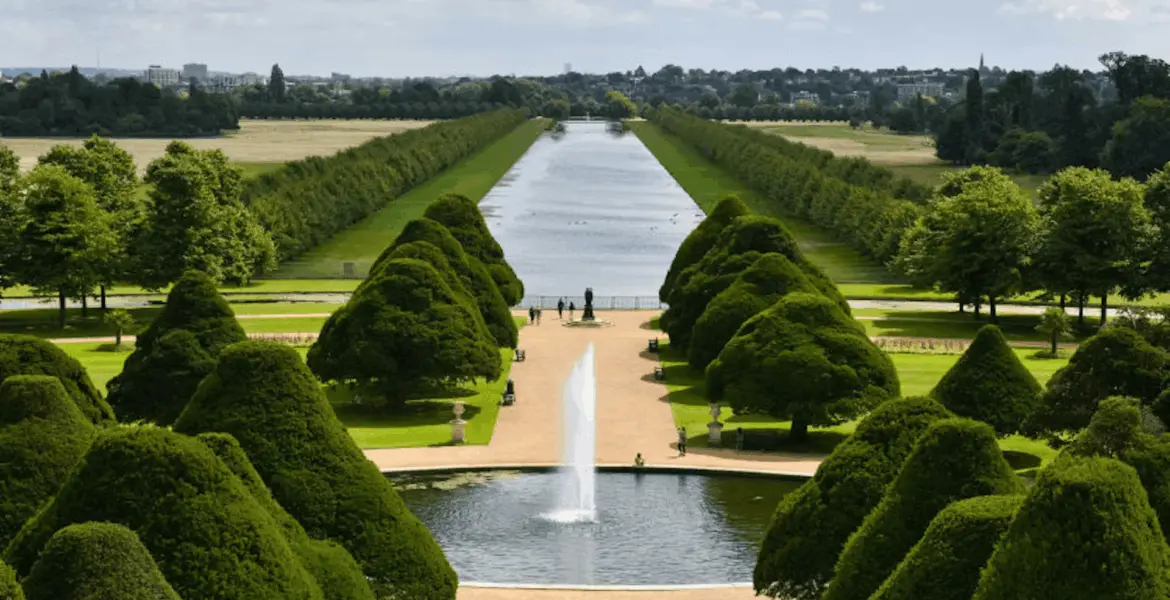
Inspired by the formal gardens of Versailles, William III commissioned extensive redesigns that introduced sweeping avenues, axial layouts, ornamental canals, and geometric planting schemes intended to reflect royal power and refinement. Elements of those Baroque foundations remain central to the experience today, particularly around the Great Fountain Garden and the Long Water.
At the same time, traces of the palace’s Tudor roots remain visible throughout the grounds. The Kitchen Garden, historic orchard traditions, and the relationship between the gardens and the enormous Tudor kitchens all hint at the scale of court life that once operated here.
What makes Hampton Court particularly compelling is that the estate never feels frozen in one period. Victorian planting traditions, seasonal displays, restoration projects, and contemporary garden management all sit comfortably alongside centuries-old layouts and structures.
Arriving at Hampton Court
Part of Hampton Court’s appeal lies in the approach. Whether arriving by train from Waterloo, by car through Richmond and Kingston, or by boat along the Thames during the warmer months, the setting gradually shifts from London suburbia into something altogether more atmospheric.
The palace itself rises dramatically behind the gardens, its red-brick Tudor façades and chimneys immediately recognisable. As you cross the grounds towards the main palace courts, the scale becomes clearer. Fountains break up the symmetry of the lawns, yew hedges frame long perspectives, and mature trees soften the formality enough to keep the estate feeling inviting rather than rigid.
The gardens are also unusually photogenic throughout the year. Spring brings tulips, magnolia blossoms, and fresh green borders, while summer introduces fuller rose displays and vibrant herbaceous planting. Autumn adds richer tones across the wider estate, particularly around the Wilderness and surrounding parkland.
Exploring the Gardens of Hampton Court Palace
The gardens at Hampton Court are best explored slowly. Some spaces are unmistakably grand, designed to impress visiting dignitaries and reflect royal ambition, while others feel more intimate and surprisingly peaceful despite the estate’s popularity.
Moving through the grounds reveals how varied the landscape really is. Formal fountains give way to shaded woodland paths, ornamental planting softens strict geometry, and quieter corners begin to emerge beyond the main visitor routes. Each section of the estate carries its own atmosphere without disrupting the overall sense of cohesion that makes Hampton Court feel so distinctive.
The Great Fountain Garden & The Long Water
The Great Fountain Garden remains one of the most striking spaces within the estate. Laid out in the late 17th century as part of William III’s redesign, the garden still carries the scale and symmetry associated with grand European royal landscapes of the period.
Broad gravel pathways divide clipped lawns and formal planting beds, while fountains draw the eye towards the palace itself. The visual relationship between the gardens and the architecture is particularly effective here, with the palace forming a dramatic backdrop behind the water features and topiary.
Beyond the fountains, the Long Water stretches into the distance beneath rows of carefully maintained lime trees. Originally designed to emulate the grand canal-style features popular in continental European palace gardens, it creates one of Hampton Court’s most recognisable views.
This section of the estate feels especially atmospheric in the early morning or later afternoon when the light settles across the water and the pace begins to slow slightly around the grounds.
The Privy Garden
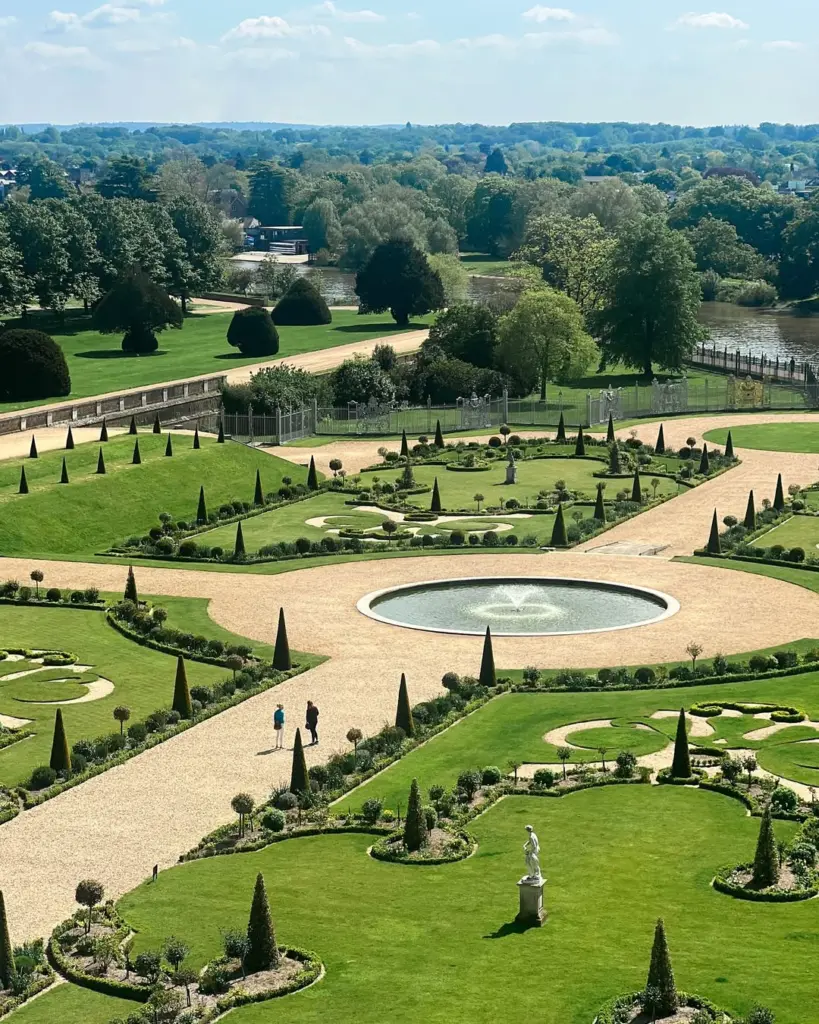
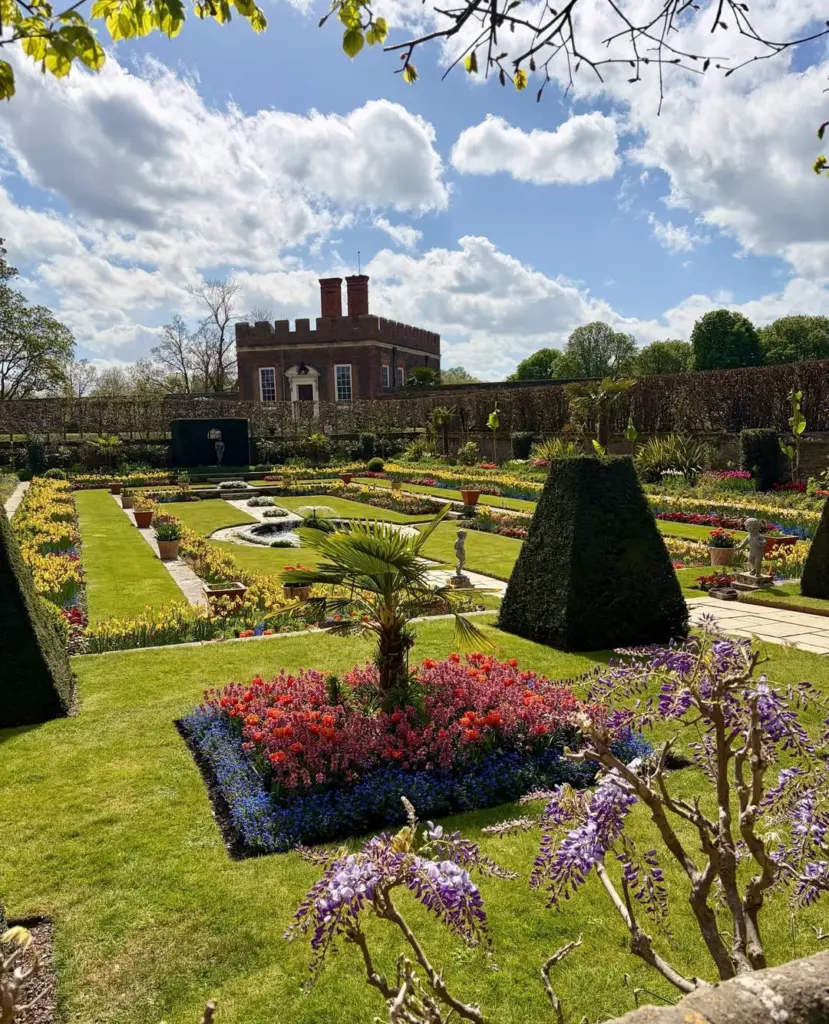
Restored in 1995 using historical records and surviving design evidence, the Privy Garden offers one of the clearest glimpses into royal garden design during the reign of William III.
Unlike the openness of the Great Fountain Garden, the Privy Garden feels more enclosed and decorative. Intricate geometric planting patterns sit within sharply clipped hedges, while ornamental statues and elegant pathways reinforce the sense of symmetry throughout the space.
One of the garden’s standout details is the elaborate wrought-iron screen designed in the style of Jean Tijou, whose metalwork became closely associated with late 17th-century royal commissions. The detailing adds a refined sense of craftsmanship that elevates the garden beyond simple formal planting.
During the warmer months, the planting softens the geometry with lavender, seasonal blooms, and ornamental borders that introduce more texture and colour to the space.
The Rose Garden & Seasonal Displays
Seasonality plays a major role in the experience at Hampton Court, and nowhere is that clearer than within the Rose Garden and surrounding floral displays.
Summer brings the gardens into full colour, with fragrant rose varieties filling the air around the central pathways and pergolas. The planting feels layered rather than overly manicured, allowing the gardens to retain a softer and more romantic atmosphere compared to the stricter Baroque spaces elsewhere on the estate.
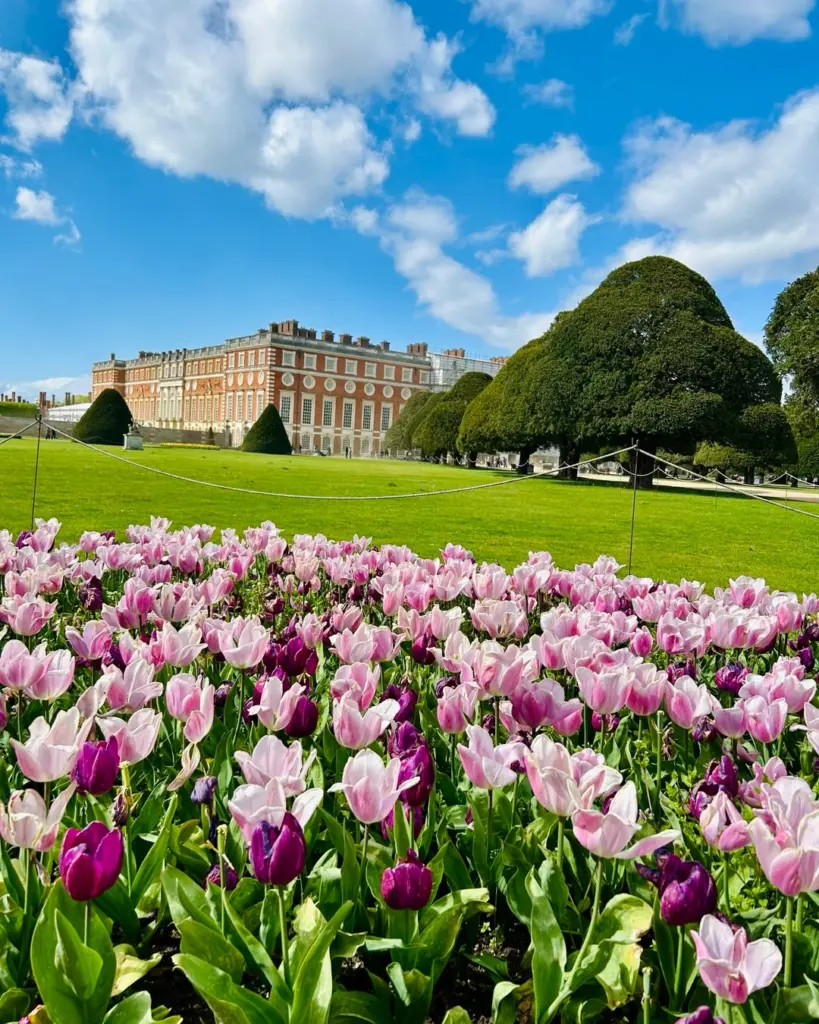
Spring is equally rewarding. Hampton Court’s tulip displays have become increasingly popular in recent years, with thousands of bulbs creating vivid colour across sections of the grounds. Magnolia trees and flowering borders begin to reshape the estate visually after winter, while wisteria around the palace walls introduces another layer of texture.
The herbaceous borders throughout the estate are also carefully maintained across the seasons, ensuring the gardens never feel static between major flowering periods.
The Wilderness & The Maze
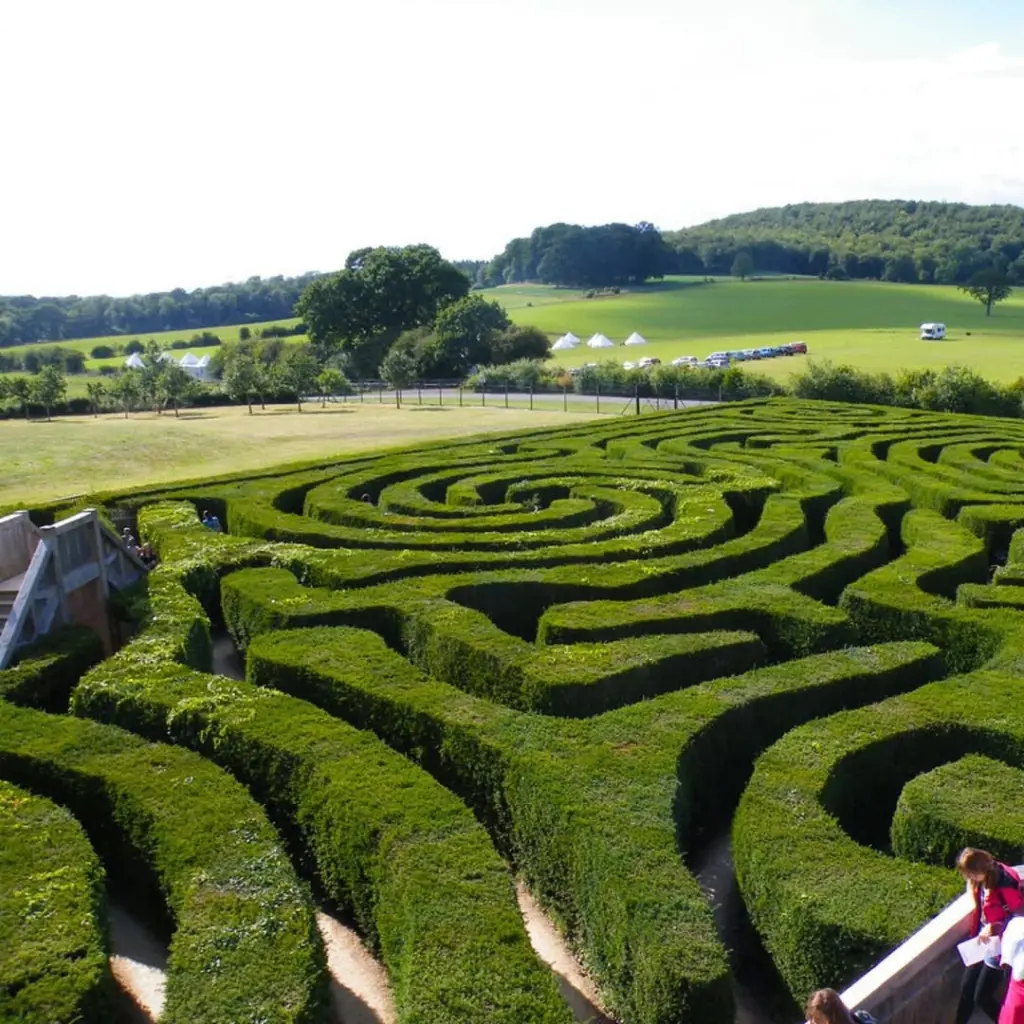
The Wilderness offers a quieter contrast to the palace’s more formal gardens. Originally developed as a fashionable style of informal planting during the late 17th century, the area was designed to feel more natural and exploratory, with winding pathways, shaded routes, and looser landscaping.
Today, it remains one of the calmest parts of the estate. Mature trees create shelter from the busier central gardens, while the pathways encourage slower wandering rather than structured sightseeing.
Within this section sits Hampton Court’s famous Maze, planted in the late 1600s and still one of the oldest surviving hedge mazes in Britain. Despite its popularity, the Maze avoids feeling gimmicky because of its historical setting and scale. The tall hedges genuinely disorientate visitors, particularly towards the centre where the pathways narrow unexpectedly.
The surrounding Wilderness helps preserve the atmosphere, making the experience feel integrated into the wider landscape rather than isolated as a standalone attraction.
The Pond Garden & Lower Orangery
The Pond Garden is one of the estate’s more visually elegant corners, particularly during spring and early summer when the planting begins to peak.
Originally developed in the early 20th century on the site of former Tudor fish ponds, the garden now combines ornamental planting with a more relaxed layout than the palace’s formal Baroque sections. Seasonal flowers surround the central pond, while mature planting and softer landscaping give the space a quieter atmosphere.
Nearby, the Lower Orangery introduces another layer of horticultural history. Historically used to protect citrus and exotic plants during colder months, the structure reflects the longstanding royal fascination with botanical collecting and ornamental gardening.
This area tends to feel calmer than the main fountain gardens and often attracts visitors seeking a slower-paced spot to pause during the visit.
The Kitchen Garden & The Great Vine
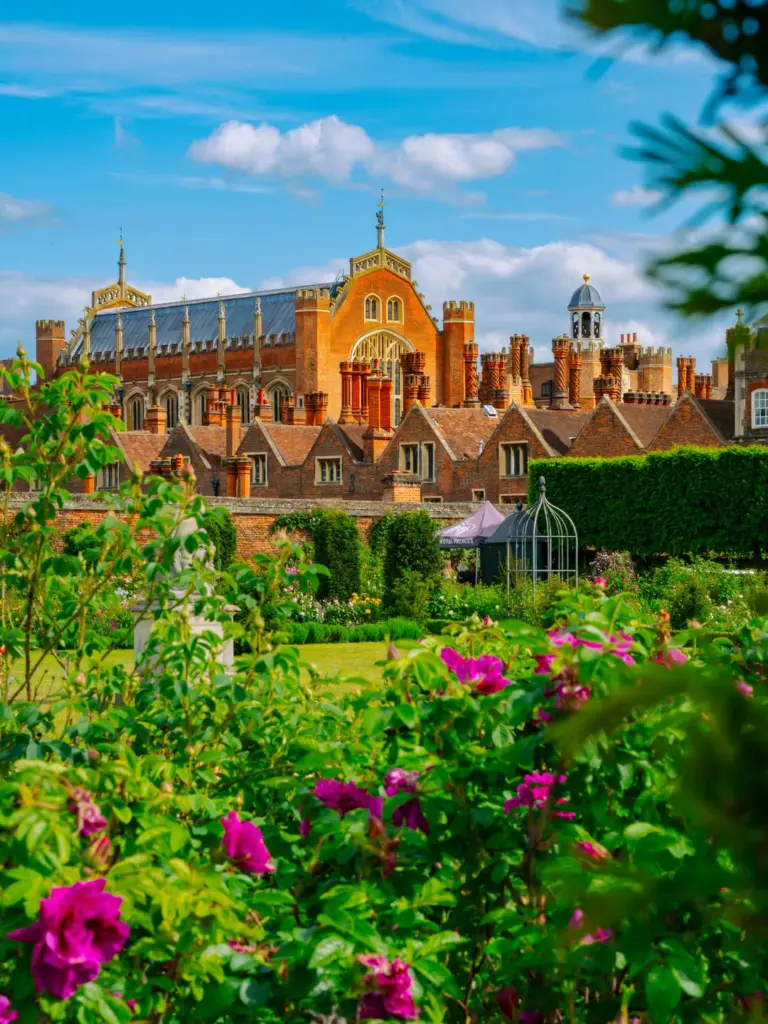
The Kitchen Garden brings a more practical side of Hampton Court’s history into focus. Historically, the palace kitchens required enormous quantities of produce to supply the Tudor court, and the surrounding gardens played an essential role in supporting palace life.
Today, the recreated Georgian Kitchen Garden grows fruits, vegetables, herbs, and edible flowers using traditional methods that reflect historical growing practices. The space feels productive without losing its visual charm.
Nearby stands one of Hampton Court’s most famous horticultural landmarks: the Great Vine. Planted in 1768 by celebrated gardener Lancelot ‘Capability’ Brown, it remains recognised as the largest grape vine in the world.
The vine still produces black dessert grapes each year and occupies an enormous glasshouse where its thick twisting branches spread dramatically overhead. It is one of the estate’s most memorable details precisely because of its scale and age.
The Magic Garden & Family Experiences
Although Hampton Court is deeply historical, the estate manages to accommodate contemporary visitors surprisingly well without compromising its character.
The Magic Garden, inspired by Tudor myths and legends, introduces a more playful dimension aimed primarily at families. Wooden towers, rope bridges, battlements, and sculptural dragons reference the palace’s history without feeling overly commercial or disconnected from the setting.
Importantly, the garden is positioned carefully enough within the wider estate that visitors seeking a quieter experience can still explore the formal gardens uninterrupted.
Seasonal events also add variety throughout the year. The RHS Hampton Court Palace Garden Festival, outdoor concerts, and occasional evening experiences help keep the estate active well beyond standard daytime visits.
Riverside Walks, Parkland & The Wider Estate
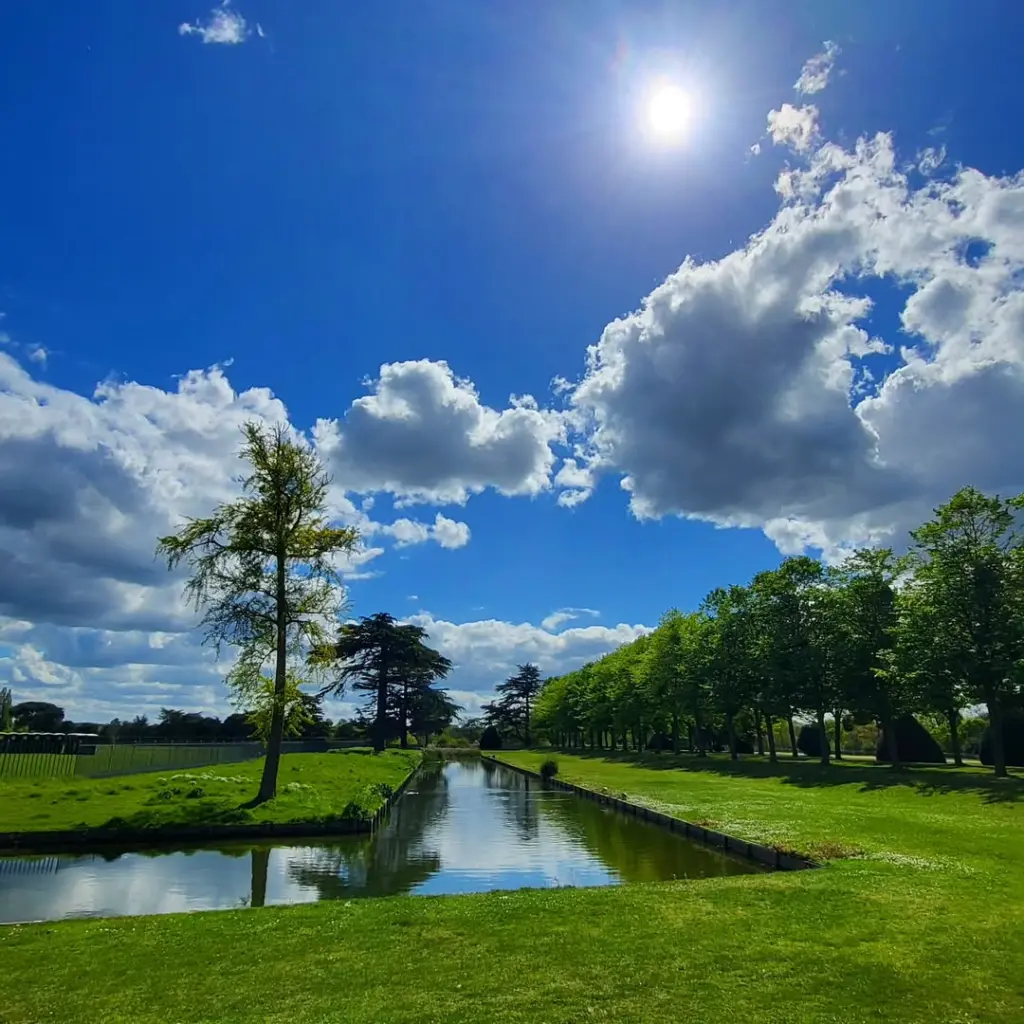
Some of the most rewarding moments at Hampton Court happen beyond the formal gardens themselves.
The Thames flows directly beside the palace grounds, and the riverside paths offer a calmer perspective away from the busiest sections of the estate. During warmer months, arriving by boat from Richmond or central London remains one of the most atmospheric ways to experience Hampton Court for the first time.
Beyond the palace grounds, the wider royal landscape opens into hundreds of acres of historic parkland, including neighbouring Bushy Park. Tree-lined avenues, roaming deer, open grasslands, and quieter walking routes give the estate a far more expansive character than many first-time visitors anticipate.
Together, the formal gardens and surrounding parkland create a royal landscape that feels immersive rather than self-contained.
Visiting Hampton Court Palace Gardens in Style
For the most relaxed experience, weekday mornings or later afternoons tend to work best, particularly during spring and early summer when the gardens are at their most vibrant.
Arriving by river remains one of the most memorable approaches, with seasonal boat services operating from Richmond and parts of central London. The slower journey suits the atmosphere of the estate particularly well.
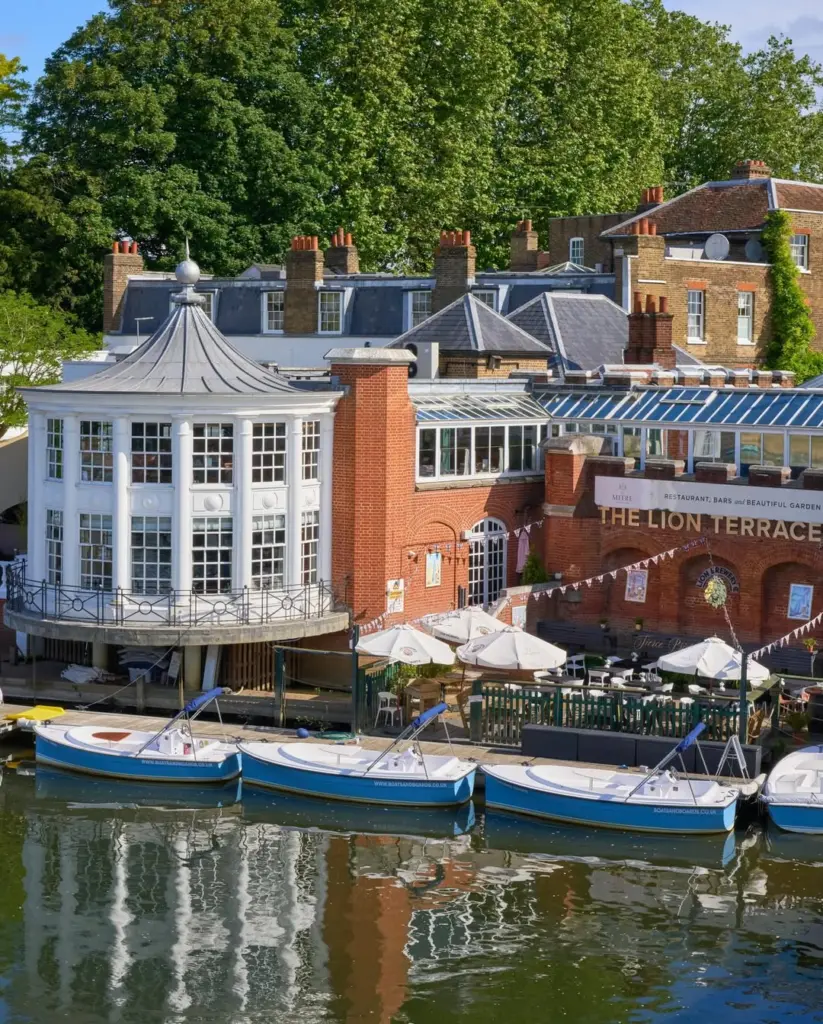
The Mitre Hotel, positioned directly opposite Hampton Court Palace, is the most convenient luxury stay nearby and works especially well for visitors wanting to extend the experience beyond a single afternoon. Its riverside setting and individually designed interiors complement the character of the palace surroundings naturally.
For dining, The Dysart Petersham offers one of the area’s strongest fine dining experiences, while The Riverhouse in Walton-on-Thames provides a more relaxed riverside setting for lunch or dinner after exploring the grounds.
Visitors willing to stay slightly further afield may also consider Fairmont Windsor Park, which combines expansive grounds, a substantial wellness offering, and easy access to both Windsor and Hampton Court for a longer heritage-focused escape.
A Different Side of Royal London
Hampton Court Palace Gardens succeed because they never feel one-dimensional. The estate moves naturally between grandeur and intimacy, formal design and softer landscapes, royal history and seasonal beauty.
Some visitors come for the palace and leave talking about the gardens instead. After spending time among the fountains, shaded avenues, rose borders, kitchen plots, and riverside pathways, it becomes easy to understand why the landscape remains one of the most rewarding royal day trips within easy reach of London.