

All products are independently selected by our editors. If you buy something, we may earn an affiliate commission.
London’s exhibition calendar has a way of delivering moments that feel quietly significant. The Griffin Catalyst Exhibition: Seurat and the Sea at the Courtauld Gallery is one of them. Running during the spring season, the exhibition brings together a remarkable group of coastal works by Georges Seurat, offering a focused look at a subject that shaped the later years of his career.
Seurat is widely recognised for the scientific rigour of his painting and the luminous technique that came to define Neo-Impressionism. Yet the sea held a particular fascination for him. Over several summers in the late nineteenth century, he travelled along the Channel coast, producing studies and paintings that capture harbours, beaches, and open horizons with an unusual sense of stillness.
At the Courtauld, these works are gathered in a rare and thoughtful presentation that allows visitors to encounter a quieter side of the artist’s practice.
Seurat and the Sea: The Story Behind the Works
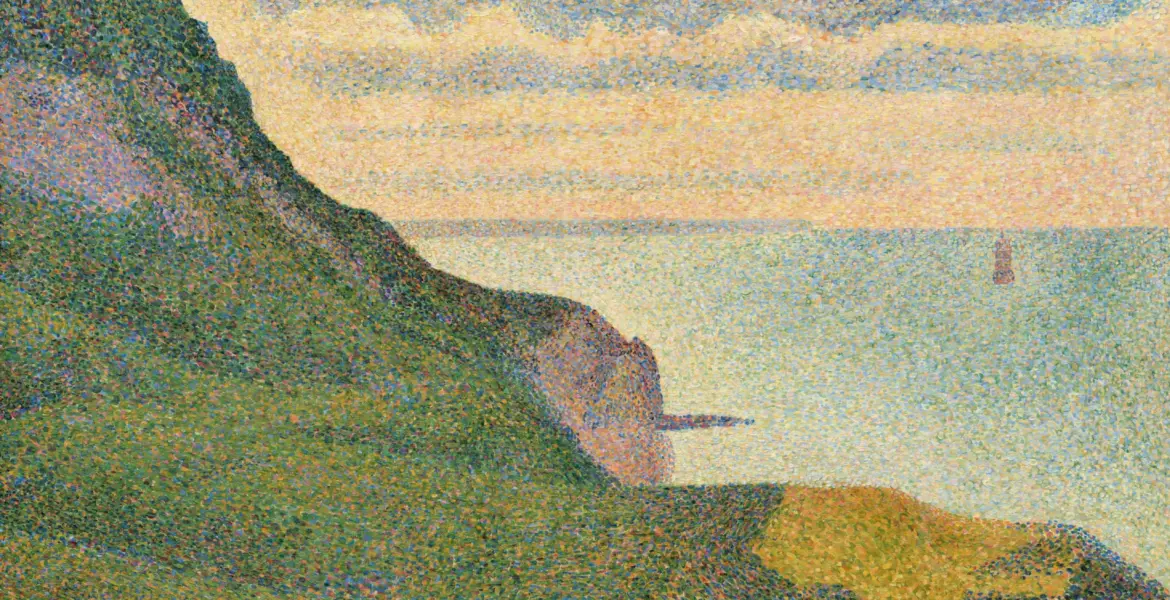
Between 1885 and 1890, Seurat spent extended periods along the northern coast of France. Places such as Honfleur, Port-en-Bessin, and Gravelines provided him with a landscape that was both expansive and controlled. Fishing boats moved through calm harbours, sailboats gathered in the distance, and long stretches of shoreline opened beneath broad skies.
These coastal visits became an important laboratory for Seurat’s artistic thinking. The sea offered a setting in which light, atmosphere, and geometry could be explored with precision. Even the simplest motif, a solitary mast rising against the horizon or a harbour wall catching the late afternoon sun, becomes an opportunity for careful experimentation.
Many of the works produced during these visits were painted quickly outdoors, often on small panels. Back in the studio, Seurat refined these observations into more structured compositions. The coastline became a place where observation and method could meet.
Why This Exhibition Matters
The Courtauld’s exhibition is the first devoted entirely to Seurat’s seascapes, bringing together paintings, oil sketches, and drawings created during those coastal campaigns. Seen together, they reveal how central the sea was to the artist’s development during the final years of his life.
The works also rarely travel. Many belong to museum collections and private holdings that are seldom shown alongside one another. Gathering them in a single exhibition allows viewers to follow Seurat’s evolving ideas with unusual clarity.
For London, the show carries additional significance. It marks one of the most focused presentations of Seurat’s work in the United Kingdom in decades, adding weight to the Courtauld’s reputation for exhibitions that combine scholarly depth with thoughtful curation.
The Seascapes: Light, Stillness, and the Open Horizon
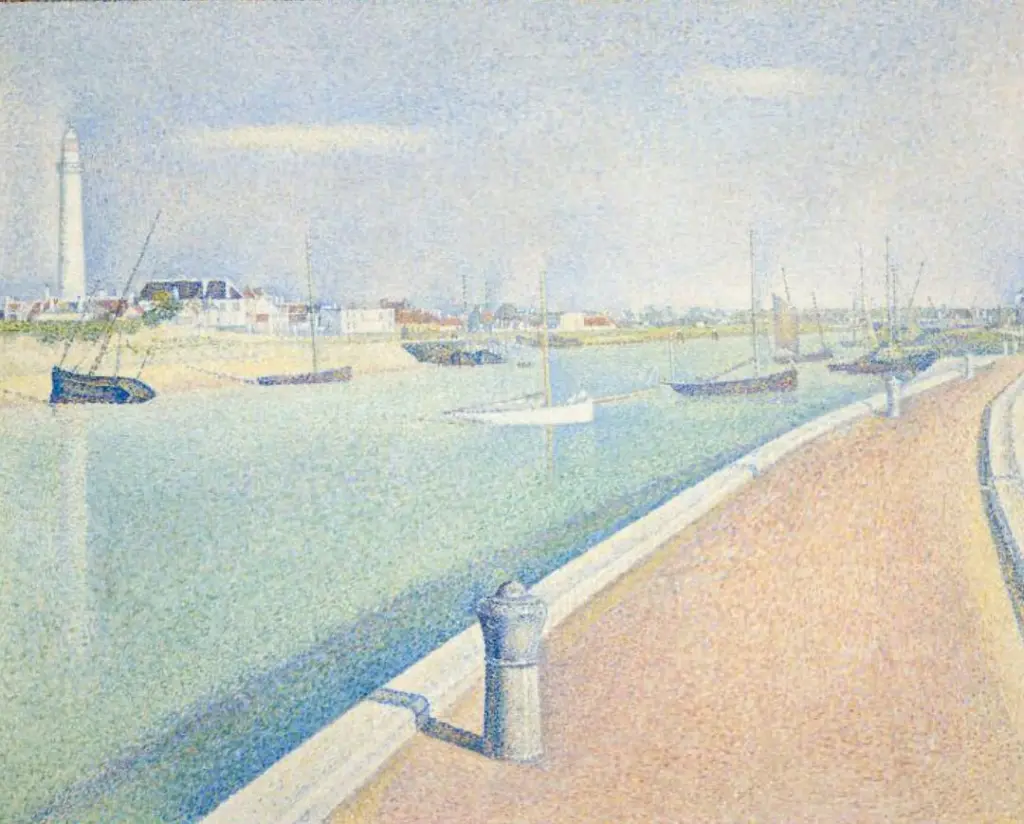
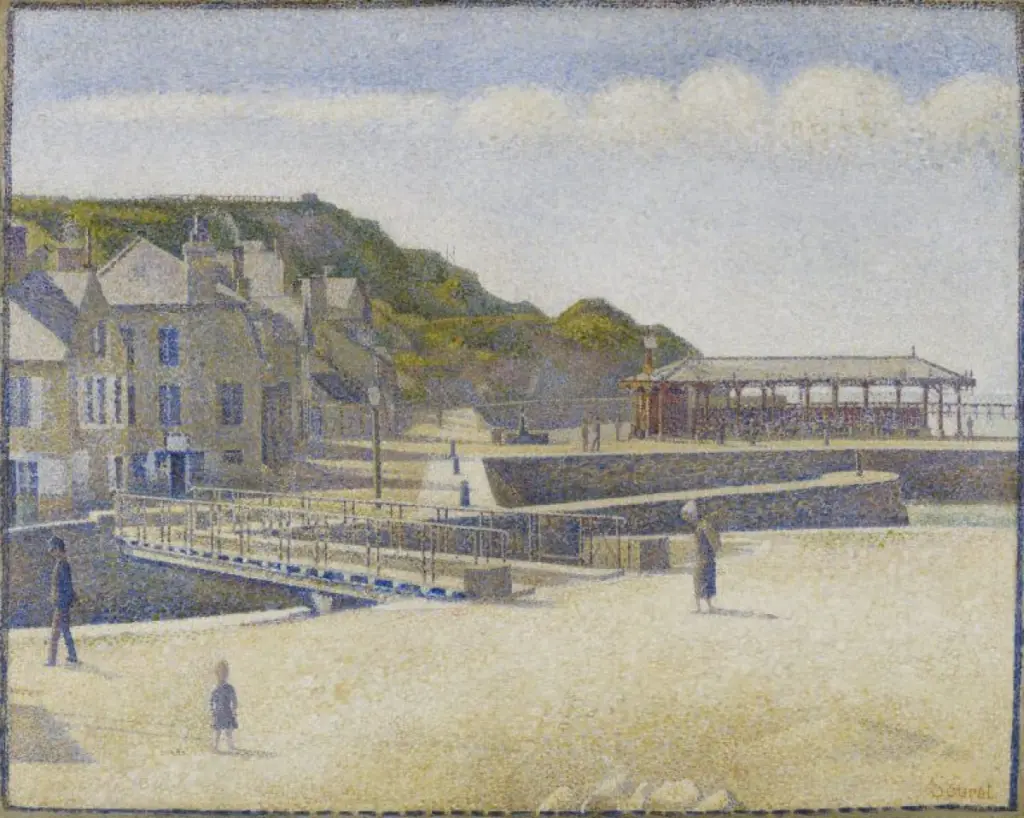
What emerges across the exhibition is a distinctive mood. Seurat’s coastal scenes are calm, deliberate, and carefully ordered. Harbours appear almost architectural, with boats and piers arranged in measured balance. Horizons stretch wide across the canvas, dividing sky and water with quiet certainty.
The sense of stillness is striking. These are not dramatic seascapes filled with crashing waves or storm clouds. Instead, Seurat presents moments of quiet observation: a sailboat drifting in the distance, the pale shimmer of sunlight on water, the subtle geometry of harbour walls.
Colour plays a crucial role. Through carefully placed dots and strokes, Seurat creates surfaces that seem to vibrate with light. Blues, greens, and warm ochres sit beside one another, producing the luminous quality that would become his signature.
Seen up close, the paintings reveal the intricacy of their construction. Viewed from a distance, they settle into a harmonious whole.
Seurat’s Method: From Observation to Optical Precision
Seurat approached painting with the mind of a researcher. His method combined careful observation with an intense interest in colour theory and visual perception.
During his coastal stays, he produced numerous small oil sketches directly from nature. These studies allowed him to capture fleeting conditions of light and atmosphere. The speed of execution contrasts with the precision that later defined his finished works.
Back in the studio, Seurat refined these observations. Shapes were clarified, lines strengthened, and colours organised according to his developing theories of optical harmony. The result was a style that later came to be known as pointillism, in which small dots of pure colour are placed side by side to create luminous effects when viewed at a distance.
Within the seascapes, this technique produces surfaces that seem quietly alive. Light flickers across water, sky softens toward the horizon, and even the stillest harbour carries a sense of subtle movement.
Works to Look Out For
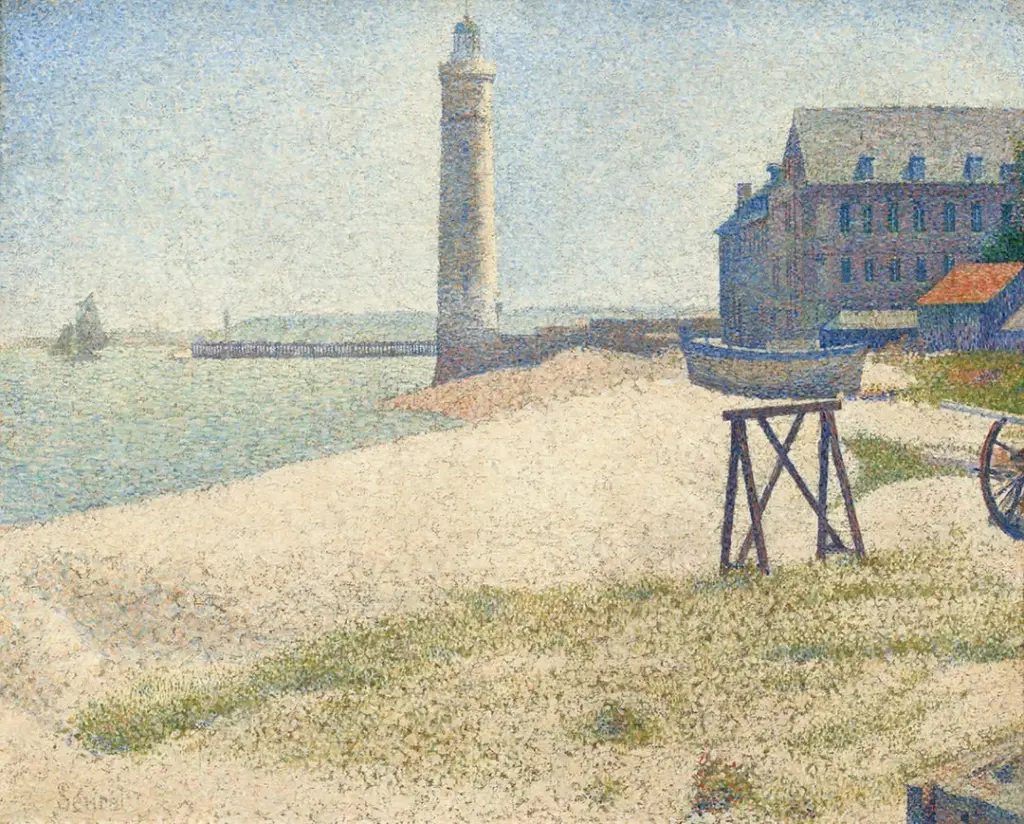
Several groups of paintings within the exhibition stand out. Works created at Port-en-Bessin reveal Seurat’s fascination with harbour life. Boats cluster around piers while calm water reflects the pale light of the coast.
The paintings from Gravelines introduce an even greater sense of structure. Here, the harbour walls and masts create rhythmic patterns across the composition, emphasising Seurat’s interest in geometry and balance.
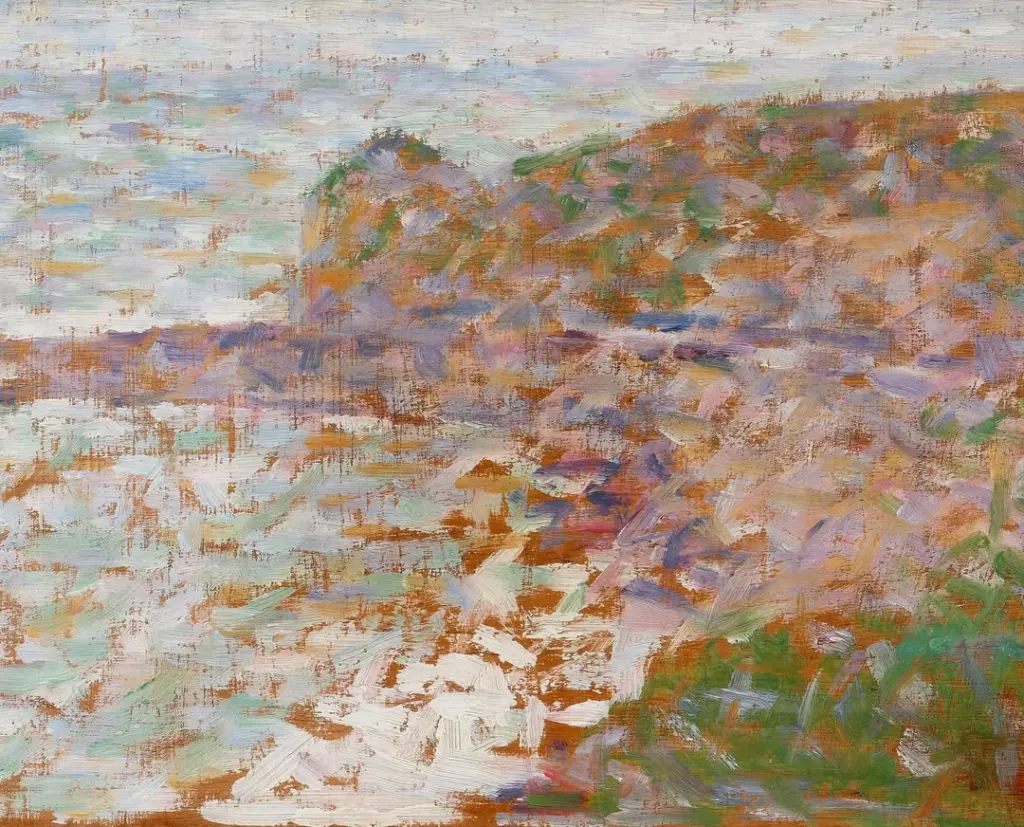
The smaller oil sketches offer another perspective. Painted quickly and directly, they capture the spontaneity of Seurat’s first impressions. These studies provide a valuable insight into how the artist transformed immediate observation into carefully constructed paintings.
Together, these works trace the progression of Seurat’s ideas during the final years of his life.
Experiencing the Exhibition at the Courtauld
The setting plays an important role in how the exhibition unfolds. The Courtauld Gallery, housed within Somerset House on the Strand, is known for its elegant scale and focused approach to display. Its exhibition galleries provide an intimate environment in which paintings can be studied closely.
This atmosphere suits Seurat’s work particularly well. The quiet pacing of the galleries encourages slow viewing, allowing visitors to notice the subtle shifts of colour and the delicate balance within each composition.
After moving through the exhibition, the Courtauld’s permanent collection offers a natural continuation of the experience. The gallery holds celebrated works by Impressionist and Post-Impressionist painters, placing Seurat’s achievements within a wider artistic conversation.
Planning Your Visit
The Griffin Catalyst Exhibition: Seurat and the Sea runs at the Courtauld Gallery during the spring season. Advance booking is advisable, particularly for weekend visits.
Those seeking a quieter experience may prefer weekday mornings or early afternoons, when the galleries tend to be less crowded, and the paintings can be viewed at an unhurried pace.
Allow time to explore Somerset House itself. The historic courtyard and riverside setting provide a fitting prelude or conclusion to a visit centred on one of the nineteenth century’s most meticulous painters.
Seeing Seurat from a New Perspective
For many visitors, Seurat is associated with a handful of iconic paintings. This exhibition invites a broader understanding of the artist. His seascapes reveal an enduring fascination with structure, light, and the quiet rhythms of coastal life.
Encountering these works together offers a rare opportunity to follow Seurat’s thinking as it unfolded along the Channel coast. The paintings reward careful attention and linger in the mind long after leaving the gallery.
Within London’s cultural season, the exhibition stands as a thoughtful and absorbing experience for anyone drawn to the meeting of art, landscape, and meticulous craft.